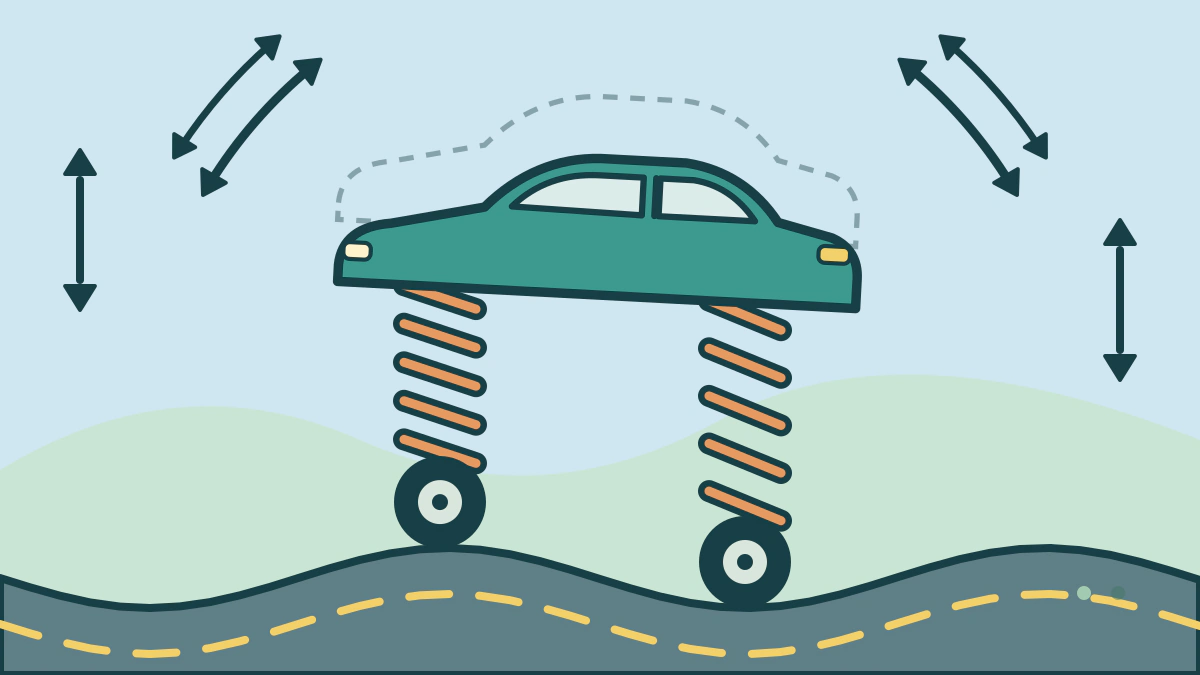
Learn what makes a car bounce: worn shocks or struts, tire pressure, heavy loads and damaged springs, with the FTC bounce test and a Pennsylvania rule.
What causes a car to bounce excessively?
Worn shock absorbers or struts are the first suspect when a car keeps bouncing, but tire pressure, a heavy load and damaged springs can add to the problem or imitate it. The sources do not rank these causes, so use the list as a checklist.
This guide covers causes. For the strut and shock comparison, see bad strut versus bad shock. For a symptom checklist, see worn shock absorber symptoms. The wider subject is in Tires, Wheels and Brakes.
Worn shocks and struts: what the two public yardsticks say
The Car Care Council says the suspension helps absorb energy from road irregularities such as potholes. It lists excessive noise, vibration or bouncing among the symptoms of steering and suspension wear.
The FTC offers a hands-on check. Push the vehicle down hard at one wheel, let go and count the bounces. It says weak shocks allow two or more. Repeat it at each wheel.
Pennsylvania’s inspection rule uses a different test. It rejects a vehicle that keeps rocking for more than three cycles after release. The two numbers measure different things, so do not mix them.
Tire pressure and tire condition: the free first check
NHTSA says to check all tires at least once a month when cold, meaning the car has not been driven for at least three hours. It says the correct pressure is on the Tire and Loading Information Label at the driver’s door edge or in the owner’s manual, not on the tire itself.
Kia’s 2026 K5 manual adds that radial tires may look properly inflated when they are not, so use a gauge. It says tires with too much or too little pressure wear unevenly, which could mean poor handling and loss of vehicle control. The FTC says improper inflation can contribute to poor cornering.
None of these sources says pressure alone makes a car bounce. A correct reading may not cure the symptom, but it removes one variable before you pay for suspension work.
Heavy loads and tired springs
The FTC says springs do not normally wear out and need replacement only if one corner of the vehicle sits lower than the others. It adds that overloading can damage springs.
Kia’s load limit page says the load limit appears on the tire and loading label on the driver’s door sill. It describes vehicle capacity weight as the maximum combined weight of occupants and cargo. Its overloading warning says exceeding the axle and gross vehicle weight ratings can cause an accident or vehicle damage.
Pennsylvania rejects a vehicle with a broken coil or leaf spring, or with spring attaching parts that are loose, badly worn, broken or missing. For pickups and vans, our guide to reading a payload sticker explains the label.
Causes compared
| Possible cause | What the source says | First check |
|---|---|---|
| Weak shock or strut | FTC: two or more bounces. Pennsylvania: more than three cycles | Bounce each corner, then a technician inspection |
| Tire pressure | NHTSA: check monthly when cold, using the door label | Gauge on cold tires |
| Overloaded vehicle | FTC: overloading can damage springs | Compare cargo and passengers with the label |
| Sagging or broken spring | FTC: replace only if one corner is lower | Look for one low corner |
| Broken mounts or stabilizer bar | Pennsylvania rejects broken shock mounts and a missing or broken sway bar | Technician inspection |
Bounce is not the same as vibration
A bounce is up-and-down motion that continues after a bump. A vibration is a shake. The Car Care Council lists them as separate symptoms, so tell the shop which one you feel.
AAA lists steering wheel, seat or floor vibration above 45 mph as a common symptom of unbalanced wheels. The FTC says an unbalanced tire may also wear steering and suspension parts early. Read wheel alignment versus wheel balancing for the difference between the two services.
What to do next
The Car Care Council calls steering and suspension key safety-related systems. It suggests checking them at least once a year, usually with a wheel alignment. It also lists loss of control and a car that pulls to one side among the warning symptoms.
The sources read for this guide give no stopping-distance figure for worn shocks, so this guide gives none. Treat bouncing that comes with wandering or pulling as a reason for a prompt inspection. Note when it happens: after bumps, with a full load or at one corner only.
The FTC says a written estimate should list the condition, the parts and the labor. Ask the shop to name the part and its position.
Frequently asked questions
Can low tire pressure make a car bounce?
The sources do not say so directly. NHTSA, Kia and the FTC link wrong pressure to uneven wear, poor handling and poor cornering. Check the pressure when the tires are cold, then look at the suspension.
Can a heavy load make a car bounce?
The FTC says overloading can damage springs, and it names a corner sitting lower than the others as the sign that a spring needs replacement. Kia’s manual says exceeding the weight ratings can cause an accident or vehicle damage. Stay inside the limits on the door label.
How many bounces mean the shocks are weak?
The FTC says weak shocks allow two or more bounces in its test. Pennsylvania’s inspection rule uses more than three rocking cycles. Neither is a precise measurement, so have a technician inspect a car that keeps moving.
Is it safe to keep driving a car that bounces a lot?
The sources give no safe distance or speed. The Car Care Council treats steering and suspension as safety systems and lists loss of control as a symptom. Arrange an inspection promptly, and do not ignore bouncing that comes with pulling or wandering.