Learn how brake pads and rotors differ in job, wear and inspection, using Car Care Council guidance, a Kia owner's manual and Department of Energy brake notes.
What is the difference between brake pads and brake rotors?
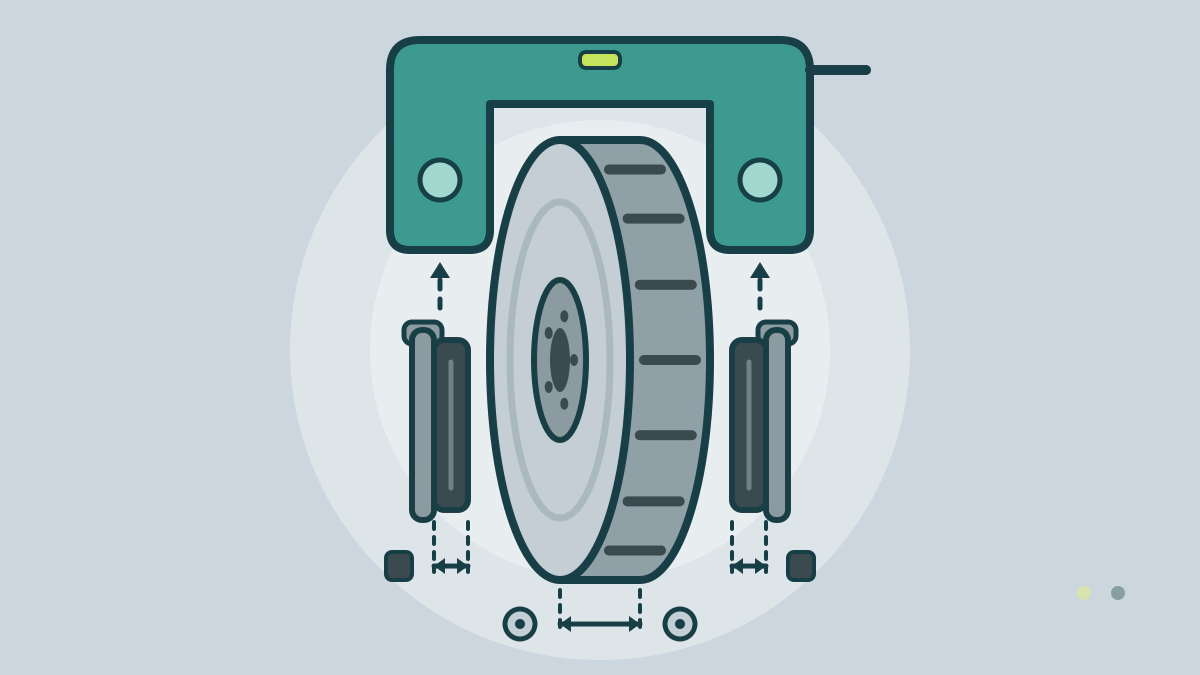
Brake pads are the friction material that presses on the rotors, and rotors are the metal discs that spin with each wheel. One squeezes and one is squeezed. Both are normal wear parts, but they wear in different ways and are judged in different ways.
This guide explains the two parts using manufacturer and industry sources. It cannot tell you the condition of your own brakes. Only a measurement with the wheels off can do that.
For more on this subject area, see Tires, Wheels and Brakes.
How pads and rotors work together
The Car Care Council describes the sequence. Pressing the pedal creates hydraulic pressure in the master cylinder. That pressure travels through lines and hoses to the calipers, which force the pads against the rotors in a disc brake system. The resulting friction slows the vehicle, in proportion to the force on the pedal.
So the caliper is the clamp, the pad is the friction surface and the rotor is the surface being gripped. Brake fluid carries the force. Our guide to how often brake fluid needs replacing covers that third part.
The Council notes that drum brakes use shoes against drums. This guide covers the disc design only.
How brake pads wear and how they warn you
Pads are the part built to wear away. A 2024 Kia manual says that when pads are worn, you will hear a high-pitched warning sound from the front or rear brakes. The sound may come and go, or occur whenever you press the pedal.
The same page says to replace front or rear pads as pairs. It warns that driving on worn pads can damage the braking system and lead to costly repairs. It also says that ignoring the warning sound can eventually cost you braking performance.
That sound does not prove the pads are the cause. Our guide to squealing brakes covers other possible causes of noise.
How brake rotors wear and how they are checked
The sources describe a wear warning for pads but not for rotors. The Kia manual’s service item says to check pads for excessive wear, discs for run out and wear, and calipers for fluid leakage.
The Car Care Council says a thorough annual brake inspection should include brake lining wear, brake fluid level and rotor thickness. It also covers hoses, brake lines and warning lights.
The Council warns against letting brakes reach the “metal-to-metal” point. That usually means more expensive rotor or drum replacement. The minimum rotor thickness and the limit for runout are set by the vehicle maker. They are in the manufacturer’s service information, not in this guide.
If you feel pulsation while braking, see why a car vibrates when braking.
Brake pads and rotors side by side
| Feature | Brake pads | Brake rotors |
|---|---|---|
| Role | Friction material pressed by the caliper | Disc that turns with the wheel and is gripped |
| Wear warning in the sources | Kia describes a high-pitched sound | None described; checked by measurement |
| What the sources check | Lining wear | Thickness, run out and wear |
| Replacement note from the sources | Replace as a pair on the same axle | Judged against the maker’s limits |
| Cost of ignoring wear | Damage to the braking system | Rotor or drum replacement, per the Council |
What speeds up wear, and why hybrids and EVs differ
The Car Care Council lists driving habits, operating conditions, vehicle type and the quality of the lining material as wear factors.
The Kia manual adds practical points. Do not drive with your foot resting on the pedal, because that creates abnormally high brake temperatures and excessive lining wear. Avoid continuous braking on long descents, since overheated brakes can temporarily lose performance. After driving on roads treated with deicing chemicals, it suggests operating the brakes to clear residue from the discs and pads, under safe traffic conditions.
It also notes that brake dust on the wheels is normal and contributes to some noise.
The Department of Energy says brake systems on hybrids and plug-in hybrids generally last longer because of regenerative braking. It says wear is significantly reduced on all-electric vehicles.
Less wear is not no wear. These cars still have pads, rotors and calipers, and they still need inspection. Check the maintenance schedule in your owner’s manual.
Frequently asked questions
Do brake pads and rotors always need replacing together?
The sources read for this guide do not say so. They say pads should be replaced in axle pairs and that rotors are judged by thickness, run out and wear. Whether a rotor needs replacing depends on its measurement against the maker’s limits.
Which wears out first, pads or rotors?
Pads are the part designed to wear away, and the Kia manual describes a built-in wear warning for them. The sources do not give a wear-rate comparison for rotors. The Car Care Council says letting pads wear to metal-to-metal contact can lead to costly rotor or drum replacement.
Can I tell which part is bad by the noise?
Not reliably. A high-pitched sound can be a pad wear indicator, but noise alone cannot show how much pad is left or whether a rotor is worn. A technician has to measure both with the wheels off.
Do electric cars need new pads and rotors?
They still have friction brakes that need inspection. The Department of Energy says regenerative braking reduces brake wear on electric and hybrid cars, so service may come less often. Follow your owner’s manual schedule.