Learn how wheel alignment (camber, caster, toe) differs from wheel balancing, which symptoms point to each, and what to ask a shop before paying.
What is the difference between wheel alignment and wheel balancing?
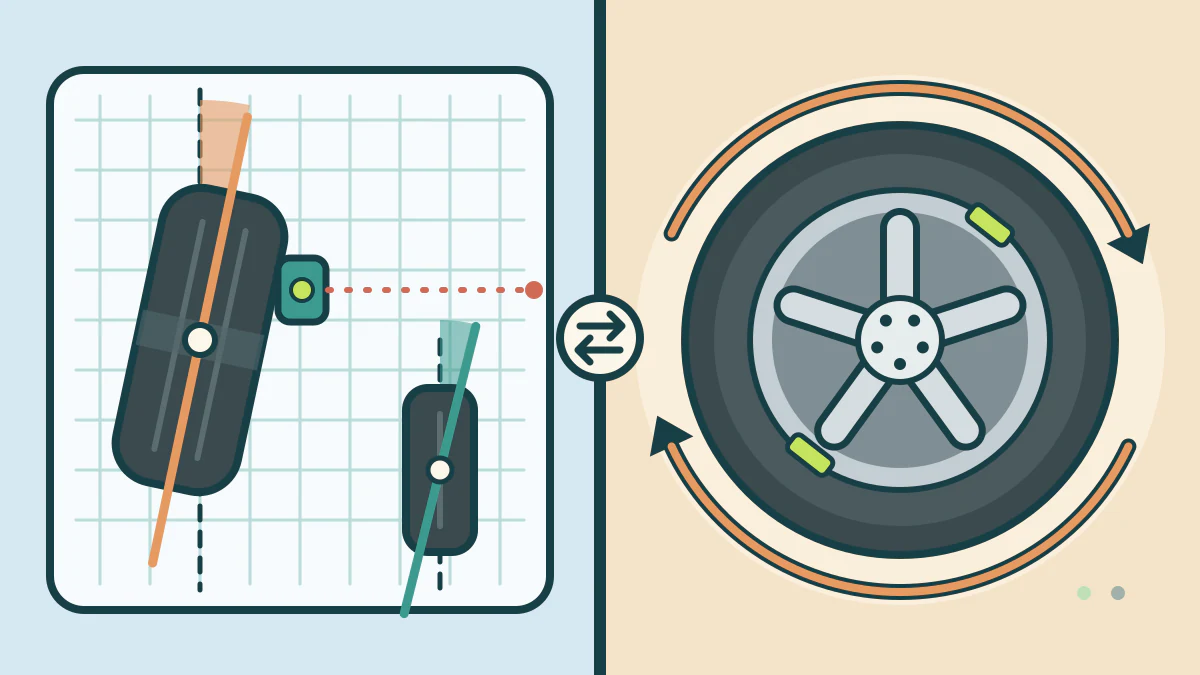
Alignment sets the angles of the wheels relative to the car. Balancing deals with how each tire and wheel assembly spins. They are separate services, and one does not fix the other’s symptoms.
NHTSA says balancing “ensures your wheels rotate properly and don’t cause the vehicle to shake or vibrate.” It says alignment prevents the car from veering to the right or left on a straight, level road. NHTSA also says both should be done by a qualified technician.
This guide covers the difference and the symptoms. It does not give adjustment steps, because alignment needs measuring equipment and the manufacturer’s specifications. For general tire care, see Tires, Wheels and Brakes.
What camber, caster and toe mean
A shop adjusts three main alignment angles. A Volkswagen technical bulletin hosted by NHTSA defines them in plain terms. It covers 2012-2013 models, but the definitions are general.
- Toe: how far the tires point inward or outward when viewed from above.
- Camber: the tilt of the wheel from vertical, viewed from the front or rear.
- Caster: the angle of the steering axis, viewed from the side of the car.
The bulletin says alignment “should always be performed based on the information published in the service manual.” Target values differ by model, so a number that is right for one car can be wrong for another.
Which symptom points to which service
The sources overlap but are not identical, so treat this table as a starting point for a conversation with a shop.
| What you notice | Service the sources point to | Source |
|---|---|---|
| Car veers on a straight, level road | Alignment | NHTSA |
| Unusual or uneven tire wear | Alignment | Kia manual, Car Care Council |
| Vibration while driving on a smooth road | Balancing | Kia manual |
| New tires just installed | Balancing | NHTSA |
| Steering wheel sits off center | Alignment, with toe adjusted | Volkswagen bulletin |
The Kia owner’s manual says unusual wear or pulling means the alignment “may need to be reset.” It says vibration on a smooth road means the wheels “may need to be rebalanced.”
The Car Care Council lists shaking among the signs of an alignment problem, along with uneven wear and pulling. Because shaking appears in both camps, ask the shop to check balance as well.
Balancing: weights and new tires
NHTSA says new tires should always be balanced when installed. Balancing relies on wheel weights. The Kia manual warns that improper wheel weights can damage aluminum wheels and says to use only approved weights.
If you have alloy wheels, ask the shop which weights it uses.
The Kia manual adds that wheels were aligned and balanced at the factory. In most cases it says you will not need an alignment again, unless you see wear or pulling.
When the symptom is not alignment or balance
Both services can come back “in spec” while the problem remains. The same Volkswagen bulletin says that if alignment is within specification, a pull may be improved by changing which tire goes on which wheel. It also tells technicians not to shift the subframe to chase a pull.
Pulling can also come from the tires or brakes. The guide on why a car pulls to one side while driving separates those causes. If the steering wheel shakes at speed, read steering wheel shakes at highway speeds first.
Check tire pressure before paying for either service. NHTSA lists inflation pressure, tread wear and tire damage among the monthly checks.
How often to check each one
There is no single interval that suits every car. The Car Care Council recommends annual alignment checks to maximize tire life. NHTSA lists rotation, balancing and alignment as recurring services without giving one mileage figure.
The Kia manual takes a symptom-based view instead. Your own owner’s manual or the manufacturer’s maintenance schedule is the right reference for your model.
For a pattern you can see yourself, read uneven tire wear patterns explained. Show the pattern to a technician.
What to ask the shop
Describe the symptom and when it happens. Say whether it started after new tires, a curb strike or other repair work.
Then ask for specific evidence:
- A printout of the alignment readings before and after the work.
- The manufacturer’s specification used for your model.
- Which wheel weights were used on alloy wheels.
The Volkswagen bulletin asks its own technicians to keep before-and-after alignment measurements with the repair order, so the request is a normal one.
Frequently asked questions
Does wheel balancing fix a car that pulls to one side?
No. NHTSA ties veering on a straight, level road to alignment. Balancing addresses shaking and vibration. A pull can also come from tire pressure, tire condition or brakes, so check those too.
Do I need both services when I buy new tires?
NHTSA says new tires should always be balanced when installed. An alignment is not automatic in that statement. Ask for an alignment check if the car pulls, the steering wheel is off center or the tires show unusual wear.
Can bad alignment cause vibration?
The Car Care Council lists shaking among the signs of an alignment problem. The Kia manual points to rebalancing for vibration on a smooth road. Ask the shop to check both, because the same feeling can have either cause.
Can I align or balance wheels at home?
Not reliably. Alignment angles need equipment that measures them against manufacturer specifications. NHTSA recommends a qualified technician for both services. Home checks are best limited to tire pressure and a visual look at the tread.