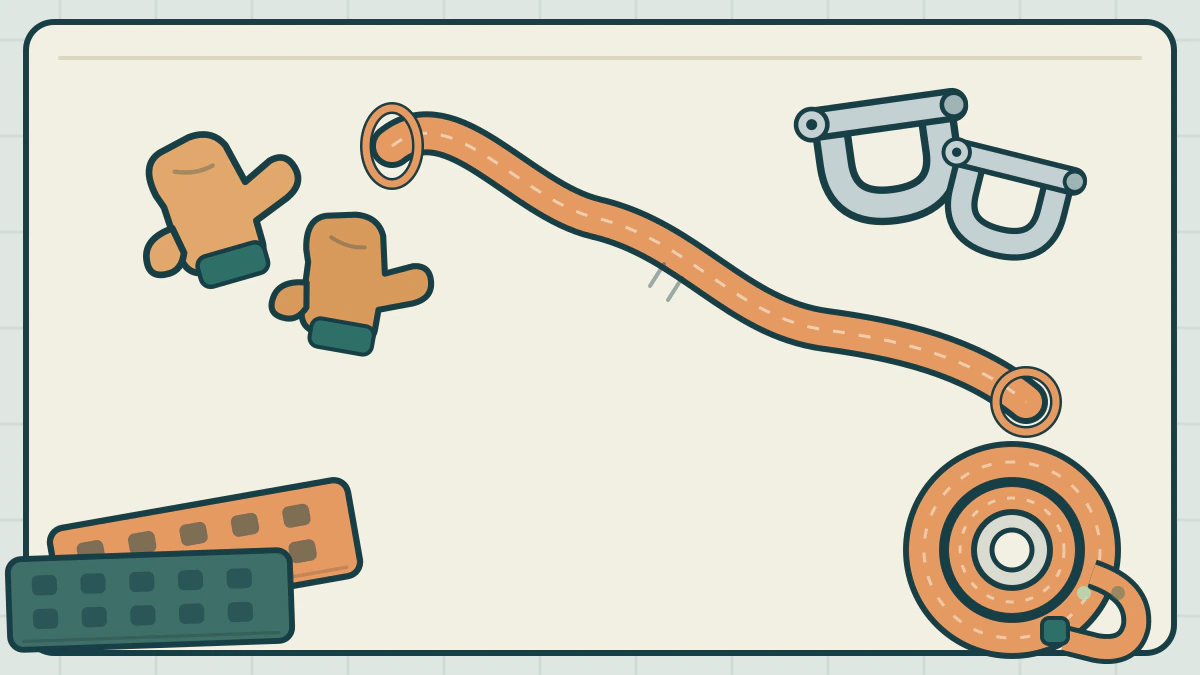
Build a recovery kit around rated points, a proper strap, gloves and a plan for communication, digging and tire repair before adding a winch.
What belongs in a first off-road recovery kit?
Start with rated recovery points on the vehicle, a recovery strap, heavy leather gloves and a way to call for help; a winch is an add-on, not the first purchase. The gear must match the vehicle’s weight and the terrain you drive.
The National Park Service’s Mojave guidance puts the vehicle first. A high-clearance four-wheel-drive with off-pavement tires is the most important safety item, and most rescues there involve vehicles stuck in sand.
Recovery points, straps and shackles
A recovery point is the part of the vehicle built to take a pulling load. Warn’s winching guide describes tow hooks secured properly to the frame as attachment points for winch lines, straps and chains. Use points the manufacturer identifies for recovery, and check the owner’s manual before trusting a hook or bracket.
A recovery strap is designed to stretch and store energy so it can snatch a stuck vehicle out. Warn says it must never be used in a winching operation, because the stored energy can release like a rubber band. Jeep’s 2024 Wrangler manual adds two related warnings: never attach a recovery strap to the winch hook to lengthen a pull, and never tow with a recovery strap attached directly to the winch hook.
A D-shackle connects the looped ends of straps, cables and snatch blocks. A tree trunk protector gives the strap or rope an anchor point and protects living trees. Leather gloves protect hands from rope barbs, sharp edges and heat.
What a winch setup needs beyond the winch
Warn’s capacity rule is simple: calculate the gross weight of what you intend to pull, multiply by 1.5, and do not exceed the rating of the winch or the winch rope.
The same guide lists the accessories that make a winch usable: a snatch block to increase pulling power or change direction, a tree trunk protector, a D-shackle, gloves and a winch damper. The damper goes over the rope midway between the winch and the anchor before tension, to absorb energy if the rope fails.
Rope wrapping matters. Jeep’s manual says never winch with fewer than 10 wraps of synthetic rope on the drum. Warn gives 5 wraps for steel and 10 for synthetic. Both say the rope must spool in the direction shown on the drum decal, or the brake may not hold.
Neither source allows the winch to be used as a hoist or to move people. Warn also says to keep everyone away from the rope and load during the pull.
Digging, jacking and tire repair
A shovel is recovery equipment. The Park Service lists a shovel to smooth cut banks and dig out of sand. Warn lists a shovel, an axe and a Hi-Lift jack as additional assistance when needed.
A jack needs a base that works on the surface under the vehicle. The Park Service recommends a jack with a base that can be set up on rocky or sandy ground.
Tires are part of the kit. The Park Service recommends an all-terrain spare and, for frequent unpaved travel, a second spare. It notes that stock spares are often thin and can fail after a few miles on a rocky road. Our guide to all-terrain versus highway-terrain tires explains the construction difference.
A lifted vehicle changes what fits and what clears. If you are choosing suspension work, read Off-Road Suspension Lift: Benefits and Trade-Offs before buying parts around a tire size.
Communication and self-sufficiency
On a remote trail, communication is recovery equipment. The Park Service recommends filing a return plan with a friend or relative and carrying a satellite phone or satellite messenger. Cell service may not exist where the vehicle stops.
The same guidance lists extra food, water and medications for several days, plus hot and cold weather clothing. It states that staying with the car is the most important thing in an emergency, and that people have died from exposure trying to walk back to a paved road.
| Item | Why it belongs | Check before the trip |
|---|---|---|
| Rated recovery points | Give the strap or winch a load-bearing attachment | Owner’s manual and physical condition |
| Recovery strap | Stretches to snatch a stuck vehicle | Rating, cuts, abrasion and stitching |
| D-shackles and tree protector | Connect straps and protect the anchor | Pin threads, wear and length |
| Winch damper | Absorbs energy if a rope fails | Placement midway along the rope |
| Shovel and jack base | Dig out and lift on soft or rocky ground | Blade, handle and base size |
| Satellite messenger | Calls for help outside cell coverage | Battery and subscription |
The Off Roading and Towing hub covers the vehicle systems that affect recovery. For the driving decisions that keep you out of a recovery, see How to Approach Steep Off-Road Hills.
Frequently asked questions
Do I need a winch to drive off-road?
No. The Park Service’s list starts with a high-clearance four-wheel drive and off-pavement tires, then a shovel, a jack with a suitable base, spare tires and communication. A winch is useful when it is rated for the vehicle and rigged correctly.
How strong should a recovery winch be?
Warn’s formula is the gross weight of the load multiplied by 1.5, without exceeding the rating of the winch or the rope. Use the actual loaded weight of your vehicle, not the empty curb weight.
Can I use a recovery strap for winching?
No. Warn says a recovery strap is designed to stretch and store energy, so it must not be used in a winching operation. Jeep’s manual also prohibits attaching a recovery strap to the winch hook to extend a pull.
What should I carry on a remote trail besides recovery gear?
The Park Service recommends a filed return plan, a satellite phone or messenger, extra food, water, medications and weather clothing. It also says to stay with the vehicle rather than walking out when you are lost or stuck.