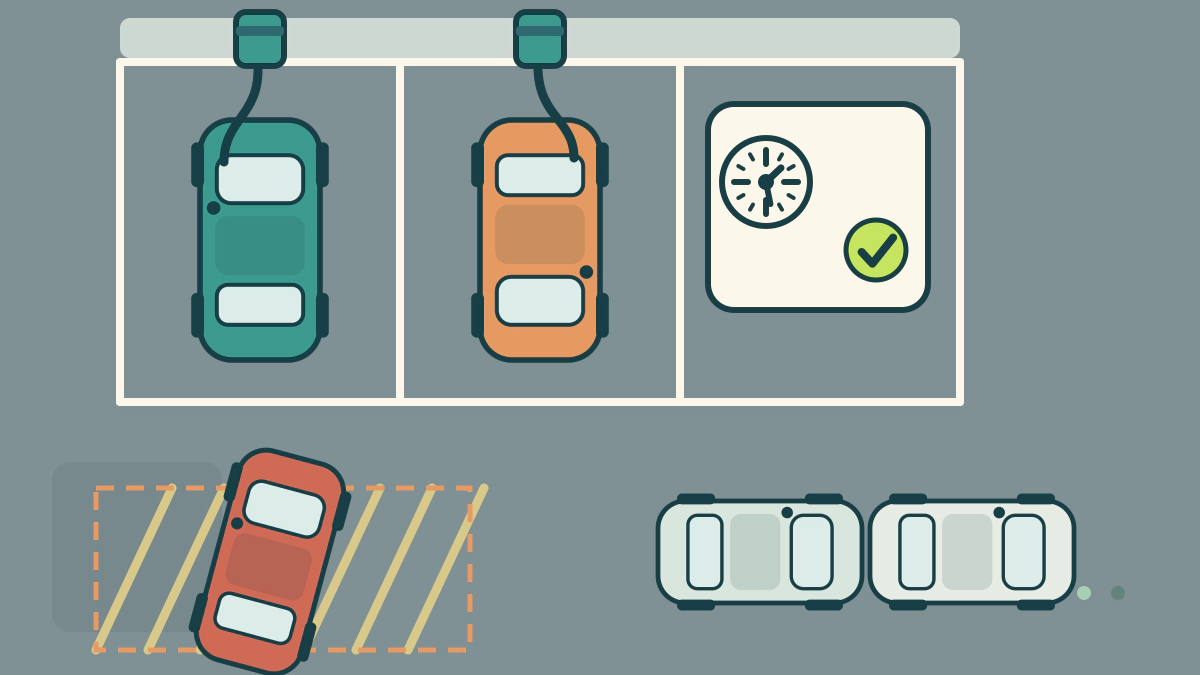
See what charging networks and public agencies actually say about idle fees, unplugging other cars and parking, and where etiquette is only a courtesy.
What is the etiquette at a busy EV charging station?
Charge only as long as you need, move as soon as the session ends, and leave other drivers’ cables alone. The enforceable parts come from the station and the property: idle fees, parking limits and posted terms. No federal rule or national industry standard sets one courtesy code for queues, unplugging or how long you may stay after charging.
Why does a finished session block the port?
A charging port supplies one vehicle at a time, even when the unit has several connectors, according to AFDC. Public charging is generally Level 2 or DC fast. When a car remains in the space after charging stops, the port is still unavailable.
ChargePoint’s etiquette guidance is direct: move along when you are done, and do not treat a charging spot as an all-day parking space. Some station owners set a fee for parking after a few hours, shown in the network app.
Electrify America’s pricing page says idle fees may be imposed for parking time after a charging session has ended. The fee is the operator’s way of encouraging turnover.
Which parts are rules and which are only courtesy?
A rule has an owner, a posted term and a consequence. A courtesy depends on the next driver’s goodwill.
| Rule or charge | Who sets it | Where to see it |
|---|---|---|
| Idle or overstay fee | Charging network or site host | Charger screen, network app |
| Parking limit or permit | Property owner and local parking ordinance | Signs, meter, parking app |
| Session price and fees | Network and site host | Charger screen, network app |
| Permission to unplug another car | The vehicle owner | Not granted by the network |
| Waitlist or virtual queue | Network, where the feature exists | Network app |
AFDC explains that parking ordinances manage public enforcement of parking policies at publicly accessible charging stations, including municipal lots, private lots and garages, and on-street spaces. That is the layer that can restrict the space; a network app showing a finished session does not transfer the other driver’s permission to you.
Should you unplug a car that has finished charging?
ChargePoint advises against it, saying not to unplug another driver unless you are sure the car is charged and you are desperate, or a note gives permission. It makes the same point about plug-in hybrids, which still have a right to charge.
No law or network rule reviewed here gives a driver permission to disconnect another vehicle. Use the network’s support channel or wait.
How should you handle a full station?
Check the live status before you arrive. Electrify America says its app and Google Maps show real-time charger status, connector type and speed.
Use a queue where the network offers one. ChargePoint says its Waitlist feature, available on some stations, lets drivers join a virtual line when all stations are busy; drivers must move when charging ends for it to work.
Take only the energy you need. ChargePoint recommends not always aiming for 100 percent, and says DC fast charging typically aims for about 80 percent because the car slows near the top. The reason is explained in why DC fast charging slows near full. A full battery can be legitimate for a long trip, but it is a poor use of a shared fast charger when a top-up would do.
Do not leave a car in a charging space without plugging in. ChargePoint calls that as frustrating as a gasoline car taking the spot. Its charging basics also say to unplug when the EV is done. If you are willing to be unplugged, a note is a courtesy, not a rule that binds anyone else.
What do you do when a non-EV blocks the space?
ChargePoint uses the term ICEd for a gasoline or diesel vehicle parked in a charging space. Its advice is not to retaliate. Leave a friendly note explaining that the space is for charging, and report the vehicle to the property or local parking authority if the site has enforcement.
AFDC’s description of parking ordinances explains why enforcement is local. The ordinance, the signs and the property rules decide what happens next.
For the mechanics of a session, see how to use a public EV charging station. For how the bill is built, see how public EV charging pricing works. For the wider subject, see EV Charging.
Frequently asked questions
Is there a legal time limit for staying after charging ends?
No single federal time limit applies. Local parking ordinances, the property’s posted rules and the network’s idle-fee policy are the enforceable terms. Check the signs and the app before you leave the car.
Can I unplug a car that has finished charging?
ChargePoint advises against unplugging another driver’s car unless there is a note giving permission or you are in an emergency. The network app showing a finished session does not give you consent. Use support or wait for the driver.
Should I charge to 100 percent at a busy DC fast charger?
ChargePoint recommends aiming for about 80 percent at a DC fast charger because charging slows near the top. If you need the full battery for a long trip, that is a reason to continue. Otherwise, take what you need and free the port.
Do all charging networks charge idle fees?
No. Electrify America says idle fees may be imposed after a session ends, and ChargePoint says some station owners set fees for parking or charging after a few hours. The amount, grace period and trigger vary, so check the screen or app.