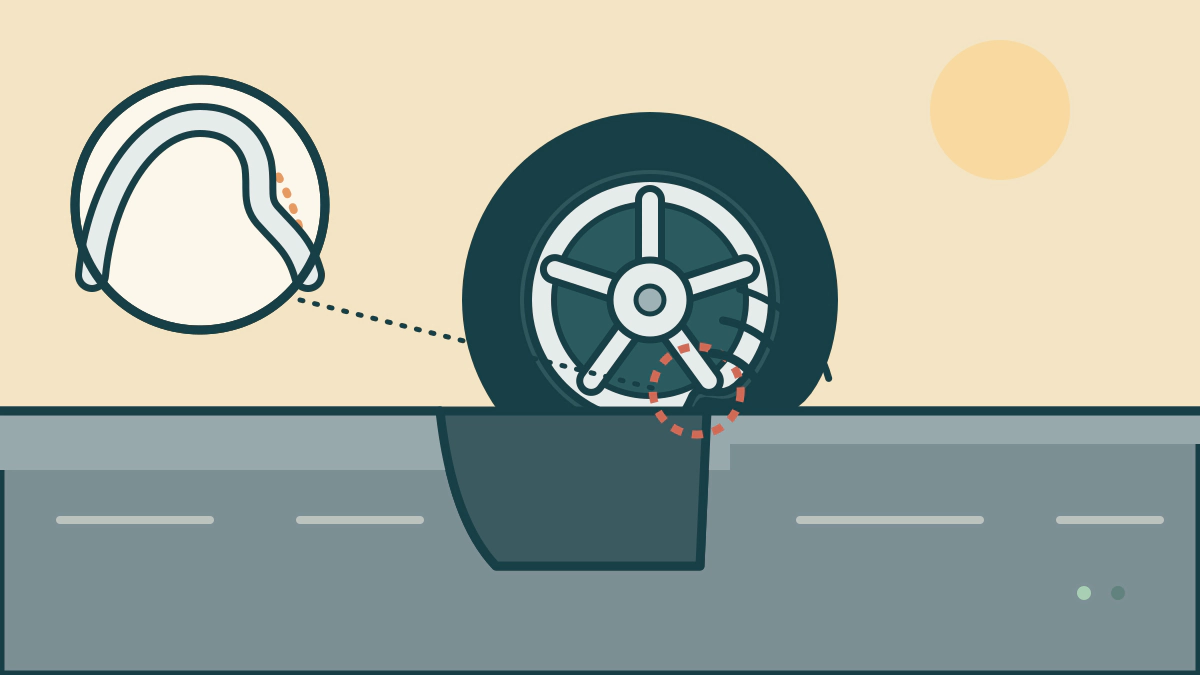
Learn what bends a wheel, the symptoms to watch for and why manuals and NHTSA say to inspect after a pothole or curb hit, with alignment and balance explained.
What causes a bent wheel?
A bent wheel is usually caused by a hard impact, such as hitting a pothole, bumping a curb or striking a manhole cover or other road hazard. The wheel is metal, and a sharp enough blow can change its shape even when the tire still looks fine.
The sources behind this guide name these impacts as risks to tires and wheels. They do not publish a list of every cause, so this guide sticks to what they state.
Impacts the manuals and NHTSA single out
The Kia 2026 K5 manual tells drivers to go slowly when passing over a pothole, speed bump, manhole or curb stone so the tires and wheels are not damaged. It also says to inspect tires and wheels after driving on a rough road or off-road.
The same section explains that low-profile tires have a shorter sidewall, so the wheel and tire are more easily damaged. Less rubber sits between the road and the rim.
NHTSA adds a warning about pressure: a tire can suddenly lose air if you drive over a pothole or bump a curb while parking. The wheel and tire take the same hit, so a pressure drop can be an early sign that something was damaged.
Symptoms to watch for
A bent wheel does not always announce itself. These are the signs the sources connect to wheel and tire problems:
- Air loss. NHTSA notes sudden pressure loss after a pothole or curb hit. Kia says damage may cause air leakage even when you cannot see it.
- Vibration. Kia says vibration on a smooth road may mean the wheels need rebalancing.
- Pulling or unusual tire wear. Kia says these can mean the alignment needs to be reset.
Here is the reasoning, which is not a quoted rule: a bent wheel can feel like an out-of-balance wheel. Only an inspection tells them apart. Our guide on steering wheel shakes at highway speeds lists the other causes of a shake.
Why a bent wheel is inspected, not ignored
Kia’s manual says tire damage is not easy to recognize by eye. If there is the slightest hint of damage, it says to have the tire checked or replaced, because damage may cause air leakage. It also says that if the tire is impacted, the owner should inspect it or contact an authorized dealer.
Pressure checks matter too. Kia says radial tires can look properly inflated when they are underinflated, so a gauge is needed. NHTSA says tire pressure monitoring systems only warn when a tire is significantly underinflated, so a monthly check is still needed. Our guide on tire pressure that keeps dropping covers the slow-leak side.
The Kia sections reviewed give no repair rule for a bent wheel. Whether a wheel can be repaired or must be replaced is a question for the wheel maker or a dealer. If you replace it, Kia says the new wheel must match the original in diameter, rim width and offset.
Bent wheel, alignment and balancing
A pothole hit can raise three separate questions. They are related by symptom but fixed in different ways.
| Question | What the sources say | What it addresses |
|---|---|---|
| Is the wheel or tire damaged? | Kia: inspect after impact; damage may not be visible | Inspection by a shop or dealer |
| Does the wheel need balancing? | Kia: vibration on a smooth road may mean rebalancing; NHTSA: balance keeps wheels rotating without shake | Weight distribution of wheel and tire |
| Does the alignment need resetting? | Kia: pulling or unusual wear may mean alignment needs to be reset | Wheel angles relative to the car |
| Was the tire removed from the wheel? | Kia: rebalance whenever the tire is removed from the wheel | Balance after tire service |
Kia’s tire maintenance section says a tire should be rebalanced whenever it is removed from the wheel. Balancing deals with weight distribution, according to NHTSA’s description. A bent wheel is a shape problem. Reasoning, not a quoted rule: balance weights may not be able to correct a distorted wheel, so a bent wheel needs its own assessment.
What to do after a hard hit
- Slow down and stop somewhere safe if the car vibrates or pulls hard.
- Check the tire pressure with a gauge. The tire and loading label by the driver’s door lists the correct figure.
- Look at the tire sidewalls and wheel edges for bulges, cuts or visible deformation.
- If anything looks wrong, or the car feels different, have a shop inspect the wheel and tire.
- If the tire pressure warning light comes on, Kia says to reduce speed, avoid hard cornering and check the tires as soon as possible.
For the wider topic, see Tires, Wheels and Brakes.
Frequently asked questions
Can a wheel be bent without any visible damage?
Yes. Kia’s manual says tire damage can be hard to see, and a wheel and tire take the same impact. If a hit was hard, have them inspected even when nothing looks wrong.
Will a wheel alignment fix a bent wheel?
An alignment adjusts wheel angles. It does not reshape a wheel. Kia lists unusual tire wear and pulling as signs that alignment may need resetting, so have the wheel checked first.
Is a vibration always a bent wheel?
No. Kia says vibration on a smooth road may mean wheels need rebalancing. A bent wheel, a damaged tire or a worn suspension part can feel similar, so a shop needs to inspect them.
Can I keep driving on a wheel that loses air?
Kia warns against driving on low-pressure tires, because they can overheat and fail. Check the pressure, and have the tire and wheel inspected before continuing normal driving.