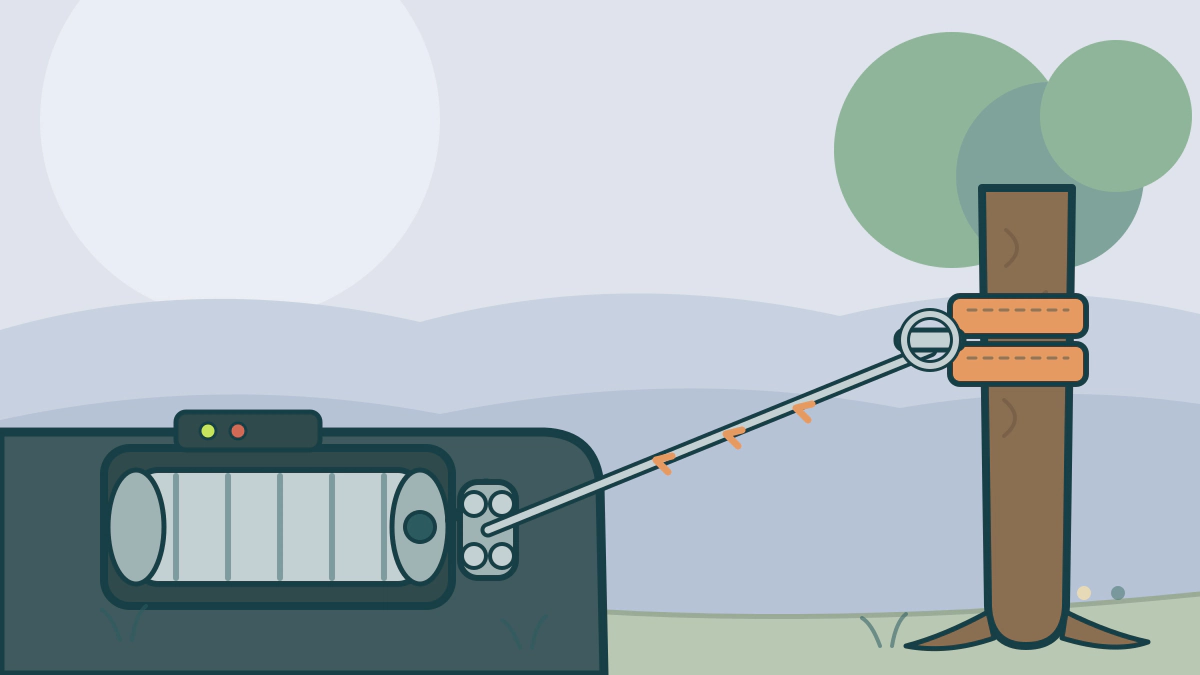
Decide when a winch is safer than a kinetic pull, how to size the load against the winch rating, and which rigging limits keep the pull controlled.
When is a winch the right recovery tool?
Use a winch when you need a slow, controlled pull and a running-start snatch is unsafe or impossible. That covers a ledge, a narrow trail with no room for momentum, or a vehicle that cannot take a shock load.
A winch also works when there is no second vehicle to pull. WARN’s Basic Guide to Winching describes a single-line pull from the winch to a fixed anchor, such as a tree, stump or rock. The Off Roading and Towing hub covers the rest of the kit.
It is not the first answer to every stuck vehicle. Jeep’s 2024 Wrangler owner’s manual describes rocking the vehicle between drive and reverse with gentle throttle. It warns not to spin the wheels faster than 30 mph or for more than 30 seconds at a time.
What can a winch do that a snatch strap cannot?
A winch applies load gradually and can stop at any point. The operator can inspect the line, reset the rigging and start again. A kinetic recovery depends on a moving vehicle and a strap that releases stored energy.
A winch can also multiply its pull. WARN says a snatch block can double the line and increase pulling power. The same guide says to keep a straight line from the winch to the load.
The trade-off is speed and reach. The recovery strap comparison explains which product fits which pull.
How much pull does the vehicle need?
WARN publishes a simple capacity formula. Calculate the gross weight of what you intend to pull, multiply by 1.5, and do not exceed the rating of the winch or the winch rope.
Maximum pulling capacity occurs on the first layer of rope on the drum. As more layers build up, pulling power decreases. Keep the pull within the rating for the amount of rope on the drum, not just the headline number on the box.
For a 5,000 lb vehicle, the formula points to a winch and rope rated at least 7,500 lb. Match that rating to the vehicle’s gross weight, not its curb weight. The towing capacity and payload guide explains where those weight figures come from.
Which rigging choices keep the pull inside the rating?
| Setup | What changes | When to use it |
|---|---|---|
| Single line | Rope runs from the drum to the anchor; full capacity is on the first layer | A light pull with a straight line |
| Double line with a snatch block | Two rope parts share the load and pulling power rises | A heavy pull or one near the winch rating |
| Direction change with a snatch block | An anchor redirects the line while rope still winds onto the drum | The anchor is not directly ahead |
WARN’s guide describes all three setups.
A few limits apply to every setup. WARN says never operate with fewer than 5 wraps of steel rope or 10 wraps of synthetic rope on the drum. Keep the rope winding onto the bottom of the drum. Use a damper over the rope midway between the winch and the anchor.
Why should a recovery strap never feed a winch?
A recovery strap is built to stretch and store energy. WARN’s guide says never use a recovery strap in a winching operation and never use a strap for winching at all.
Jeep’s manual gives the same warning in vehicle terms. Never attach a recovery strap to the winch hook to increase the length of a pull, and never tow a vehicle with a recovery strap attached directly to the winch hook. It also says never use bungee or kinetic straps, because they store dangerous force.
Use a winch line, a winch extension or a tree trunk protector for the anchor. A kinetic rope belongs to a different job.
What should you check before you power in?
Inspect the winch mount, rope, hook and anchor before the pull. WARN says frayed, kinked or damaged rope must be replaced immediately, and loose or damaged mounting must be corrected. Ford’s manual adds a load rule for its recovery hooks: the load must not exceed the vehicle’s GVWR.
Put on heavy leather gloves. Keep hands away from the fairlead and never touch the rope or hook while it is under load. WARN requires the operator and bystanders to stand clear and keep others away.
Set the vehicle in neutral, keep the engine running and hold moderate brake pressure during the pull.
Stop and inspect after a short distance. WARN’s steps stop after about 6 feet to check that the rope is winding evenly, then repeat until the vehicle is on stable ground.
Frequently asked questions
Can a winch replace a snatch strap?
No. A winch is for a slow, controlled pull; a snatch strap or kinetic rope is for a running-start pull. WARN says never use a recovery strap in a winching operation.
Can I use a winch to tow a vehicle?
No. WARN says never use a winch or winch rope for towing, and never use a winch as a hoist. Shock loads from towing can overload the rope and the winch.
How many wraps of rope should stay on the drum?
WARN says at least 5 wraps for steel rope and at least 10 wraps for synthetic rope. With fewer wraps, the rope can pull loose from the drum because the attachment is not designed to hold a load.
What if the anchor is not directly ahead?
Use a snatch block at a point directly in front of the vehicle to change the pulling direction. WARN says this keeps the rope winding onto the drum at the correct angle. A side pull can pile rope at one end of the drum and damage it.