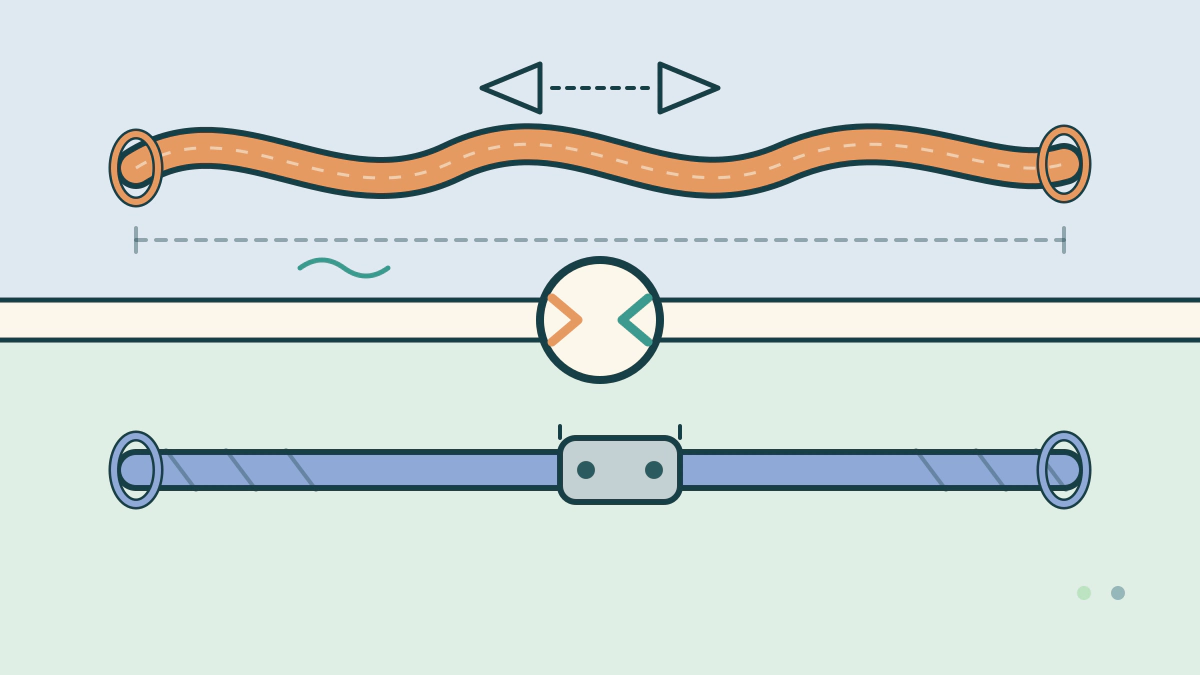
Learn how kinetic recovery straps and low-stretch tow straps differ in stretch, load ratings and safe use, and how to size either one to your vehicle.
Do recovery straps and tow straps do the same job?
No. A recovery strap stretches to store energy for a snatch pull; a tow strap stays low-stretch for a steady pull.
Stretch is the defining difference. The ARB705LB snatch strap is 100% nylon and stretches a genuine 20 percent under load. Factor 55’s 7/8-inch kinetic rope is double-braided nylon and can stretch up to 30 percent. A tow strap is built to stay close to its original length.
Factor 55 says a tow strap pulls a vehicle in a steady manner. A recovery strap or kinetic rope is meant to stretch during a running-start pull. The same Factor 55 guide says the two types are not interchangeable. The Off Roading and Towing hub covers the rest of the recovery kit.
Why does stretch change the load on both vehicles?
A kinetic pull turns motion into stored energy. As the nylon stretches, it builds that energy and then releases it to the stuck vehicle. ARB says the elasticity aids the recovery and reduces the chance of vehicle damage.
That stored energy explains the extra rules. Ford’s 2027 Bronco Sport owner’s manual says to remove slack slowly before pulling. A sudden slack take-up can create much higher loads and break the hook or the strap. Ford also says to place a damper such as a tarp or heavy blanket over the strap.
Ford also tells bystanders to stand at least twice the strap length to the side of the vehicles. That keeps them out of the path if a hook or strap fails.
A tow strap has little stretch. Factor 55 warns that a tow strap used for a snatch pull can damage the vehicle or rip a recovery point. The reverse swap is also wrong. A kinetic rope used for steady towing can slingshot the towed vehicle toward the tow vehicle.
What do the numbers on a strap mean?
Manufacturers publish different figures, and they are not interchangeable. Factor 55 lists a minimum breaking strength of 28,300 lb and a working load limit of 5,660 lb for its 7/8-inch by 30-foot kinetic rope. Never plan a pull that exceeds the strap’s working load limit.
ARB publishes a breaking strength of 17,600 lb for the ARB705LB. It does not publish a working load limit on that product page. A breaking strength is not a working limit. Ask the maker before treating any number as a safe service load.
Vehicle-side rules add another check. Ford says to use recovery straps with a minimum breaking strength two to three times the gross vehicle weight of the stuck vehicle. Factor 55 sizes its kinetic rope at a 4:1 to 6:1 minimum breaking strength to GVWR ratio. It also says to size the rope to the lighter of the two vehicles. The towing capacity and payload guide explains how GVWR differs from other weight limits.
Those rules answer different questions. Use the rule published for the product you own, and stay under the vehicle’s stated limit.
| Job | Correct product | Stretch | Published example |
|---|---|---|---|
| Steady pull of a rolling vehicle | Tow strap | Low | Factor 55 30-foot tow strap, 31,000 lb breaking strength |
| Snatch recovery from sand or mud | Snatch strap or kinetic rope | 20% to 30% | ARB705LB, 17,600 lb breaking strength; Factor 55 7/8-inch, 28,300 lb MBS and 5,660 lb WLL |
| Tree anchor for a winch | Tree trunk protector | Low | Tough nylon protector, as listed in the winch maker’s accessory guide |
Which attachment points make a strap fail?
Factor 55 says never attach a recovery strap or kinetic rope to the ball on a receiver. The ball can become a projectile.
Ford adds two more limits. Do not use chains, cables or tow straps with metal hook ends. And never link two straps with a clevis pin, because the pin can become a projectile.
Ford says to line up the tow vehicle and the stuck vehicle within 10 degrees. A side load puts force where the hardware was not designed to take it.
Use rated recovery points on both vehicles. If you are unsure which points are approved, read why factory tow hooks may not be recovery points. For a winch pull, see when to use a winch for vehicle recovery.
How do you check a strap before and after a pull?
Ford says the recovery strap must be in good condition and free of visible cuts, tears or damage.
WARN’s winching guide says frayed, kinked or damaged rope must be replaced immediately. Do not try to repair a cut strap with tape or a knot.
Frequently asked questions
Can I use a tow strap for a snatch recovery?
No. A tow strap is low-stretch, so it cannot absorb the energy of a running start. Factor 55 says a tow strap used this way can damage the vehicle or pull a recovery point loose. Use a snatch strap or kinetic rope sized to the vehicle instead.
Can I use a kinetic rope to tow a disabled car?
No. Factor 55 warns that the stretch can slingshot the towed vehicle toward the tow vehicle. Use a low-stretch tow strap for a steady tow, and keep speed and distance within the equipment maker’s instructions.
What is the difference between breaking strength and working load limit?
Breaking strength is the load at which the product failed in testing. Working load limit is the lower load the maker allows in service. Factor 55 lists both for its 7/8-inch kinetic rope: 28,300 lb and 5,660 lb. Never exceed the working load limit.
Do I need a damper over a recovery strap?
Ford recommends a damper such as a tarp, heavy blanket or carpet over the strap. It absorbs energy if the strap or a hook breaks. Place it over the strap before tension is applied, and keep people out of the line.