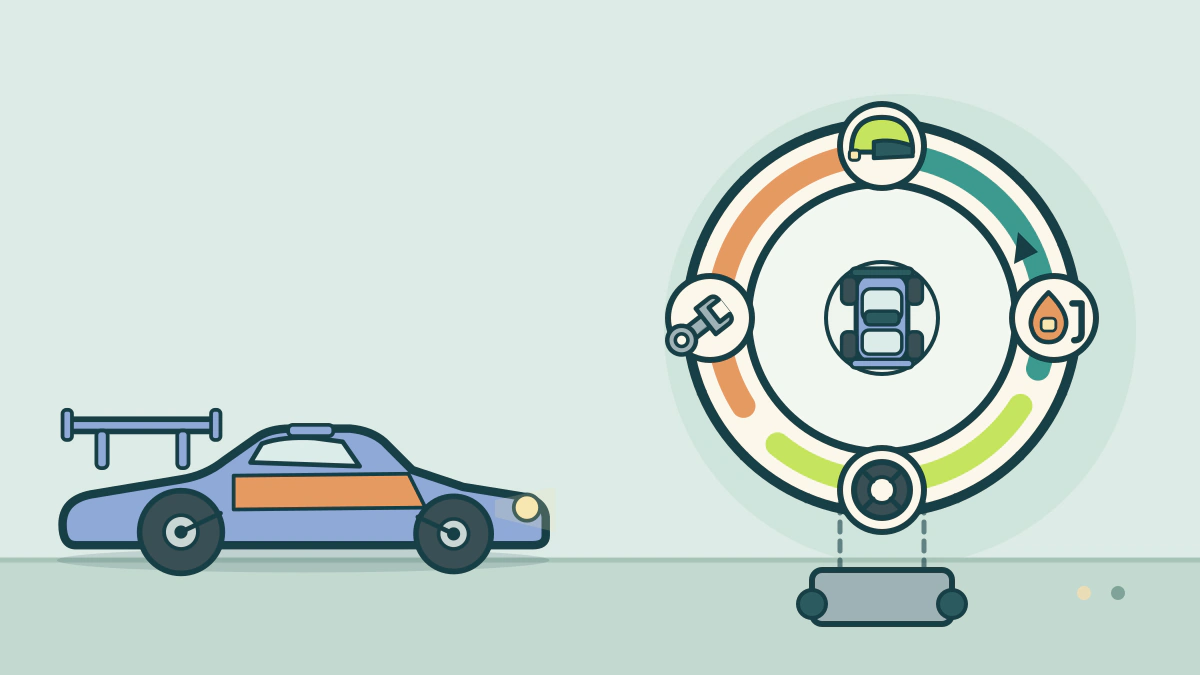
Endurance racing shares one car between several drivers over races from a few hours to 24 hours, with pit stops and classes scored separately.
How does endurance racing work?
Endurance racing is team racing over a long time or distance, with two to four drivers sharing one car, pit stops for fuel, tires and driver changes, and separate class results. The winner is decided by distance covered, not by a single fast lap.
That structure creates the strategy. A car can be quickest and still lose through penalties, a long repair or a badly timed stop.
IMSA runs races from 100-minute sprints to the 24-hour Rolex 24 At Daytona, including 12-hour and 10-hour classics, according to IMSA 101. The FIA World Endurance Championship mixes six-hour races with longer events and the 24 Hours of Le Mans.
Why do several drivers share one car?
Teams rotate drivers so each can rest, refuel and recover between stints.
IMSA says teams may run two to four drivers per car depending on race duration, and that drivers change during pit stops. The FIA WEC regulations describe how crews are graded and how much time each must spend in the car.
Driver grading uses four FIA categories: Bronze, Silver, Gold and Platinum, based on race record and achievements.
Hypercar does not admit Bronze drivers. LMGT3 crews of two or three drivers must include at least one Bronze driver plus another Bronze or a Silver driver.
LMP2 crews must include at least one Silver or Bronze driver, according to the ACO’s class guide. That requirement creates the LMP2 Pro/Am classification when a Bronze driver is aboard.
How are stints and driving time limited?
A stint is one driver’s run between pit stops. It usually ends when the fuel tank is low, when tires need changing, or when a driver reaches a time limit.
The rules set minimum and maximum driving times. In the WEC, a Silver or Bronze driver in LMGT3 must complete at least 1 hour 45 minutes in a six-hour race, 2 hours 20 minutes in an eight-hour race and 2 hours 55 minutes in a 10-hour race.
Falling short of the minimum, or exceeding the maximum, can bring a penalty from the stewards up to disqualification. The European Le Mans Series applies a simpler rule for its four-hour races: each driver must drive at least 40 minutes.
What happens during a pit stop?
A pit stop can combine fuel, tires, a driver change and repairs. The order matters because safety rules restrict what can happen at the same time.
The WEC sporting regulations require the car to be stopped, in its working area, with the engine off and the car grounded before refueling. A driver change may happen during a pit stop only with the car properly stopped and the engine off. Tools are not allowed during the refueling phase, so tire changes cannot overlap with fueling.
Teams also plan around tire rules. Dry-weather tire quantities are limited, while wet tires are not limited when the track is declared wet, according to the WEC regulations page.
What are the classes in endurance racing?
Cars are split by technology and purpose so that very different machines can race at once. Each class has its own winner and its own championship points.
| Series | Top prototype class | Second prototype class | GT class or classes |
|---|---|---|---|
| FIA WEC | Hypercar (LMH or LMDh) | LMP2 | LMGT3 |
| IMSA WeatherTech | GTP | LMP2 | GTD PRO and GTD |
Hypercar covers two technical paths. LMH allows more freedom in architecture, including a front-axle hybrid system. LMDh uses a common platform from Dallara, Multimatic, Ligier or Oreca that each manufacturer then shapes.
LMP2 is aimed at independent teams. Four chassis makers supply the class, and all use the same Gibson engine. LMGT3 cars are built from the FIA GT3 platform, and manufacturers must produce more than 2,500 road cars a year to be eligible.
IMSA describes its prototypes as cars designed only for the track and its GT cars as based on road-going models, according to its championship page.
How is the race won and scored?
The car that covers the greatest distance when the checkered flag falls wins its class.
To be classified, a car must cross the finish line and complete at least 70 percent of the distance of the overall winner.
Points usually reward consistency. The European Le Mans Series, for example, awards 25 points for first, 18 for second, 15 for third and down to one point for tenth, plus one point for class pole.
Neutralizations change strategy. In the European Le Mans Series, a Full Course Yellow slows cars to 80 kph and closes the pit entry when announced, while a Safety Car can close the pit entry for three laps.
Hybrid systems in the top class are covered in How Motorsport Hybrid Systems Work, and tire choices are compared in Racing Slicks vs Road Tires. The Motorsports and Performance Driving hub collects the rest of the section.
Frequently asked questions
Why do different classes race together?
Running prototypes and GT cars at the same time fills the grid and tests traffic management. Each class has its own rules, winner and points. A slower GT car is not racing the overall leader for position.
How many drivers are on an endurance team?
IMSA says teams may use two to four drivers depending on race length. WEC LMGT3 crews have two or three drivers, while Hypercar crews do not admit Bronze-rated drivers. The exact minimum and maximum driving times come from the series regulations.
What is a stint in endurance racing?
A stint is the period one driver spends in the car between pit stops. It often ends when fuel runs low or tires need changing. Rules also cap how long a driver may stay aboard.
Why is the 24 Hours of Le Mans so important?
It has run since 1923 and is organized by the Automobile Club de l’Ouest. Its length stresses reliability, driver rotation and pit strategy. The history of the race explains how it started.