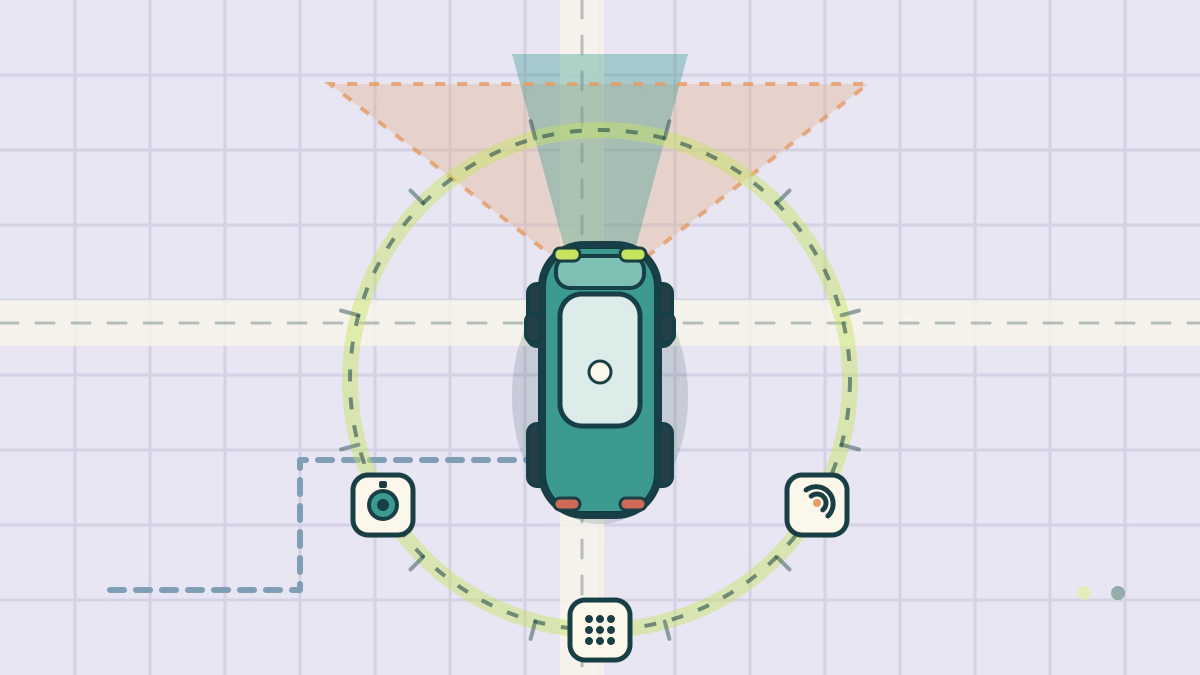
See the capabilities a driverless car needs to navigate, from sensors and map data to computing, redundancy and operating limits NHTSA says must be defined.
What does a driverless car need in order to navigate?
A driverless car needs a chain that works end to end: sensors that measure the scene, software that detects and responds, map and route data, computing hardware, and backups that reach a safe stop when something fails.
NHTSA’s voluntary guidance lists 12 safety elements, including system safety, object and event detection and response, fallback and cybersecurity. The car also has to know where it may operate. SAE J3016 calls that the operational design domain, or ODD, and defines the levels around the driving task and its fallback. The taxonomy is published by SAE.
Which jobs count as object and event detection and response?
NHTSA’s OEDR element is the clearest statement of the job. While engaged and inside its ODD, the system must detect and respond to other vehicles in and out of its path, pedestrians, bicyclists, animals and objects that could affect safe operation. It also has to handle emergency vehicles, temporary work zones, and police or construction workers directing traffic.
No single sensor covers all of that. NHTSA’s driver assistance page shows the split in ordinary cars. Lane departure warning uses a camera to watch lane markings. Rear automatic braking uses parking sensors and a backup camera. Blind spot systems use rear-facing cameras or proximity sensors. A driverless system has to combine those views into one picture.
How does detection become a driving decision?
Detection is only half of OEDR. The system must also choose and carry out a response. NHTSA describes OEDR as detection of any circumstance relevant to the immediate driving task plus implementation of the appropriate response in its Automated Driving Systems 2.0 guidance.
The software needs hardware. NHTSA notes that advanced safety technologies depend on an array of electronics, sensors and computing power. It also treats cybersecurity as a critical part of safe deployment on its automated vehicle page.
Software updates add a requirement. NHTSA’s guidance says the development process should be planned, controlled and documented so unexpected results from updates are caught. Measurable testing should accompany each release.
Why does a driverless car need map data?
Maps give the system a reference for road features that sensors may not see until they are close. The Department of Transportation’s AV 3.0 report says automation benefits from dynamic data on work zones, road closures and signal timing. It also names static data such as bus stop locations and crosswalk geometry, and says this information may be relayed through digital maps.
A map is a reference, not a guarantee. NHTSA’s guidance also calls for detection of temporary work zones and unusual conditions.
What does redundancy have to cover?
NHTSA’s system safety element encourages developers to describe design redundancies and safety strategies for handling malfunctions. It lists sensors, actuators, communication failure and software errors as design considerations.
The fallback element gives the goal. When the system leaves its ODD or conditions change, the vehicle should move to a minimal risk condition. For a Level 3 system, that can mean handing control to a fallback-ready person. If no one responds, the system should keep reducing risk, which may include slowing down or stopping.
Is the operating domain part of the answer?
Yes. An ODD defines where and when the system is designed to work: roadway types, geographic area, speed range, weather, and day or night. A car that works in one city does not automatically work in another.
| Requirement | What it must do | Where the requirement appears |
|---|---|---|
| Sensors and response | Detect and respond to vehicles, people, animals, objects, work zones and emergency scenes | NHTSA object and event detection and response |
| Map and route data | Supply static and changing road information for planning | DOT AV 3.0 |
| Computing and software | Turn sensor data into a response and support controlled updates | NHTSA system safety element |
| Redundancy | Keep critical functions working after a failure | NHTSA system safety element |
| Fallback | Reach a minimal risk condition outside the ODD | NHTSA fallback element |
| Cybersecurity | Protect electronics, sensors and computing from attack | NHTSA automated vehicle page |
How do these requirements fit together?
A driverless car is a system, not a sensor kit. A missing map, an unvalidated road rule or an untested fallback can stop a trip even when the sensors work. That is why the safety elements overlap. OEDR depends on sensing. Fallback depends on redundancy. Validation has to cover all of them together.
The SAE levels guide covers that scale. For a service that uses these systems, see how robotaxis work. Camera service behind assistance features is covered in ADAS camera calibration, and the Future Mobility and Innovation hub collects related guides.
Frequently asked questions
Does a driverless car need lidar?
NHTSA’s guidance does not mandate a specific sensor type. It describes the detection and response job the system must perform and asks developers to document how they validate it. A company can choose its own sensor mix if it documents the safety case.
Why do driverless cars need maps?
Digital maps can supply road features and changing information such as work zones, closures and crosswalk geometry. They reduce what the system has to discover from scratch. Sensors still have to detect temporary changes that the map does not contain.
What happens if a sensor or computer fails?
NHTSA’s guidance encourages developers to design redundancies for sensors, actuators and communication, and to define a fallback strategy. The vehicle should reach a minimal risk condition, which may mean slowing down or stopping.
Can a driverless car operate anywhere?
No. Every automated driving system is designed for an operating domain that defines road types, geography, speed, weather and time of day. A system validated for one city or one weather range is not automatically valid elsewhere.