How smelting, chemical leaching and direct recycling recover materials from used EV batteries, what black mass is and why feedstock supply shapes the market.
What are the main ways to recycle an EV battery?
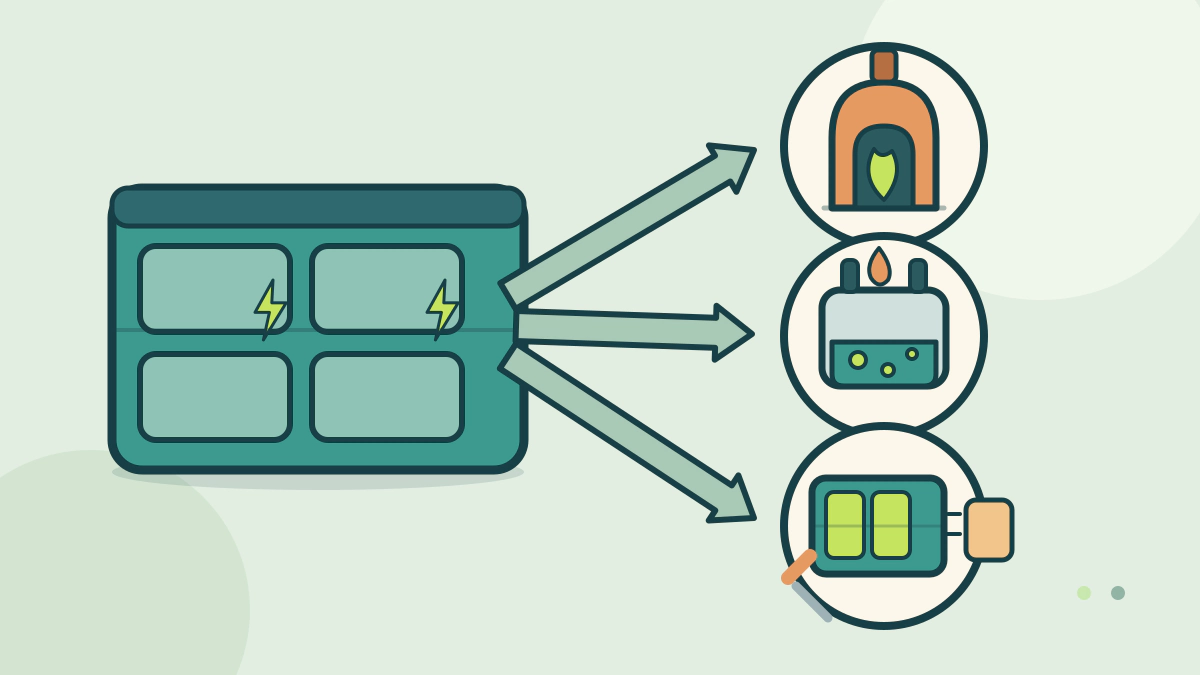
There are three main recovery routes: smelting, chemical leaching and direct recycling, and all three usually begin with mechanical shredding. The US Department of Energy calls them pyrometallurgy, hydrometallurgy and direct recycling, and places them at different stages of commercialization. See the AFDC battery overview.
Mechanical treatment is not a separate route. Disassembly, crushing, shredding and separation produce black mass, a mixed material that later steps process. AFDC treats that step as a major element of any recycling technology.
How a used pack becomes black mass
Collection comes first. A pack may reach a dealer or repair shop after a replacement, or an auto dismantler when the whole vehicle is scrapped. The EPA describes this path in its recycling overview.
Facilities may evaluate packs for repair or reuse before recycling. That can mean replacing a bad module or repurposing the pack for stationary storage.
Before shredding, batteries are discharged or otherwise managed to reduce fire risk. Shredding then separates black mass, copper and aluminum foils, separators, plastics, steel canisters and electrolyte.
Black mass has no industry standard. Its makeup varies with the batteries and the shredding process, and it may be exported for further processing. EPA notes wide variation in the material’s makeup and moisture content.
Smelting, leaching and direct recycling compared
| Method | What it does | Materials recovered | Commercial status |
|---|---|---|---|
| Pyrometallurgy (smelting) | High-temperature furnace treatment | Cobalt and nickel; lithium reports to slag | Operating at large scale |
| Hydrometallurgy (leaching) | Chemical dissolution of black mass | Cobalt, nickel, lithium and manganese possible | Factories expanding |
| Direct recycling | Preserves the cathode crystal structure | Cathode material for new cells | Smaller-scale trials |
| Mechanical pretreatment | Shredding and separation | Black mass, foils and plastics | Used across routes |
Smelting accepts mixed battery types, including lithium-ion and nickel-metal hydride. Organics, electrolyte and carbon anodes burn as fuel or reductant, and the process uses significant energy. AFDC adds that lithium ends up in slag, which is used as a concrete additive.
Leaching dissolves metals from black mass into salts that can become cathode precursors. AFDC says lower capital cost and flexibility explain why many companies are building leaching plants. EPA reports several US facilities in development.
Direct recycling keeps the cathode’s molecular structure instead of breaking it into separate metals. AFDC calls it potentially the most economically viable route. EPA describes it as smaller-scale experimentation. Those statements fit together: the economics look attractive, but deployed capacity is still limited.
Why recycling economics are harder than the chemistry
A recycling plant needs batteries. IEA says recycling today is dominated by manufacturing scrap, not end-of-life packs. Batteries sold in recent years mostly remain in use, creating roughly a 15-year lag before large volumes retire.
That mismatch has produced excess recycling capacity relative to available feedstock in some markets. IEA also estimates that China hosts more than 85% of global material-recovery capacity.
Chemistry changes the business case. LFP and sodium-ion packs contain materials with lower recovery value than nickel-rich cathodes. IEA says this may push recyclers toward toll-based models, where the recycler is paid for a service rather than earning profit from recovered metals.
Where second-life batteries fit
A used EV pack may still hold at least 70% of its initial capacity if it has not failed or been damaged, according to studies cited by AFDC. That leaves useful capacity for stationary or backup duty.
Second use delays recycling rather than replacing it. Costs include transport, testing, remanufacturing, certification and installation, and AFDC says the economics are still evolving.
IEA adds that a growing secondhand EV market keeps packs in vehicles longer and can move them to other regions. That can delay the feedstock that recyclers in Europe and North America expected.
What should an owner do with a retired EV battery?
Do not put a traction battery in household trash or a municipal recycling bin. EPA says lithium-ion batteries can start fires when damaged or crushed, and most discarded lithium-ion batteries are likely hazardous waste.
For a vehicle pack, EPA advises contacting the dealer, repair shop or salvage yard that handled the battery. Large packs may not be removable by an owner, and the manufacturer’s instructions govern handling.
An owner should not open, cut or probe a high-voltage pack. Ask the dealer or a qualified recycler about takeback, and check the battery warranty before assuming the pack has no value. A pack that still works may suit a buyer with lower range needs, and our guide to selling an EV with battery degradation covers that decision.
Recycling value is also one difference among many between battery types. Our LFP vs NMC comparison explains the chemistry tradeoffs, and the Future Mobility and Innovation hub collects related technology guides.
Frequently asked questions
Does every EV battery get recycled?
No. Collection and recycling systems are still developing, and many packs remain in vehicles or second-life use. IEA expects end-of-life batteries to become the main recycling feedstock only in the mid-2030s.
Is direct recycling better than smelting?
Direct recycling can preserve more of the cathode’s value and avoid high-temperature smelting. But EPA describes it as smaller-scale, while smelting operates at large scale today. The better route depends on chemistry, pack design and the receiving facility.
Why is black mass important?
Black mass concentrates the cathode and anode materials after shredding. Smelting and leaching usually process it, and its variable composition is one reason standardized battery design would help recycling.
Can an EV battery be reused before it is recycled?
Yes. AFDC and EPA both describe repair, resale and repurposing for stationary storage. Second use can extend the pack’s life, but testing, certification and liability costs affect whether it makes economic sense.