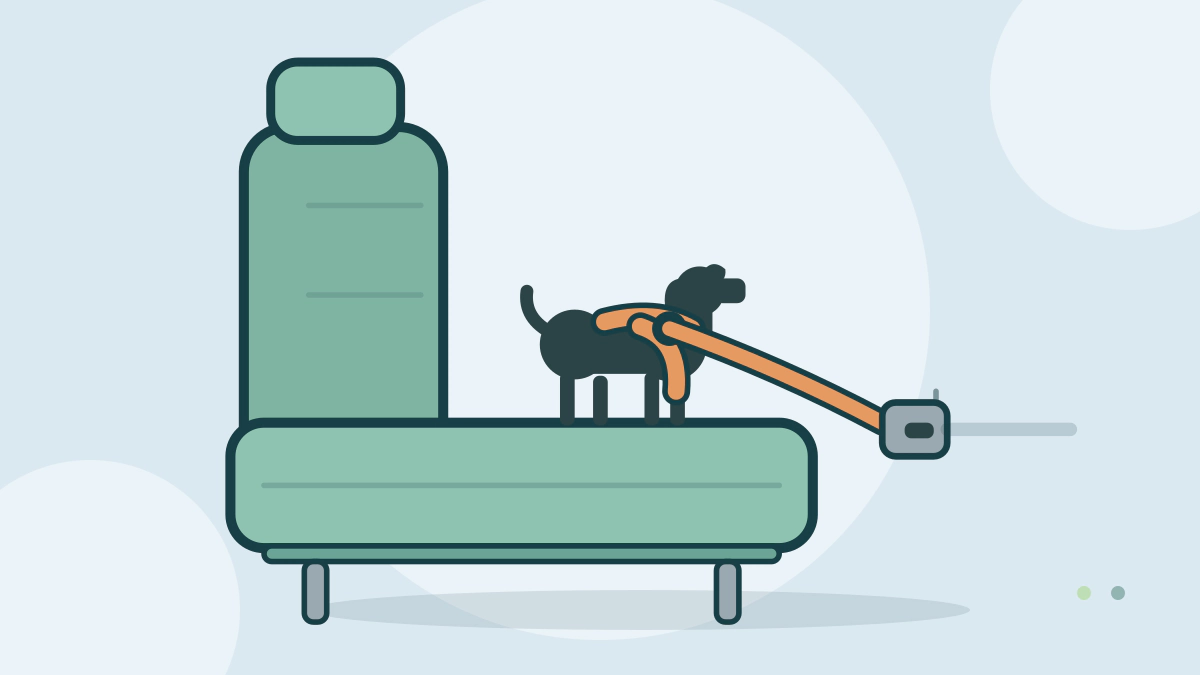
Restrain a dog in the back seat, skip the pickup bed, and manage heat and stops, using AVMA vehicle-safety and travel guidance for US drivers.
How should a dog ride in a car?
A dog should ride restrained in the back seat, clear of airbags, in a harness or crate that fits it and the vehicle. Leaving a dog loose, letting it sit on the driver’s lap, or carrying it in an open pickup bed all create risks that owners can avoid. The guidance here comes from AVMA’s pet safety in vehicles page and its advice for traveling with a dog or cat.
Pick a restraint that fits the dog and the trip
AVMA says a vehicle harness is not the same as a walking harness. Look for one made for car travel that works with the seat belt and holds the dog sitting upright rather than lying down. A crate or carrier should be big enough for the dog to stand up, turn around and lie down comfortably. Secure it so it cannot move, and place it as near the center of the vehicle as practical.
AVMA reports that kennels, carriers, harnesses and pet seat belts are sold without the standards or industry tests that apply to child restraints. Read the maker’s instructions and any published test results before you buy.
| Option | Where it works best | What to confirm |
|---|---|---|
| Vehicle harness | A dog that settles on a seat | It is made for car travel, works with the seat belt and keeps the dog upright |
| Crate or carrier | Small and medium dogs, or an SUV cargo area | The dog can stand, turn and lie down; the crate is secured and ventilated |
| Pickup-bed kennel | Only when the cab has no room | The kennel is secured, correctly sized and ventilated |
| Loose in the cabin | Nowhere | AVMA lists footwell, lap, airbag and ejection risks |
Why the back seat and the airbag matter
AVMA describes three ways a loose dog endangers the car. A small dog can crawl into the footwell and interfere with the brake or accelerator. A large dog leaning across the driver can block the view of the road. In a collision, an unrestrained dog can be crushed by a deploying airbag or thrown out of a window or windshield.
That is why AVMA says to keep dogs out of the passenger seat when the car has airbags, and never to let a dog sit on the driver’s lap.
Pickup beds and window rides
Driving with a dog loose in a pickup bed is dangerous and, AVMA says, illegal in many states. Debris can strike the dog, and a fall or jump can cause serious injury or death. A tether is not a simple fix: AVMA warns that it can tangle, injure or even choke the dog. If a dog must ride in a bed, AVMA calls for a secured, correctly sized and ventilated kennel.
A head out of the window is another risk that looks harmless. Airborne dirt and debris can injure the dog’s eyes, ears, nose and mouth. An abrupt stop or turn can throw the dog from the window.
Heat, cold and every stop
Never leave a dog alone in a parked vehicle. AVMA cites vehicle-heating research showing the cabin can rise about 20 degrees Fahrenheit in 10 minutes and almost 30 degrees in 20 minutes. At one hour it can be more than 40 degrees hotter than outside. Cracking the windows does not change that.
Cold is a hazard too. AVMA says a car on a chilly day is not much better than leaving a pet outdoors, and young, old, ill or thin dogs are especially vulnerable. On a rest stop, take turns with another adult or use a drive-through.
Before a long drive
Help the dog get used to the crate or harness first, then take short drives before a long one. AVMA also suggests a veterinary examination before travel, with attention to motion sickness and to clinics along the route.
For a trip across state lines or into another country, AVMA says a Certificate of Veterinary Inspection is generally needed within 30 days before non-air travel and within 10 days before air travel. Some destinations need months of preparation, so check the rules early.
After the trip, removing pet hair from upholstery is easier with the right method. If luggage shares the cargo area, securing luggage in an SUV keeps a heavy bag from sliding into the dog. More household-vehicle guidance sits in the Family, Teen and Accessible Vehicles hub.
Frequently asked questions
Can a dog ride in the front seat of a car?
AVMA says to keep dogs out of the passenger seat when the vehicle has airbags, because a deploying airbag can injure or kill a pet. The back seat, restrained, is the safer default. A dog should never sit on the driver’s lap.
Is a seat belt harness safe for a dog?
A vehicle harness is different from a walking harness, and AVMA recommends one designed for car travel that works with the seat belt. There is no federal standard or industry test for pet restraints, so check the maker’s fit limits and published test results rather than assuming the product is regulated.
Can a dog ride in the bed of a pickup truck?
AVMA says a loose dog in a pickup bed is dangerous and illegal in many states. If the dog must ride there, use a secured, correctly sized and ventilated kennel. A simple tether can tangle or choke the dog and is not a substitute for a kennel.
How long can a dog stay in a car?
Only while the dog is attended, and never in a parked vehicle. AVMA says the cabin can heat by about 20 degrees Fahrenheit in 10 minutes, even on a day that does not feel hot. In cold weather, young, old, ill and thin dogs are especially at risk.