Check an install the way NHTSA does: one inch of movement at the belt path, one attachment method, a top tether, approved add-ons and a snug harness.
What are the most common car seat installation mistakes?
A loose seat, a missing top tether, the wrong belt path, unapproved add-on products and a loose harness cover most of the errors NHTSA’s installation guidance is written to prevent. The fixes come from NHTSA’s installation tips and its step-by-step guides for forward-facing and rear-facing seats.
The one-inch test catches a loose install
NHTSA says a car seat should not move side to side or front to back more than 1 inch when you pull at the belt path. The location matters. Pulling the top of a forward-facing seat will move it because the tether has some give. Put a hand or knee into the seat, press down and tighten the belt or lower-anchor strap, then check again at the belt path. Recheck the install after a week.
Using the seat belt and the lower anchors together
NHTSA’s guidance is to install with either the lower anchors or the seat belt, never both. Pick the method the car seat maker specifies for your child’s weight.
The lower anchors also have a weight limit. NHTSA says the limit is on the seat’s warning label or installation diagram. If there is no label, subtract the seat’s weight from 65 pounds. Once the child passes that limit, reinstall with the seat belt and keep using the top tether.
The top tether, the belt path and the lock-off
NHTSA recommends always using the tether with a forward-facing seat, whether the seat is held by the seat belt or the lower anchors, as long as both the car seat and vehicle makers allow it. The tether limits forward head movement in a crash.
Tether anchors are not in the same place on every vehicle. NHTSA says sedans often have them on the rear shelf, while vans, pickups and SUVs may put them on the seatback, the floor or the ceiling. Read the owner’s manual so you do not clip onto a luggage tie-down by mistake.
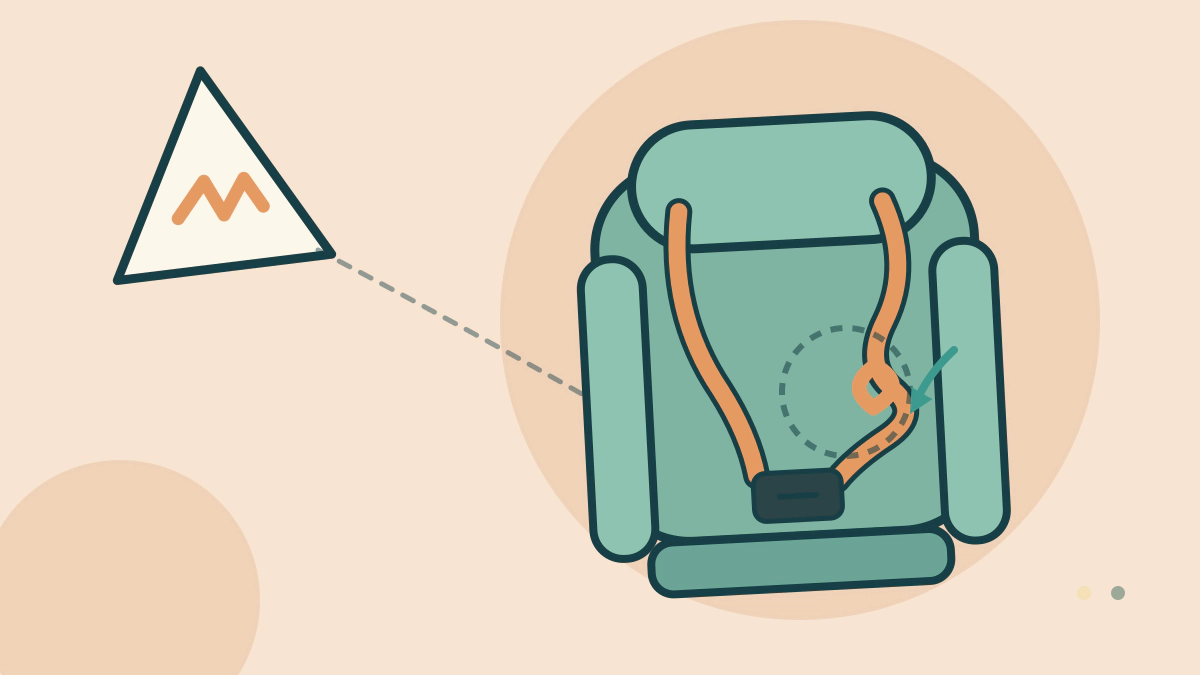
Thread the belt through the path marked for the direction the seat faces. NHTSA gives separate routes for forward-facing and rear-facing seats because the belt path changes with the seat’s position. A twisted belt or strap cannot spread the load, so straighten it before tightening.
Then lock the belt the way the vehicle manual describes, or use the car seat’s lock-off. NHTSA lists the vehicle’s seat-belt locking system and the car seat lock-off as the two ways to lock a seat belt install.
Aftermarket inserts, padding and bulky coats
NHTSA’s car seat glossary says aftermarket products are not recommended for use with car seats unless the car seat manufacturer makes them or allows them. That covers extra head supports, seat protectors, harness pads and thick mats. The seat was tested as sold, and an added layer can change the harness fit or how the seat sits on the vehicle cushion.
Clothing follows the same rule. Buckle the child into the harness first, then put coats or blankets over it. For a rear-facing baby who needs support, NHTSA allows small rolled blankets beside the shoulders and head. It does not allow thick padding under or behind the baby unless the car seat maker recommends it.
Harness routing and the chest clip
Rear-facing harness straps go through the slots at or below the child’s shoulders. Forward-facing straps go at or above, and some seats require the top slots. The chest clip sits at armpit level. The harness is snug when you cannot pinch extra material at the shoulder.
| NHTSA check | Common mistake | What good looks like |
|---|---|---|
| Movement at the belt path | Seat rocks more than an inch | Less than 1 inch side to side and front to back |
| Attachment method | Seat belt and lower anchors used together | One method, chosen from the seat manual |
| Top tether | Left hanging on a forward-facing seat | Connected to the correct tether anchor and tightened |
| Belt path | Belt routed through the wrong path or twisted | Correct path for the seat’s direction, webbing flat |
| Add-on products | Thick mat or insert the seat maker did not supply | Only what the seat maker supplies or allows |
| Harness | Loose, twisted or at the wrong slot height | Snug and flat, correct slots, chest clip at armpit level |
What to do when the install is not right
Try another seating position or the other attachment method the manual allows. NHTSA says certified technicians at inspection stations will check a seat free of charge in most cases. If the seat has been through a crash, check the replacement rules before reinstalling it. More restraint guidance sits in Car Safety and Recalls and the Family, Teen and Accessible Vehicles hub.
Frequently asked questions
How tight should a car seat be?
NHTSA’s test is movement at the belt path: no more than 1 inch side to side or front to back. Pulling somewhere else, such as the top of a forward-facing seat, is not the right check.
Should I use LATCH or the seat belt?
Use one, never both. NHTSA says either the lower anchors or the seat belt secures the seat, and the lower anchors have a weight limit. When the child passes that limit, switch to the seat belt and keep using the top tether.
Is a seat protector mat safe under a car seat?
Use one only if the car seat maker allows it. NHTSA’s glossary says aftermarket products are not recommended unless the car seat manufacturer makes or permits them.
Can I use a rolled towel for a newborn?
NHTSA allows small rolled blankets beside a baby’s shoulders and head when support is needed. It does not allow thick padding under or behind the baby unless the seat maker recommends it. Check the seat manual and the recline indicator.