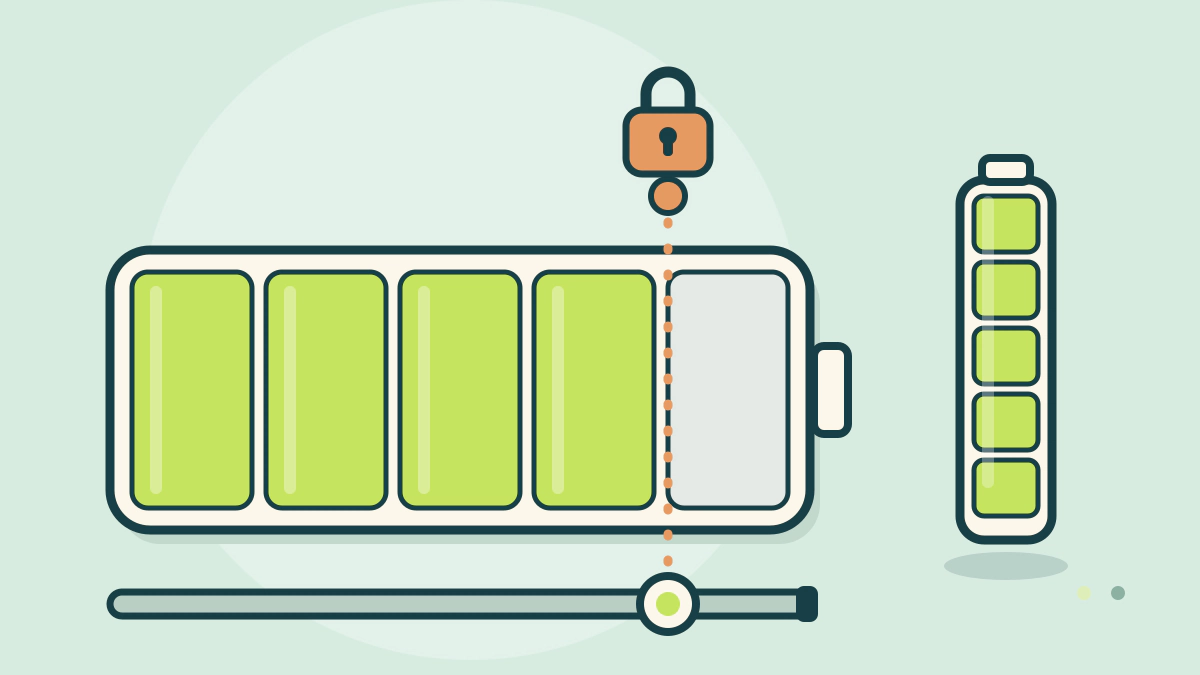
Compare what Ford and Kia manuals actually say about charge limits, what EPA says about fast charging near full, and when a full battery is the right call.
Should you charge your EV to 100 percent?
For everyday driving, use the daily charge limit your own manufacturer specifies, which is often below 100%, and save a full charge for days when you need the range. The number is not universal. Ford tells owners to set the maximum charge level to no more than 90%; Kia’s EV6 manual gives a selectable target without naming one daily percentage. Applying one brand’s rule to another is guesswork.
Why the last part of a charge behaves differently
Two issues get mixed together here: time and battery wear.
On a DC fast charger, EPA says the rate is higher when the battery is closer to empty and slows as it approaches full. EPA adds that charging beyond 80% tends to be significantly slower and can sometimes double the time spent charging to reach 100%.
EPA’s consumer tips page puts the reason next to the time cost. It says EVs charge quickly to about 80%, then slow significantly to maintain the long-term health of the batteries.
That is about DC fast charging, not a rule that an overnight home charge to 100% will damage a pack.
What Ford tells owners to set
Ford’s owner support instructions walk through setting a maximum charge level on the SYNC screen at a saved charging location. The page ends with a specific note: Ford recommends setting the Max Charge Level to no more than 90%, to prolong the EV’s battery life.
That is one manufacturer’s recommendation, stated for its own vehicles. It is not evidence that 90% is correct for every battery chemistry, pack design or model year.
What the Kia EV6 manual does and does not say
Kia’s EV6 owner’s manual lists a charging limit under EV settings, separately for AC and DC. The target level is selectable in 10% steps; if it is below the current charge, the car will not charge.
The manual does not attach a recommended daily percentage to that control. It gives a different piece of battery advice instead: performance and durability can deteriorate if a DC charger is used constantly, so DC charging should be minimised to help prolong high-voltage battery life (charging information section).
Two makers, two emphases: Ford states a ceiling, while Kia is explicit about DC frequency and leaves the target to the owner. Both point you at their own settings.
What federal guidance says about a full battery
The DOE Alternative Fuels Data Center says EV batteries have a limited number of charging cycles and directs owners to the dealer and the owner’s manual for battery life and warranty information. It does not publish one recommended daily percentage.
FuelEconomy.gov says to check the owner’s manual for the best charging advice for your vehicle, because these vehicles vary significantly in how they manage energy.
The federal message is consistent: the manual decides. Where a government page mentions 80%, as EPA does for DC fast charging, it concerns fast-charging time and battery health.
When charging to 100% is the right choice
- A long drive tomorrow, especially a first leg with limited charging stops.
- A day of errands or a commute that exceeds the range available at a lower limit.
- Cold weather, which reduces range, if the manual permits a higher target.
- A shared car, where the next driver may not plug in before leaving.
The DOE consumer guide says it is best to ensure the battery is fully charged before leaving on a long trip and to plan charging stops along the route. That is trip planning, not a daily habit.
Timing matters too: a car charged high at home may sit full for hours. Whether that matters depends on chemistry and manufacturer guidance, covered in what causes EV battery degradation.
A routine that follows the manual
| Situation | Setting to consider | Reason |
|---|---|---|
| Normal commuting | The maker’s daily limit (Ford’s published example: no more than 90%) | Reduces time spent at a high state of charge |
| Day before a long trip | 100%, if the manual allows it | Range buffer for the first leg |
| DC fast charging en route | Often stop around 80% | EPA says charging slows beyond 80% and can double the time |
| A car with a selectable limit | Check the manual for the number, not another brand’s | Kia exposes 10% steps without one stated daily figure |
The table is a decision aid, not a substitute for the manual; the percentages come from the Ford guidance and EPA advice cited above. For fast-charging mechanics, see why DC fast charging slows near full. Chemistry also changes the advice, so LFP and NMC packs are not treated identically. The EV Charging hub collects the related guides.
Frequently asked questions
Does one charge to 100% ruin an EV battery?
No. Battery wear is gradual and depends on time, temperature, chemistry and how often the pack sits at a high state of charge. A full charge before a trip is normal use.
Is 80% the universal recommendation?
No. EPA’s 80% figure concerns DC fast-charging time and battery health, while Ford’s published ceiling is 90% and Kia’s manual offers a selectable limit without one recommended daily percentage. Use your own manual.
Should I charge to 100% before a long trip?
Usually yes, if the manual allows it and you need the range. The DOE consumer guide advises a full charge before a long trip and planning stops along the way. Return to your normal daily limit afterwards.
Does a lower charge limit cost me range every day?
It does, by design. A 90% limit gives up roughly a tenth of usable capacity, which is simple arithmetic. If that margin still covers your daily driving, the limit costs nothing in practice. If it does not, charge higher or plug in more often.