Learn how front-wheel drive behaves in snow, why tires decide most of the grip, and how to start, climb and brake without a skid.
What front-wheel drive changes in snow
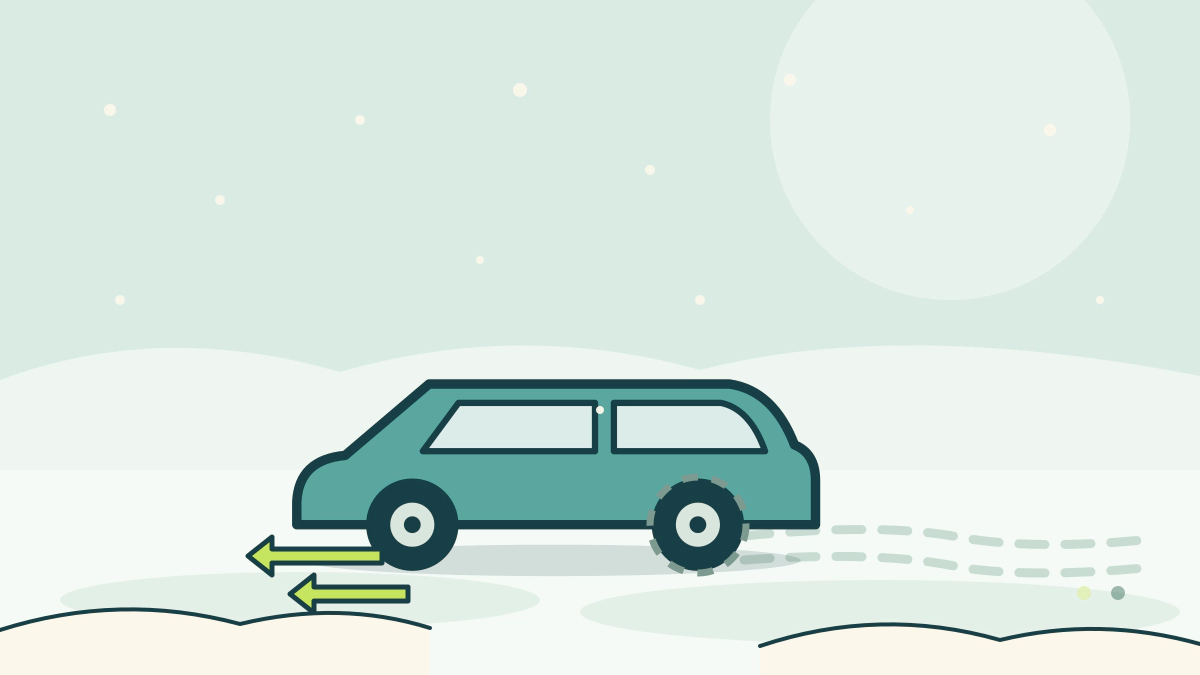
A front-wheel-drive car sends engine power to the front wheels, which also steer, so the front tires have to do two jobs at once. The layout decides which wheels receive power. It does not change how much grip the tires have on snow.
The tire is the part that touches the road. The Colorado Department of Transportation publishes a stopping-distance comparison for a car traveling 60 mph on snow. It lists more than 800 feet for summer tires, 669 feet for all-season tires and 310 feet for winter tires.
Start, steer and brake as separate actions
The Colorado DOT says that in winter weather you should accelerate, turn or brake, but only one of those at a time. Doing two at once can cause a slide or a spin.
The Kia 2026 K5 owner’s manual lists speeding, rapid acceleration, sudden brake applications and sharp turns as potentially very hazardous on snowy or icy roads. It also says to keep a sufficient distance from the vehicle ahead and to apply the brake gently.
Front-wheel drive does not exempt a driver from that advice. A hard squeeze of the accelerator can spin the front tires before the car moves.
If the car has antilock brakes, NHTSA says to apply firm, continuous pressure and let the system work. Without ABS, pump the brakes if the wheels start to lock.
Pick tires for the surface, not the badge
| Tire type | CDOT stopping distance from 60 mph on snow | What the marking tells you |
|---|---|---|
| Summer tires | More than 800 feet | Not intended for snow or ice |
| All-season tires, non-mud-and-snow | 669 feet | A compromise for mixed conditions |
| Winter tires | 310 feet | Mountain-snowflake icon plus M+S |
The Colorado DOT says winter tires are the safest choice for snowy and icy conditions, all-weather tires are also considered safe, and mud-and-snow tires are acceptable only in light snow.
Mount winter tires on all four wheels. The Kia manual says this balances handling, warns that they should match the original size and load range, and notes that snow tires may grip less on dry roads.
Colorado lists 3/16 of an inch as the minimum tread depth for tires that meet its traction law. Our guide to checking tire tread depth shows how to measure it, and the winter versus all-season tire guide explains the markings.
Climb and descend without losing the front wheels
A front-drive car climbs better if it keeps momentum. The Colorado DOT advises keeping momentum uphill to avoid getting stuck; stopping halfway and restarting is harder.
Downhill, Colorado DOT suggests a lower gear when possible and gentle taps on the brake. That limits brake heat and helps keep traction, the agency says.
Chains and traction devices on a front-drive car
Traction devices follow the drive wheels. Caltrans says chains must be installed on the drive wheels and that drivers should know whether their vehicle is front or rear wheel drive. On a front-wheel-drive car, that means the front axle.
The Kia manual tells drivers to install tire chains on the front tires. It notes that chains provide greater driving force but do not prevent side skids, so they are not a substitute for slowing down. It also says to drive less than 20 mph or the chain manufacturer’s recommended limit, whichever is lower, and to check state law before fitting chains.
Caltrans says to stay at least four car lengths back from snow removal equipment.
Clear the car and set up for low light
The Colorado DOT says to take extra time to clear the car of snow and ice before leaving.
At night, keep the headlight beams low. Colorado DOT warns that high beams can amplify the appearance of falling snow and reduce visibility.
Inside the car, NHTSA suggests checking tire pressure when cold and carrying a scraper, shovel, sand or kitty litter, jumper cables, a flashlight, blankets and water.
Know when front-wheel drive is not the answer
The Iowa DOT advises drivers to adjust speed for conditions and not to use cruise control on slushy roads or patches of packed snow and ice.
NHTSA says to check the weather and traffic reports before leaving and to consider postponing non-essential travel when roads are not in good shape. If the surface is glazed rather than snowy, read our guide to black ice driving safety. The winter car maintenance checklist covers the service work, and the Driving Guides hub has more weather topics.
Frequently asked questions
Does front-wheel drive make a car safe in snow?
Not by itself. Front-wheel drive decides which wheels receive power, not how much grip the tires have. The Colorado DOT’s comparison shows winter tires stopping in about 310 feet from 60 mph on snow, against 669 feet for all-season tires.
Should chains go on the front wheels of a front-wheel-drive car?
Yes, because traction devices belong on the drive wheels. Caltrans says chains must be installed on the drive wheels, and the Kia owner’s manual tells drivers to install them on the front tires. Check your state’s rules first, because chain requirements and restrictions vary.
Can I use cruise control on a snowy road?
No. The Iowa DOT advises drivers to adjust speed for conditions and not to use cruise control on slushy roads or patches of packed snow and ice. Cruise control can add power when the wheels lose grip, which is the opposite of what you want.
How fast can I drive with tire chains?
The Kia owner’s manual says to drive less than 20 mph or the chain manufacturer’s recommended limit, whichever is lower. Caltrans adds that chain control areas can change rapidly, so follow the posted signs and the chain instructions for your vehicle.