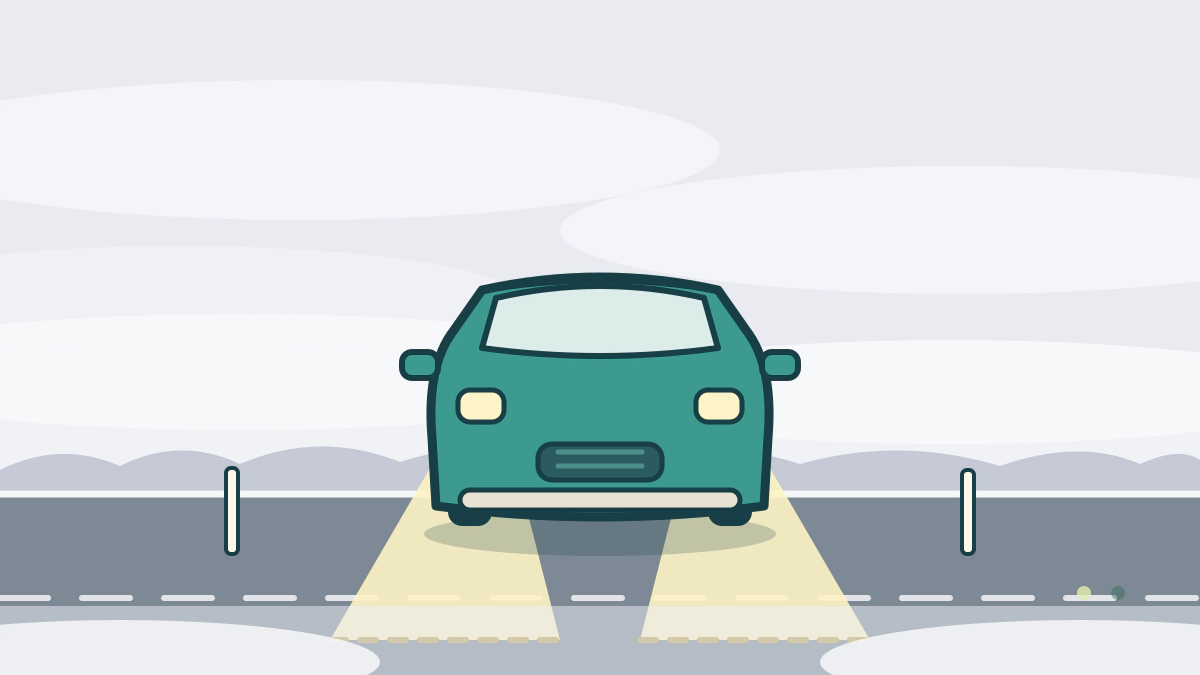
Use low beams, set speed by the distance you can see and know when to pull off the road, with guidance from the National Weather Service.
Set speed by what you can see
Slow down, turn on your low-beam headlights and leave a larger gap than you would in clear weather. The National Weather Service gives that advice for fog, and it adds two more instructions: allow extra time to reach your destination, and leave plenty of distance so you can handle a sudden stop.
Fog removes the margin that ordinary driving depends on. You see hazards later, and the vehicle ahead may slow without warning.
The Colorado Department of Transportation states the general principle plainly: driving too fast for conditions causes most crashes. In fog, conditions are the visible distance, not the posted limit.
No single speed fits every fog bank. If the road disappears before you could stop, slow down further or leave the road at the next safe place.
Aim low beams and hold your lane
Headlight choice matters in fog. The National Weather Service says to use low beams because they also switch on the taillights, making your car visible to traffic behind you. It says to use fog lights if the vehicle has them.
High beams make the problem worse. The service explains that high beams cause glare, which makes it harder to see what is ahead. Colorado DOT gives the same warning for snow at night: high beams can amplify the appearance of falling snow and reduce visibility.
Aim your eyes at the road lines. The National Weather Service advises following the lines on the road to stay in the proper lane.
What the advisories mean
| Alert or condition | What the National Weather Service reports | What it means for a driver |
|---|---|---|
| Dense Fog Advisory | Visibilities frequently drop to one-quarter of a mile or less | Travel is difficult; take extra caution or avoid driving if possible |
| Freezing Fog Advisory | Surface temperatures at or below freezing; visibilities typically at or below one mile | Fog plus ice; treat the road as slippery |
| Fog at night | The service advises low beams; high beams add glare | Slow further and expect less contrast |
| Near-zero visibility | The service says to pull into a safe location and stop | Do not keep rolling and hope to see the next marker |
Fog can thicken between exits, and a patch can be denser than the forecast for the surrounding area.
If you must stop in fog
Pulling off is safer than stopping in a lane, but only if you do it completely. The National Weather Service says that in extremely dense fog with visibility near zero, the best course is to turn on the hazard lights and pull into a safe location such as a business parking lot.
If there is no lot or driveway, the service says to pull as far off the road as possible. Once stopped, turn off all lights except the hazard flashers, set the emergency brake, and take your foot off the brake pedal. That last step matters: with your foot on the brake, the tail lamps stay lit and another driver may not realize your car is stopped.
If you carry warning devices, NHTSA lists flares or emergency markers among the items worth keeping in the vehicle.
Prepare the car and the route
Visibility starts at the glass. Caltrans advises keeping the windshield and windows clear and stopping at a safe turnout to use a scraper when needed. It also puts wipers, the defroster and the heater on the pre-winter check list, and suggests washer fluid rated for cold weather so the windshield does not ice over.
Check the forecast before you leave. NHTSA recommends checking local weather and traffic reports, and it says to consider postponing non-essential travel when conditions are poor. For a longer trip, review the route and tell someone your route and arrival time.
The winter car maintenance checklist covers the service items, and the Driving Guides hub has more weather topics.
Freezing fog is also an ice problem
Fog is not always just a visibility problem. The National Weather Service explains that when surface temperatures are at or below freezing, the tiny liquid droplets in fog can freeze instantly on roads, vehicles, tree branches and sidewalks. It warns that freezing fog can cause black ice on roadways.
That changes the driving task. Slow down more than you would for visibility alone, and avoid sudden braking or steering. Our guide to black ice driving safety explains where the glaze forms first and how antilock brakes should be used.
If freezing fog is common where you drive, the winter versus all-season tire guide explains the mountain-snowflake marking and why compound and tread matter in cold weather.
Frequently asked questions
Should I use high beams in fog?
No. The National Weather Service says high beams cause glare that makes it harder to see the road ahead. Use low beams, which also turn on the taillights, and use fog lights if your vehicle has them.
What does a Dense Fog Advisory mean?
It means widespread dense fog has developed and visibilities frequently drop to one-quarter of a mile or less, according to the National Weather Service. The service says travel is difficult and advises extra caution or avoiding a drive if possible.
Where should I stop if fog gets too thick?
Turn on the hazard lights and pull into a safe place such as a parking lot. If none is available, pull as far off the road as possible, turn off every light except the hazards, set the emergency brake and take your foot off the brake pedal.
Does fog mean the road is icy?
Not always. Fog alone does not freeze, but freezing fog forms when surface temperatures are at or below freezing. The National Weather Service says the droplets can freeze on roads and create black ice, so slow down and treat the surface as slippery.