See which driving habits add heat and wear to pads and rotors, what owner's manuals warn against, and how to brake with less wasted energy.
Which driving habits wear brakes fastest?
The habits that wear brakes fastest are the ones that add unnecessary heat: resting a foot on the pedal, braking late and hard, and holding the brakes down a long descent. Brakes are a normal wear item, and some wear cannot be avoided. The avoidable part comes from how the pedal is used.
The Car Care Council says several factors affect brake wear, including driving habits, operating conditions, vehicle type and the quality of the brake lining material (Car Care Council). It treats brakes as a normal wear item and recommends at least one inspection a year.
Resting a foot on the brake pedal
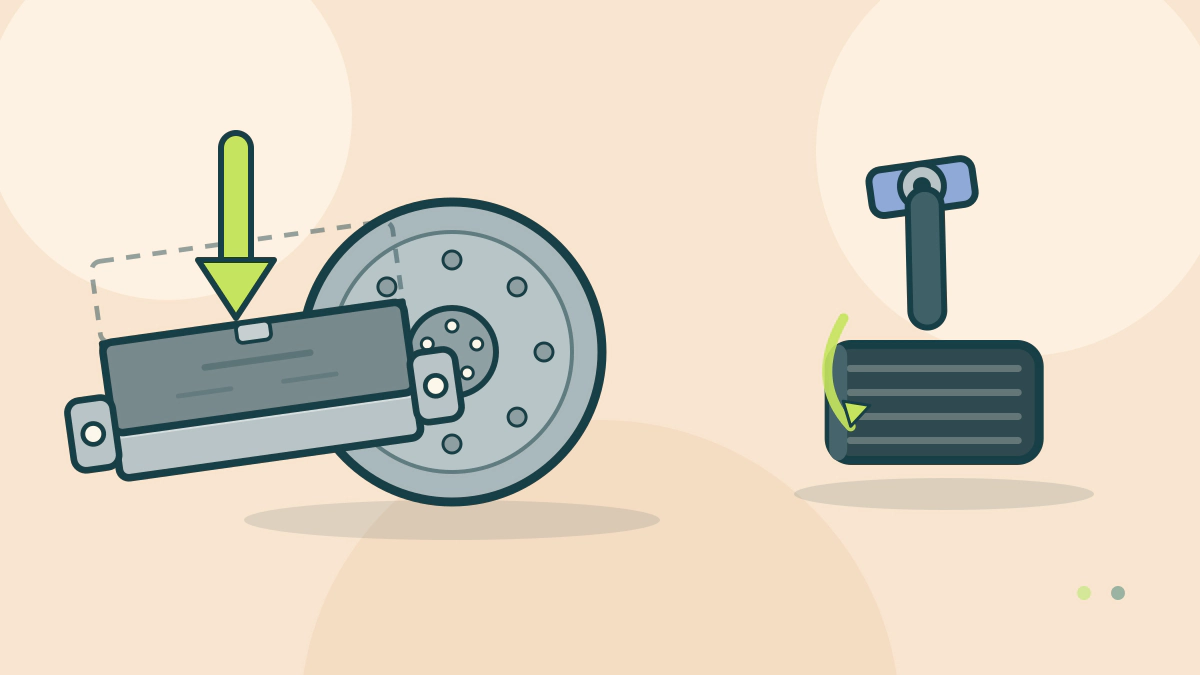
The 2025 Hyundai owner’s manual is direct: do not drive with your foot resting on the brake pedal. It says this creates abnormally high brake temperatures, excessive brake lining and pad wear, and longer stopping distances (Hyundai manual). The 2024 Kia owner’s manual uses similar words: abnormally high brake temperatures and excessive brake lining and pad wear (Kia manual).
A driver may do this without meaning to. A left foot held over the pedal, or a right foot that stays on it between stops, keeps the pads in light contact. The result is heat with no useful stopping.
Braking late instead of easing off early
Bendix, a brake manufacturer, says hard driving with repeated heavy braking can quickly raise brake pad temperatures. It says the heat can break down the friction material, increase wear rates and lead to brake fade (Bendix). Braking on long descents, especially when loaded or towing, has the same effect.
Late braking compresses the same speed change into a shorter distance. That puts more energy into the pads and rotors in less time. Looking further ahead and lifting off sooner spreads the work over a longer distance, so the brakes do less of it.
Holding the brakes down a long hill
Both owner’s manuals warn against continuous brake application on a long or steep descent. The Kia manual says to shift to a lower gear and warns that continuous braking can overheat the brakes and cause a temporary loss of braking performance (Kia manual). The Hyundai manual gives the same warning and, in the electrified model it covers, says to raise the regeneration level with the paddle shifter (Hyundai manual).
The right method depends on the vehicle. A manual transmission, an automatic with a manual mode, and an electric drive with regeneration all differ. Use the procedure in your owner’s manual, not a generic gear choice.
| Habit | What it does to the brakes | What to do instead |
|---|---|---|
| Resting a foot on the pedal | Keeps light contact, adds heat and pad wear | Keep the foot off unless stopping |
| Braking late and hard | Raises pad temperature quickly | Lift off earlier and brake progressively |
| Holding the pedal downhill | Can overheat the brakes and cause fade | Use the manual’s lower-gear or regeneration method |
| Ignoring a brake noise | May let a worn pad reach the rotor | Have the system inspected |
| Skipping inspections | Misses wear that the pedal does not show | Follow the annual check and the manual’s schedule |
When the habit is not the whole story
Bendix says pads should wear evenly. Uneven wear can point to a caliper that does not retract, a sticking slide pin or another hardware problem, not just driving style (Bendix). A pad that drags will wear faster no matter how smoothly the car is driven.
The Car Care Council lists warning signs that should prompt an inspection: pulling to one side, odd noises when braking, an illuminated brake warning light, grabbing, a low or hard pedal, vibration and squealing (Car Care Council). It also warns against letting the brakes reach the metal-to-metal point.
What normal braking looks like
Smooth braking is not the same as never using the brakes. The pedal still has to stop the car. The difference is that the driver plans the stop, uses one firm application rather than a series of late stabs, and lets the car slow before the last part of the stop.
The Car Care Council recommends an annual brake check that includes lining wear, fluid level, rotor thickness, hoses and lines, warning lights, and a test drive. That inspection is how you learn whether a habit is costing you pads. For the wear question in general, see how long brake pads last. For noise, see squealing brakes: when to worry. The Driving Guides hub has more everyday driving guidance.
Frequently asked questions
Does riding the brakes really cause damage?
Yes. The Hyundai and Kia manuals say a foot resting on the pedal creates abnormally high temperatures and excessive pad wear. The Hyundai manual adds that stopping distances increase. Continuous application downhill can overheat the brakes and temporarily reduce their performance.
Is engine braking bad for the car?
The owner’s manuals reviewed here instruct drivers to shift to a lower gear on long or steep descents, so the engine can help control speed. The correct method varies by transmission and powertrain. Use the procedure for your vehicle in its owner’s manual.
Do brakes wear faster in city traffic?
The Car Care Council lists operating conditions as one factor in brake wear, alongside driving habits, vehicle type and lining material. More stops mean more brake use. The council does not publish a universal mileage figure, and this guide does not invent one.
How do I know if a habit is causing uneven wear?
Bendix says uneven pad wear can indicate a caliper that does not retract or a sticking slide pin. An inspection can measure lining thickness and check how the calipers and hardware are working. Ask for the measurements rather than a general description.