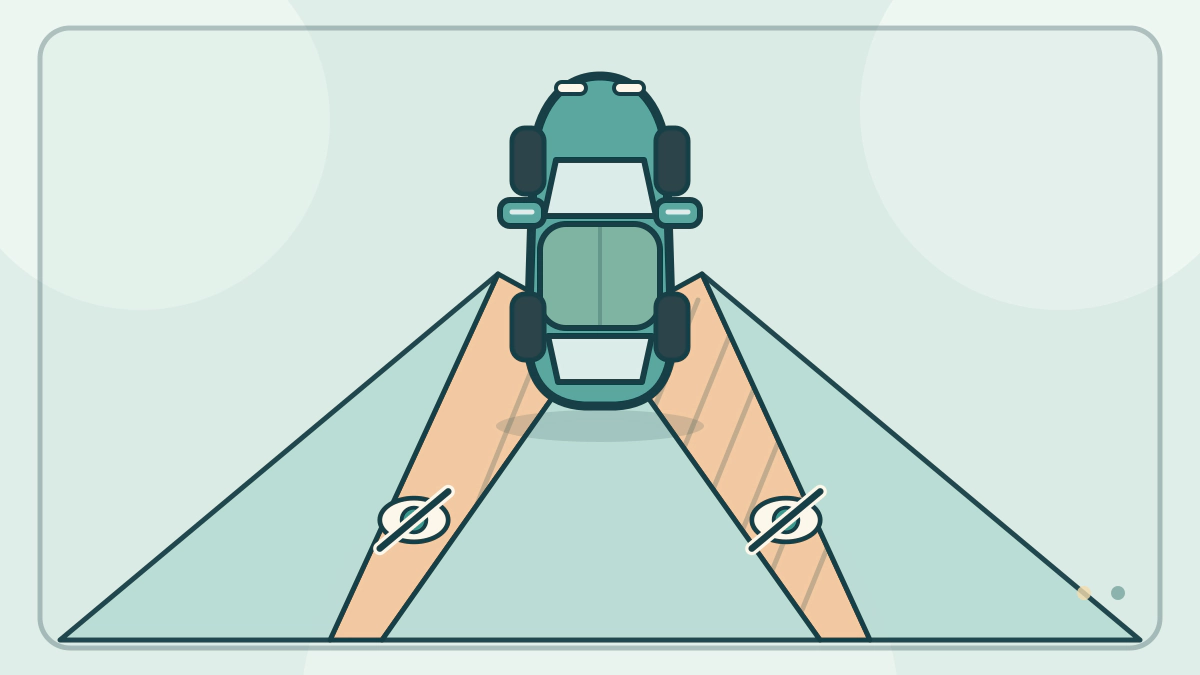
Set the inside mirror to frame the rear window and the outside mirrors to show only a sliver of the car, then check blind spots yourself.
How should you set and use your car mirrors?
Set the inside mirror to frame the rear window, set each outside mirror so only a thin edge of your own car is visible, and still look over your shoulder before a lane change. The settings shrink the blind zones beside the car. They do not remove the need to check.
The South Carolina Driver’s License Manual calls the inside mirror the primary mirror for viewing the rear (SCDMV). NHTSA’s current blind-spot flyer explains the outside-mirror positions and the limits of what they show (NHTSA).
Adjust the seat first, then the inside mirror
The SCDMV manual says to sit upright with your back against the seat and your feet on the floor. Set the seat and mirrors before you start driving, not while the car is moving.
The manual says the rearview mirror should frame the rear window. You should see the traffic flow behind the car, not your own face, the ceiling or the back seat. If the mirror has a day/night position, set it for the time of day you are driving.
Where the outside mirrors should point
The SCDMV manual describes enhanced mirror settings. Rest your head against the closed driver’s window, then move the left outside mirror until the rear edge of the car barely shows. Lean to the right until your head is under the inside mirror or above the center console, then set the right mirror until the right edge barely shows.
NHTSA gives the same head positions. It says to adjust the driver’s outside mirror so you can just see the left side of the vehicle, and the passenger’s mirror so you can just see the right side. Adjusting the mirrors slightly outward from the vehicle shows more of the roadway, according to the flyer.
| Mirror | Head position for adjustment | What it should show |
|---|---|---|
| Inside | Normal seated position | The rear window, framed, with traffic behind |
| Driver’s outside | Against the driver’s window | A thin edge of the car’s left side |
| Passenger’s outside | Middle of the car | A thin edge of the car’s right side |
What changes, and what does not
With the old setting, the outside mirrors show the sides of the car and leave blind zones that can hide a vehicle. NHTSA’s 2011 fact sheet calls that the blindzone setting. Turning the mirrors outward moves the view into those zones (NHTSA fact sheet).
The SCDMV manual says you will not see the left and right sides of the car in normal driving after the change. It says the setting adds 12 to 16 degrees of viewing area on each side. NHTSA’s 2025 flyer says the remaining blind spots along the sides will not be large enough to hide a vehicle.
That is not the same as a clear lane. The 2025 flyer still tells drivers to take a moment to look over the shoulder before changing lanes. The SCDMV manual also says to check blind spots by turning your head and looking over your shoulder.
Use a passing car to check the setting
The 2011 NHTSA fact sheet offers a simple test. From your normal driving position, watch a car pass. It should appear in the outside mirror before it leaves the inside mirror. It should then appear in your peripheral vision before it leaves the outside mirror (NHTSA fact sheet).
The same fact sheet says the enhanced setting made a shoulder check unnecessary. NHTSA’s 2025 flyer does not repeat that claim and still asks for a shoulder check. Treat the older sheet as a way to test coverage, not as permission to skip the look.
Mirrors while driving, backing and at night
Use the mirrors to check traffic behind you when you slow down, stop, change lanes or enter an intersection. The SCDMV manual lists those situations. It also says to check the mirrors while backing up, but warns that they do not show the area immediately behind the vehicle. If the car has a rearview camera, the manual says to check it as well.
At night, the 2011 fact sheet says the enhanced setting reduces glare from outside mirrors because a following car’s headlamps stay out of the mirror until the car is close.
For the technology that watches the same space, see why blind-spot monitoring cannot replace mirror checks. For a low-speed skill that depends on mirror reference points, see how to parallel park step by step. The Driving Guides hub covers the rest of the everyday skills.
Frequently asked questions
Should the outside mirrors show the side of my car?
Only a thin edge. The SCDMV enhanced setting has the rear edge of the car barely visible. A setting that shows most of the car’s side repeats what the inside mirror already covers and leaves larger blind zones.
Do I still need a shoulder check with the mirrors set this way?
Yes. The 2025 NHTSA flyer says to look over your shoulder before changing lanes even with enhanced settings. The older fact sheet’s no-shoulder-check advice is not repeated in the current guidance.
Why can’t I see the area directly behind my car?
The SCDMV manual says mirrors do not show the area immediately behind the vehicle. Use the mirrors and a rearview camera if you have one, and check the space directly when you can do so safely.
How often should I reset the mirrors?
Reset them whenever the seat or a mirror has moved, and check them before each drive. The SCDMV manual says to adjust the seat and mirrors before you start to drive. Two drivers who share a car will usually need different settings.