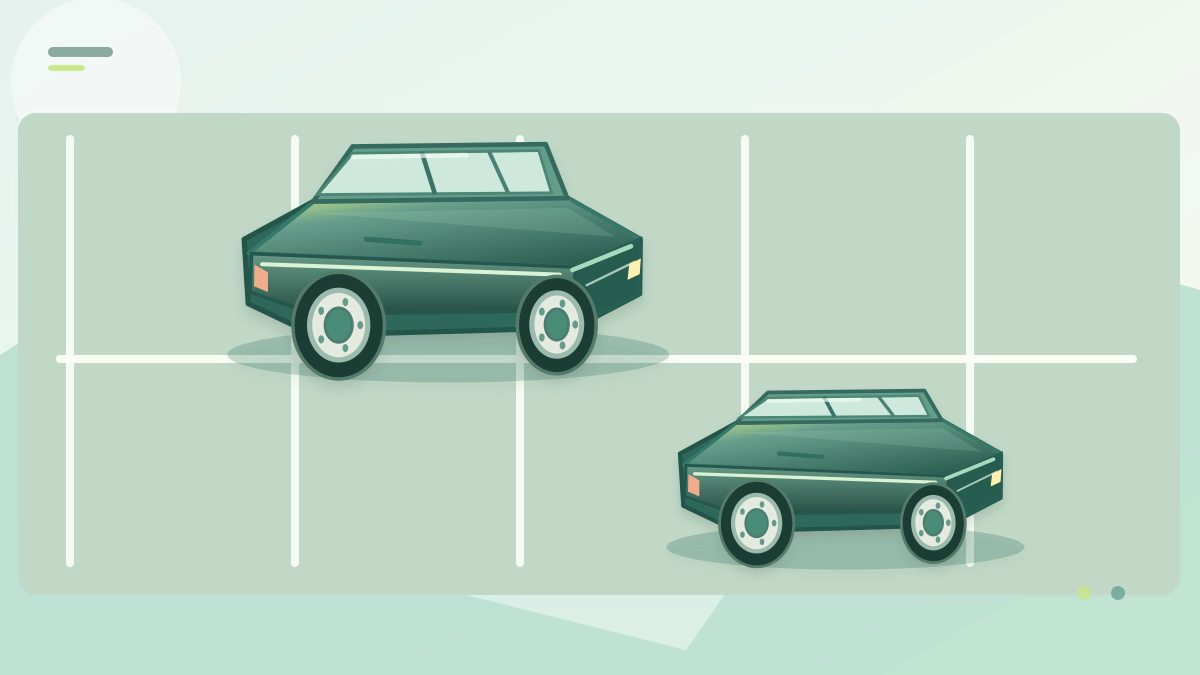
Parallel parking is a low-speed positioning skill that improves with consistent reference points, careful observations and practice in a safe location.
Choose a suitable space
Find a legal parking space long enough for your vehicle with room to maneuver.
Check signs and local restrictions.
Signal appropriately and watch for pedestrians, cyclists and moving traffic.
The exact turning reference points depend on your car’s size and steering geometry.
Position the car
Pull alongside the front vehicle with a safe lateral gap, then check your surroundings again.
Shift into reverse only when your path is clear.
Back slowly while turning toward the curb as your vehicle’s rear enters the space, checking both front and rear clearance.
Straighten and center
As the car rotates into position, unwind or reverse your steering input to align with the curb.
Stop and reposition as needed rather than forcing the vehicle into a tight spot.
Avoid contacting the curb with your tires or wheels and leave adequate space for neighboring cars to exit.
Practice safely
Practice in an empty authorized lot with cones or markers before attempting busy streets.
Learn the dimensions and sightlines of your specific car.
Follow your state driving handbook; this overview is not a substitute for professional driving instruction.
A repeatable low-speed sequence
- Signal, scan mirrors and blind spots, and choose a space you can enter legally without blocking a crosswalk, driveway or hydrant.
- Pull alongside the vehicle in front of the space at a safe, practical gap. Align in accordance with the method taught in your state’s driver manual and suitable for your vehicle.
- Check continuously for pedestrians, cyclists and approaching traffic. Reverse very slowly while steering toward the curb, using actual visual checks rather than relying only on the camera.
- When the vehicle’s angle allows, steer back toward straight, pause and re-check clearance; then counter-steer to bring the front into the space.
- Finish roughly parallel to the curb with enough room for both neighboring vehicles to leave. Stop and restart the maneuver if clearance is uncertain.
No universal steering angle or wheel-turn count works on every car.
Wheelbase, turning radius, camera orientation, curb shape and the cars beside you all matter.
Quick maneuver checklist
| Step | Safety check | Your next move |
|---|---|---|
| Prepare | Space is legal and clear of road users | Signal and position alongside the vehicle ahead |
| Enter | Check mirrors, blind spots and pedestrians | Reverse slowly while turning into the space |
| Straighten | Verify front and rear clearance | Counter-steer gradually and adjust |
| Finish | Vehicle is legal, parallel and safely parked | Set parking brake as appropriate; check before opening door |
Common mistakes to avoid
- Fixating on the backup camera instead of continuously looking around.
- Steering before checking cyclists approaching from behind.
- Reversing too quickly and trying to correct without stopping.
- Mounting the curb, which can damage tires or wheels and may endanger pedestrians.
- Practicing on busy streets before learning with cones or an instructor.
Learn the vehicle’s own reference points
Practice in a legally accessible, quiet location with markers before trying a busy curb.
Steering timing differs with wheelbase, turning radius, seating position and visibility.
Use the method taught by your state’s driver handbook or instructor rather than memorizing a universal number of wheel turns.
Begin by checking that the space is long enough for the vehicle and that you can enter without crossing a sidewalk, blocking access or creating risk for cyclists.
Signal and pause where it is legal and safe.
Check mirrors and blind spots before reversing, and repeat those checks throughout the maneuver.
Make corrections deliberately
Back into the space at a controlled pace and adjust steering as the rear approaches the curb.
Recheck front clearance as the car turns.
If the angle is poor, stop and reposition while the path is clear instead of trying to force the car into a shrinking gap.
The rearview camera can show useful detail but may distort distance and miss objects outside its view.
When the car is nearly parallel, straighten the wheels and move slightly forward or backward to create safe clearance for adjacent vehicles.
Apply the parking brake as appropriate, check for traffic before opening the door and respect local curb-distance and parking restrictions.
Practice the situations that create errors
Try different legal space sizes with cones, recognizing that the available margin changes how much adjustment is needed.
Practice stopping as soon as a pedestrian enters the area, not merely continuing because sensors remain silent.
Learn to judge both front and rear overhang, not only the rear wheels.
A calm, repeatable sequence matters more than completing the maneuver in one continuous motion.
On a driving test, follow the specific state examiner’s instructions and handbook rules; this general guide is a preparation aid, not a national scoring standard.
Common questions
Can you rely entirely on parking sensors?
No. Sensors have limitations and may not detect all objects. They supplement the driver’s observations.
How close to the curb is required?
Laws and road-test expectations vary by jurisdiction. Check the current state driver’s manual and posted rules for your location; avoid a fabricated nationwide distance.