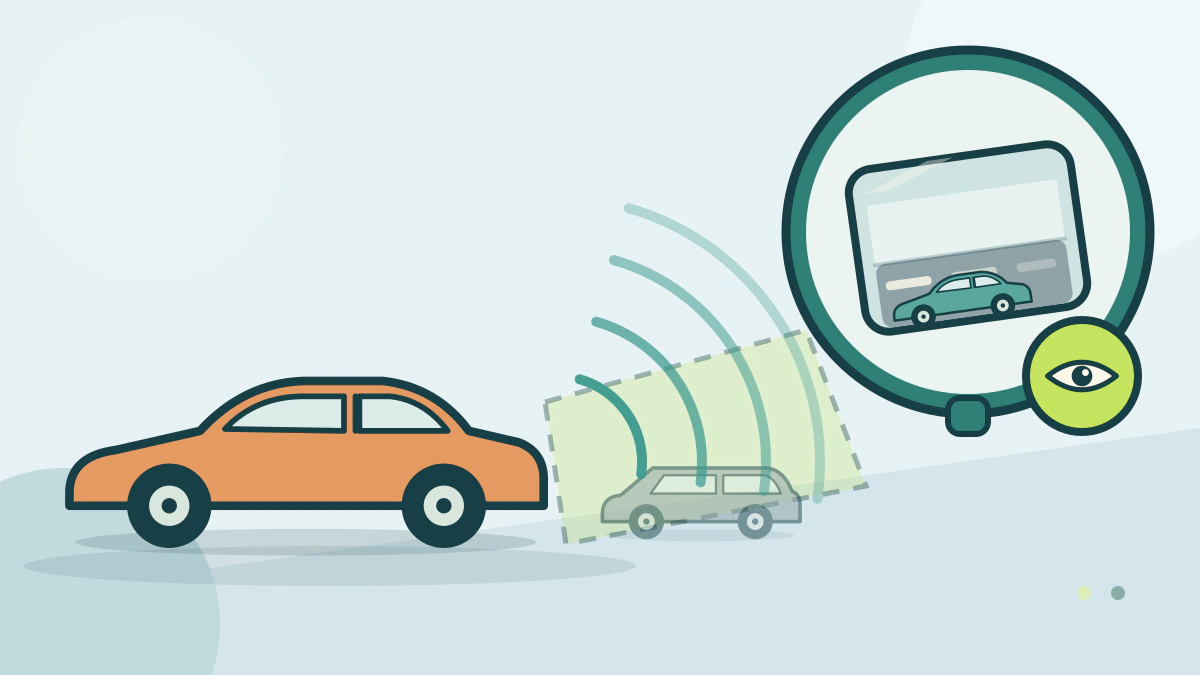
Blind-spot monitoring watches a limited zone and warns; it does not show the whole scene. See the gaps in an owner's manual and keep a safer lane-change habit.
Why blind-spot monitoring cannot replace mirror checks
Blind-spot monitoring warns you about a vehicle in a monitored zone. It does not show you the whole scene, and it cannot make the lane-change decision. The system is an aid, and its own owner’s manual lists conditions where it may not warn at all.
NHTSA describes blind spot warning as a system that alerts the driver with an audio or visual warning if there are vehicles in adjacent lanes that the driver may not see when making a lane change.
What the system actually watches
IIHS says blind spot detection uses sensors to monitor the side of the vehicle for vehicles approaching blind spots. Many systems show a visual alert on or near the side mirrors and sound an alert if you signal while a vehicle is in the zone. Some can also brake or steer lightly.
The geometry is limited. The 2023 Mazda CX-5 manual says its blind spot monitoring detects vehicles approaching from the rear at about 6.3 mph or faster. It covers the driving lanes on both sides, from the rear part of the front doors to about 164 feet behind the car (Mazda CX-5 manual). It is looking for approaching vehicles in a defined area, not painting a picture of the road.
The gaps listed in the owner’s manual
The same manual is unusually direct: the warning light, sound and screen display may not activate, or may be delayed, even when a vehicle is in an adjacent lane. It includes a list of conditions where detection is difficult or the system stops.
| Situation | What the system may do | What the driver still must do |
|---|---|---|
| Vehicle alongside at nearly the same speed | May not detect it | Check the mirror and the space beside the car |
| Speed below about 6.3 mph | May not operate | Use the mirrors and a direct look |
| Reversing | Switches to rear cross-traffic alert | Use the camera, mirrors and a look behind |
| Snow, ice or mud on the rear bumper | May shut off | Clean the area and check visually |
| Trailer or bike rack fitted | Radar may be blocked | Check the manual; the system may need switching off |
| Two lanes over, or a steep slope | Warning may be late or missing | Move your head and look at the lane |
That table describes one 2023 Mazda CX-5. Other vehicles differ in speed thresholds, sensor type and coverage. The owner’s manual for your model is the authority, not a general description of the feature name.
What a mirror check adds
A mirror check shows the lane markings, the width of the gap and whether the space is closing. A sensor report only tells you something is in a zone. The lane change needs both.
IIHS reports that blind spot detection reduces lane-change crashes by 14 percent. That is a real benefit, and it is also a limit. Most lane-change crashes in the studied population were not prevented by the feature alone. IIHS says the safety benefit grows when several crash-avoidance features are bundled together.
A warning that replaced the mirror check would not have that record.
Why drivers over-trust the light
IIHS says crash avoidance technologies cannot be effective unless they are used and understood. Drivers who do not trust a system may switch it off. Drivers who experience warnings but do not understand them may fail to respond. The page also notes research showing that regular users of partial automation can develop a false sense of security about what the technology can do.
Blind spot monitoring is not automation; IIHS calls it temporary assistance. The human problem is the same: a dark light is easy to read as clear.
The light has two states. The road has more. Treat no warning as “the system has not warned me,” not as “nothing is there.”
A lane-change routine that keeps the aid useful
Signal first. The Mazda manual says the warning sound and flashing indicator activate when you signal while a vehicle is detected. Signaling early gives the system and the driver behind you more time. Then check the mirror, glance over your shoulder, and move only when the space is visibly clear.
Keep the rear bumper and sensors clean, especially in winter. If the blind-spot off indicator stays illuminated, the manual lists a system fault, a moved rear sensor, snow or ice on the bumper, long driving on snow-covered roads, extreme heat near the sensors and low battery voltage as possible causes. Have the system inspected rather than assuming it is working.
For the reversing version of the same problem, see rear cross-traffic alert. For another warning-only system and its limits, see automatic emergency braking limitations. The Car Safety and Recalls hub covers the wider set of features.
Frequently asked questions
Does blind-spot monitoring brake the car?
Some systems can apply light braking or steering input if the driver ignores the warning and starts to change into an occupied lane. NHTSA describes that as blind spot intervention. Others only warn. Check the owner’s manual for your trim.
Why does my blind-spot warning light stay on?
The 2023 Mazda CX-5 manual refers to the blind-spot off indicator. It lists a system fault, a moved rear sensor, snow or ice on the bumper, long driving on snow-covered roads, extreme heat near the sensors and low battery voltage. A steady warning is a reason to inspect the system, not to ignore it.
Can blind-spot monitoring see motorcycles and bicycles?
NHTSA describes the feature as warning about vehicles in adjacent lanes. It does not promise detection of every cyclist or motorcyclist, so keep the visual check.
Is a shoulder check still necessary with the warning?
Yes. The manual says to always check the surrounding area visually before changing lanes, and that the warning may not activate or may be delayed. The system adds information. It does not replace the look.