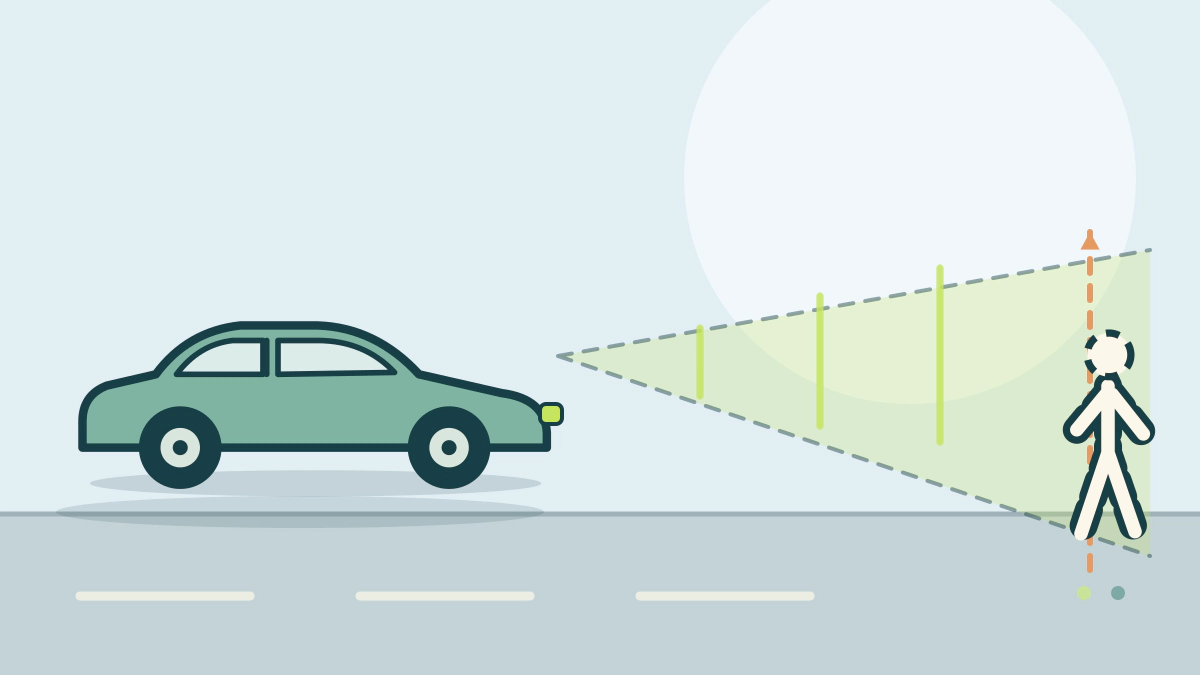
Automatic emergency braking can prevent some rear-end and pedestrian crashes, but federal tests define how fast and in what weather it must work.
Where automatic emergency braking stops being reliable
AEB can avoid or soften some crashes, but only within the speeds, targets and conditions its sensors can handle, and it never takes over the driver’s duty to watch the road. That boundary is easier to see in the federal rule and the insurance-industry tests than in a showroom slogan.
NHTSA explains the two jobs inside AEB. If you brake but not hard enough, dynamic brake support adds braking. If you do not brake at all, crash imminent braking applies the brakes for you (NHTSA driver assistance technologies). Both jobs depend on the system detecting a collision first.
What the federal AEB rule actually requires
Federal Motor Vehicle Safety Standard 127 sets the first national performance floor for light vehicles. It covers passenger cars and trucks, buses and multipurpose vehicles up to 10,000 pounds gross vehicle weight. Compliance is required for vehicles built on or after September 1, 2029, with a one-year delay for small-volume manufacturers (49 CFR 571.127).
The rule requires a forward collision warning and automatic braking when approaching a lead vehicle at any speed above 6.2 mph and below 90.1 mph. For pedestrians, the required range is above 6.2 mph and below 45.3 mph. Above those ceilings, no federal performance requirement applies.
The warning itself has requirements too. It needs an auditory signal and a steady red visual symbol. The rule also limits false braking, and it requires a telltale when a sensor is blocked or the system degrades. Manufacturers cannot give you a permanent off switch, apart from limited cases such as low-range four-wheel drive or tow mode.
The test conditions are narrower than real driving
The federal tests run on dry, uniform pavement with no debris, cracks or dips. They are not run in rain, snow, fog or smoke. Air temperature must be between 0 and 40 degrees Celsius, and wind is capped at 22 mph for vehicle tests and 15 mph for pedestrian tests. Sensors and the windshield in front of them must be clean, the tires must be the original size and inflation, and the AEB warning light must be off (same rule).
The standard does not promise the same result with a dirty camera, a snow-covered radar, low sun or a windshield chip in the sensor’s view. Camera-based systems also need proper aim after windshield work, which is why ADAS camera calibration matters.
| Situation | What the federal rule covers | What remains the driver’s job |
|---|---|---|
| Lead vehicle, same lane | Warning and braking above 6.2 and below 90.1 mph | Judge closing speed and brake early |
| Pedestrian in the path | Warning and braking above 6.2 and below 45.3 mph | Scan road edges and crosswalks |
| Rain, snow, fog or spray | Not part of the test conditions | Slow down and increase the gap |
| Blocked or damaged sensor | System must warn of degraded operation | Clean the sensors and arrange repair |
| Speeds above the test ceiling | No federal AEB performance requirement | Full manual braking and steering |
What the independent tests add
IIHS runs its own vehicle-to-vehicle front crash prevention test at 31, 37 and 43 mph. It uses a passenger-car target and a motorcycle target, both centered and offset, and checks forward collision warning against a semitrailer as well. Warning timing and speed reduction both count, and braking carries about two-thirds of the score (IIHS test description).
The motorcycle target matters. A narrow object is harder for a radar or camera to classify than the broad back of a car. In IIHS’s first commercial-vehicle ratings, the motorcycle target was the biggest challenge, and several systems did not warn or slow at all in most motorcycle trials (IIHS, October 2026).
What AEB cannot do, even when it works
AEB is a last-moment intervention. It acts only when a crash is imminent and cannot see through a parked truck, around a bend or past a hill crest.
The system may brake later or more gently than a person who saw the hazard early. And if it applies the brakes when it should not, the federal rule limits how much extra deceleration that false activation may add, but it does not eliminate false activations.
Where the responsibility sits
NHTSA’s guidance is consistent: these systems assist, and the driver remains responsible.
Treat the chime and the automatic braking as a second chance. Keep your foot ready, leave a gap, and look farther ahead than the car in front. For the wider difference between assistance and automation, see driver assistance versus self-driving. The Car Safety and Recalls hub collects the related ratings and recall guides.
Frequently asked questions
Does AEB work at highway speed?
The federal rule requires lead-vehicle AEB above 6.2 mph and below 90.1 mph, but that is still a ceiling. Above it, and in poor weather, the system has no tested obligation.
Can I turn automatic emergency braking off?
Generally no. FMVSS 127 bars a control that permanently disables AEB, apart from narrow exceptions such as low-range four-wheel drive or tow mode, and the system must return to its default mode each ignition cycle.
Does AEB detect pedestrians at night?
The federal pedestrian test does not require nighttime performance and caps at 45.3 mph, though IIHS does run night tests and finds large differences. Dark clothing, rain and unlit roads remain difficult for every sensor type.
Is AEB the same as adaptive cruise control?
No. Adaptive cruise control holds a set speed and gap during normal driving, while AEB intervenes only when a collision is imminent; a car can have one without the other.