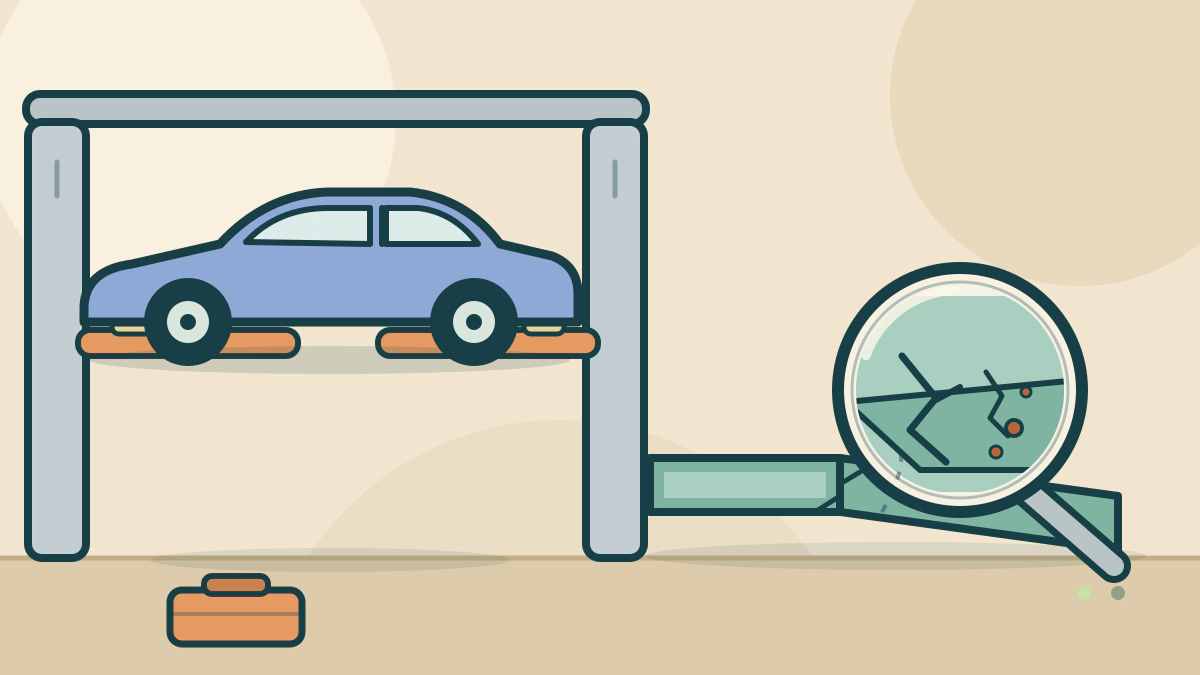
Use a structured post-crash check for structural, fluid, suspension and safety-system damage, and learn when a teardown estimate is needed.
What counts as hidden damage after a crash?
Hidden damage after a crash is damage that sits behind the panels or inside the structure, so a walk-around cannot rule it out. California’s Bureau of Automotive Repair says most collision repairs are hidden by the vehicle’s panels.
The visible dent is a poor guide to the total repair. A bumper cover can spring back while the reinforcement behind it stays bent.
Why a visual check is not enough
BAR’s 2025 tear down notice says collision damage often includes hidden issues that cannot be seen during a visual inspection. A tear down means disassembling the damaged area to find the full extent.
BAR lists the kinds of problems that can hide in a bad repair. They include substandard structural repairs, inoperative air bags, damaged suspension and electrical faults, according to its salvage vehicle notice.
Each of those areas can affect how the car behaves in the next crash, not just how it looks.
A post-crash check, area by area
| Area | What to look for | Why it matters | Who should check |
|---|---|---|---|
| Body gaps and panel alignment | Uneven gaps, a hood or door that sits proud, mismatched paint | A moved panel can signal bent structure underneath | Body shop |
| Fluids and cooling | Leaks under the car, low coolant, a damaged radiator or condenser | A leak can lead to overheating or a breakdown | Repair shop |
| Wheels, tires and suspension | A tilted wheel, a new pull, uneven tire wear, a bent strut or control arm | Steering and braking may be affected | Alignment or suspension shop |
| Air bags and seat belts | A warning light, a belt that will not pull out, a deployed bag | A used air bag or damaged belt may not protect in a second crash | Authorized repair center |
| Electrical and sensors | Warning lights, a camera or radar fault, a dead outlet or light | Driver assistance and safety systems may not work | Dealer or qualified shop |
| Underbody and structure | Crushed rails, buckled floor, creases in the structure | The crumple zone may not absorb energy as designed | Body shop with measuring equipment |
Do not confirm structural damage from a photograph. Panel gaps can suggest a repair, but cannot show whether a rail is straight.
Ask for a written teardown estimate
California has required a written teardown estimate since July 1, 2025, before a shop disassembles a vehicle to find hidden damage. The 2025 BAR notice lists what that estimate must contain.
- The area to be disassembled, described specifically
- The cost of the teardown and the cost of reassembly
- The cost of parts normally destroyed by the teardown
- The maximum time needed to reassemble the vehicle if you decline repairs
- Whether the teardown prevents the vehicle from being reassembled
After the teardown, the shop must give you an itemized estimate for the parts and labor it found. These rules apply in California. Other states set their own repair shop rules.
A teardown can find hidden damage before repairs start, which may change the estimate.
Give the safety systems their own check
NHTSA says an air bag can deploy only once. A deployed bag must be replaced, at an authorized repair center, before the vehicle is driven again. A bag that did not deploy still needs a check if the warning light is on.
NHTSA also warns about counterfeit and substandard replacement air bag inflators. Some have failed to deploy or have thrown metal fragments. Ask where replacement parts came from and keep the invoice.
Seat belts are part of the same system. Ask the shop to confirm the belts still retract and lock as designed. The owner’s manual and the repair estimate should show what the manufacturer requires.
Check recalls and keep the paperwork
A crash repair does not cancel an open recall. Use NHTSA’s recall lookup with the VIN to check for campaigns that apply to the vehicle.
Keep the estimate, the teardown authorization, the final invoice and any photos. The invoice should list what was replaced and what was repaired. BAR’s inspection program checks that invoice repairs were completed.
If you are dealing with an insurer, read what to do after a car accident for insurance. If the car is not safe to drive, see when not to drive a car after a collision.
When to get a second opinion
Ask for an independent inspection when the estimate keeps growing, when the shop cannot explain the structural repair, or when the car still pulls, leaks or shows a warning light after the work. BAR offers a no-cost collision repair inspection for repairs done in California.
A second opinion confirms that the car matches the paperwork. The parent hub is Car Safety and Recalls.
Frequently asked questions
Can hidden damage show up later, after I start driving?
Yes. A leak, a warning light, uneven tire wear or a new pull can appear after some miles. Have the car checked again if any of those appear.
Do I need a teardown for every crash?
No. A light hit may need only a visual check. A teardown makes more sense when damage could be structural. Ask the shop to explain why it recommends one.
Is a clean vehicle history report enough after a crash?
No. A history report may not capture a repair paid privately or one that was never reported. The physical inspection and the repair invoice are separate evidence. Use both.
Can I keep driving with an air bag warning light on?
No. Have the system checked before driving. NHTSA says a deployed bag must be replaced before the vehicle is driven again, and a warning light can mean the system will not work in a crash.