Learn which crash damage, fluid leaks, airbag deployments and warning lights make a car unsafe to drive, plus what a tow operator, insurer and inspector need.
The short answer: when the car should leave on a tow truck
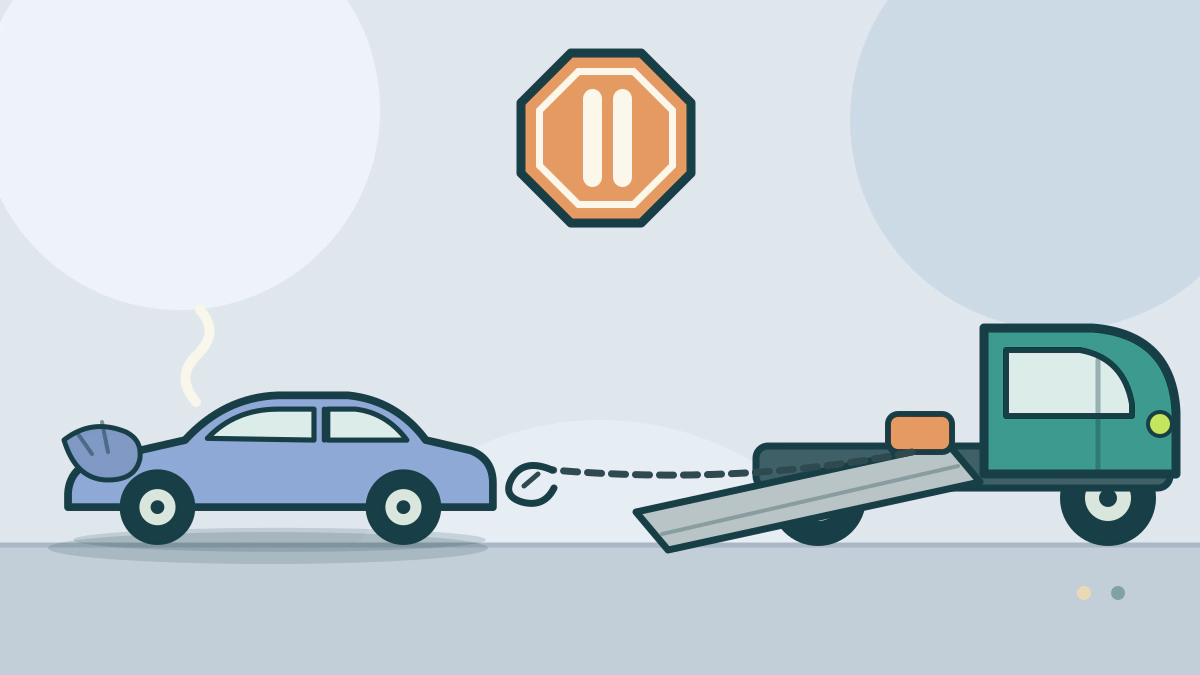
Do not drive a car after a collision if it is leaking fluid, smoking, smells of fuel, has a deployed airbag, has a wheel that no longer sits straight, or has damage pushed into the passenger space. A car can start and roll a few feet and still be unsafe at road speed. Treat the tow as part of the crash response.
Call 911 if anyone is hurt. Vehicle questions wait until everyone is clear of the traffic lane.
Move the car only as far as the scene requires
The Ohio Department of Public Safety tells drivers involved in a crash to move the vehicle off the roadway as far as possible. The California Highway Patrol says that when there are no injuries, move the vehicle out of traffic to the nearest place of safety.
That short move protects people from a second collision. It is not permission to drive home. If the car will not roll, steers strangely or leaves a trail of fluid, leave it and call for help.
The damage signs that call for a tow
Use a walk-around as a screen, not a diagnosis. Do not reach under a damaged vehicle or open a hot hood.
| What you notice | What it can mean | What to do |
|---|---|---|
| Fresh puddle or steady drip | Damaged radiator, hose, oil pan or brake line | Do not start the engine; tow it |
| Smoke, steam or a fuel smell | Fire risk or a damaged fuel line | Move away and call 911 |
| Airbag hanging out | An airbag has deployed | Tow it; the bag must be replaced |
| A wheel sits back or points differently | Bent suspension or steering damage | Do not drive, even across a lot |
| Doors or hood will not latch | Body or structure has moved | Tow it and have it measured |
| Red brake, oil or temperature light | A system may not work at the next stop | Stop and have it inspected |
AAA’s crash guide is direct about fire risk: if you smell gasoline or see smoke, move as far away as safety allows and do not try to put out a fire yourself.
Airbags, structure and systems you cannot see
NHTSA states that air bags can only deploy once and should be replaced at an authorized repair center before the vehicle is driven again.
Structure matters even when the car looks repairable. IIHS writes that major deformation or intrusion into the occupant compartment is a good predictor of injury risk in similar real-world crashes. Its protocol also covers fuel and high-voltage system integrity. If a door will not close or the floor looks buckled, the car needs measuring on a frame machine, not a drive to the body shop.
What the warning lights add
The 2026 Kia K5 owner’s manual says the air bag warning light should appear for about 3 to 6 seconds after the ENGINE START/STOP button is turned to ON, then go out. If it stays on, comes on while driving or blinks, the system needs an authorized dealer. Kia’s 2027 AY1IV electric owner’s manual adds that after a collision the vehicle should be inspected by a professional workshop to verify the high-voltage battery is still connected.
Why “it still runs” proves very little
An engine that starts proves the battery, starter and fuel supply work well enough to idle. It says nothing about brake lines, steering geometry, airbag sensors, seat-belt pretensioners or the strength of the cage around the occupants. Driving a damaged car can turn one incident into two.
What to tell the tow operator and your insurer
Tell the dispatcher where the car is, which wheels still roll, whether anything is leaking, whether an airbag deployed, and whether the car is all-wheel drive or electric. Ask whether it needs a flatbed or wheel dollies. Ask where the car is going, and keep the tow receipt.
The NAIC lists what to collect at the scene: the other driver’s name, address and insurer, the other car’s make, model, year and plate, witness contacts, the officer’s name, badge number and contact information, and the time, date and exact location. The insurer assigns an adjuster who may inspect the damage, so keep notes and dates.
Collision versus comprehensive coverage are separate coverages with their own deductibles, so ask your insurer before assuming a crash falls under one or the other.
If the car is repaired and returned to service, check for open safety recalls by VIN using NHTSA’s recall lookup. The Car Safety and Recalls hub covers the wider recall and crash-test picture. After a repair, airbag warning lights deserve their own check.
Frequently asked questions
Can I drive home if the airbags deployed?
No. NHTSA says deployed air bags must be replaced at an authorized repair center before the vehicle is driven again. A deployed bag cannot protect you in a second impact. Have it towed.
Is a warning light after a crash always a reason to stop?
Not every light means the same thing, but a red brake, oil-pressure, temperature or airbag light that stays on is a reason to stop driving. A safety system may not be working, or the engine may be damaged. Have the car checked before you continue.
Will my insurance pay for the tow?
That depends on your policy. Towing may be included in roadside assistance, added as an endorsement, or reimbursed as part of a covered claim. Save the receipt and ask your insurer what your policy includes.
What if the car drives fine but a wheel looks crooked?
Treat it as undrivable. A wheel that sits back, leans inward or points away from its partner suggests suspension or steering damage that can affect braking and steering at speed. A tow is cheaper than a second crash.