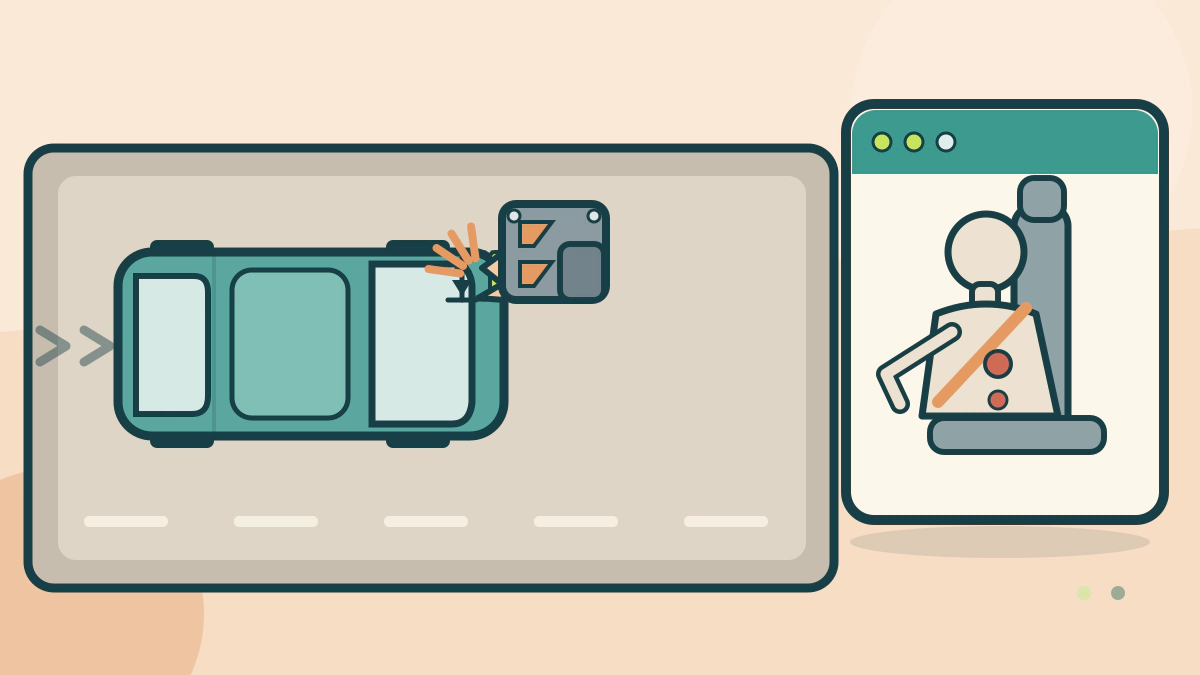
Learn how IIHS runs its 40 mph small-overlap front test, what the 25 percent overlap measures, and how to compare the result with other crash tests.
What does the small-overlap test measure?
A small-overlap front crash test is a 40 mph crash in which only 25 percent of a vehicle’s front end hits a rigid barrier. The IIHS test represents the front corner of a car striking another vehicle, a tree or a utility pole.
IIHS runs the test twice. One run puts the overlap on the driver side and the other puts it on the passenger side. A Hybrid III dummy representing an average-size male is belted in the driver seat. A second dummy is belted in the front passenger seat for the passenger-side run.
This is a consumer crashworthiness test, not a federal minimum requirement. NHTSA’s 5-Star Safety Ratings use a different frontal crash.
How the three frontal tests differ
| Detail | Small overlap front | Moderate overlap front | NHTSA frontal |
|---|---|---|---|
| Who runs it | IIHS | IIHS | NHTSA |
| Test speed | 40 mph | 40 mph | 35 mph |
| Front overlap | 25 percent | 40 percent | Full width |
| Front-seat dummies | Average-size male driver and passenger | Average-size male driver | Average-size male driver, small female passenger |
| Extra dummy | None | Small female or 12-year-old behind driver | None |
The moderate overlap page describes its 40 percent overlap and second-row dummy. The NHTSA ratings page lists its 35 mph full-width barrier test.
A federal rule sits underneath these consumer tests. FMVSS 208 requires a belted frontal barrier test at up to 30 mph. A vehicle certified to the standard’s enhanced option can be tested at up to 35 mph. The small-overlap test goes beyond that baseline.
What IIHS records during the run
IIHS measures intrusion into the occupant compartment at key locations. Sensors in the dummy’s head, neck, chest, legs and feet record injury risk. High-speed film and greasepaint show how the dummy moved and where it struck the air bags.
Those measurements feed a rating for the test. The IIHS ratings page explains that its tests evaluate crashworthiness, which is how well a vehicle protects occupants in a crash.
The rating is not a single number. It reflects structure, dummy injury measures and how well the belts and air bags controlled movement.
Why the overlap percentage matters
At 25 percent overlap, only the outer quarter of the front end engages the barrier. At 40 percent, a wider section of the front structure shares the load.
IIHS says the small-overlap test stands for a crash with another vehicle or with an object such as a tree or utility pole.
Neither test replaces the other. The two tests can produce different results, which is why IIHS publishes them separately.
Why weight limits the comparison
IIHS states that ratings in this test can only be compared among vehicles of similar weight. Crash severity depends on the vehicle’s weight, so a heavier vehicle faces a different load in the same test.
That rule follows the physics described on the IIHS size and weight page. In a two-vehicle crash, the heavier vehicle pushes the lighter one backward, so the people in the lighter car face more force.
NHTSA applies a similar limit. It says frontal and overall scores can only be compared within the same class and within 250 pounds of curb weight.
How to use a small-overlap result
- Write down the exact model year, body style and trim.
- Open the IIHS vehicle ratings page for that vehicle.
- Look at the driver-side and passenger-side small-overlap results separately.
- Compare only with vehicles of similar size and weight.
- Check the moderate overlap and side results too.
- Check open recalls by VIN.
IIHS does not test every model every year. The about our tests page says it carries a rating over when structure and air bags have not changed. It can also extend a rating to a model that shares a platform.
That makes the model year and build date important. A rating for one year does not automatically apply to a later car with a redesigned front end.
What the test does not cover
The result covers one crash direction and one overlap. It does not measure side impact, rear impact, rollover protection or crash avoidance. Those have their own tests and their own limits.
It also does not tell you whether a particular car has been repaired after a crash. A used vehicle with a good original rating can still have damaged structure. See how to check for hidden body repairs before buying.
For the wider comparison between the two organizations, see NHTSA vs IIHS crash testing. The parent hub is Car Safety and Recalls.
Frequently asked questions
Does NHTSA run a small-overlap crash test?
No. NHTSA’s frontal rating comes from a 35 mph full-width crash into a fixed barrier. The 25 percent overlap test is an IIHS program. The two results answer different questions and should not be swapped.
Why does IIHS test both the driver and passenger sides?
IIHS runs the test twice, once per side, and publishes a separate result for each. Check both results, since the two runs are scored on their own.
Can I compare a small-overlap rating between a sedan and a large SUV?
No. IIHS says ratings in this test can only be compared among vehicles of similar weight. A heavier vehicle faces a different load. Compare cars in the same size and weight group.
Does a good small-overlap rating mean the car has no safety defects?
No. A crash test looks at one crash scenario. Recalls, tire condition, driver assistance and repair history are separate. Check recalls by VIN and have a used car inspected.