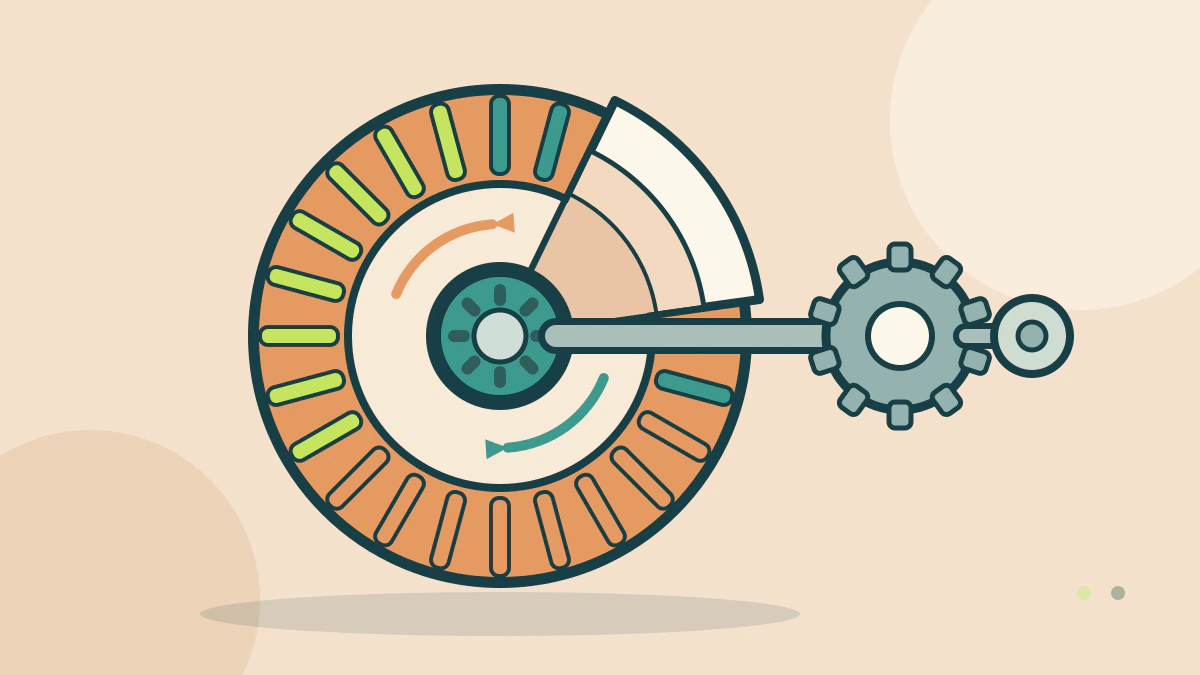
A torque converter automatic launches through a fluid coupling, changes ratio with planetary gearsets and locks the converter to cut slip at road speed.
How does a torque converter automatic move the car?
It uses a fluid coupling to pull away from rest and a set of planetary gears to change ratio. Allison Transmission describes its automatic as a hydraulic torque converter that connects the engine to the transmission through a planetary gear set. The converter multiplies engine torque at launch, which is how the car starts smoothly without a clutch pedal.
The history of automatic transmissions covers how the design reached production. This article explains the parts inside a current unit and what each one does.
What the impeller, turbine and stator do
The converter has three main elements inside a fluid-filled housing.
- The impeller is attached to the housing and turns with the engine.
- The turbine is splined to the transmission input shaft.
- The stator sits between them on a one-way clutch.
A BorgWarner patent on an integrated torque converter describes the flow. The impeller throws fluid outward, and the fluid strikes the turbine blades and turns them. The fluid then returns toward the impeller through the stator. The stator redirects that return flow so it enters the impeller in the direction of rotation and adds to it instead of fighting it.
That redirection is the source of torque multiplication. The patent says the returning fluid augments rotation, “allowing for a multiplication of the torque passing through the torque converter.” It also states that the stator’s one-way clutch limits rotation to one direction.
Why the converter helps at low speed
Allison says the converter smoothly multiplies high engine torque and delivers more power to the wheels. The same page credits that multiplication with faster acceleration, better startability and less wheel spin and wheel hop, which can damage the driveline. It also notes minimal rollback on grades and good low-speed maneuvering.
Those traits come from the fluid link. There is no dry clutch taking the launch load, which is why Allison says the design avoids the clutch repairs a manual transmission needs.
What the lockup clutch changes
A fluid coupling can slip, and slip wastes energy. The converter therefore contains a lockup clutch that can connect the turbine to the housing and bypass the fluid path.
ZF says its passenger-car converters have adaptable lock-up clutches. In its twin-damper design the clutch can be applied early, which improves comfort at low engine speeds and reduces fuel consumption. The BorgWarner patent describes the same part: when engaged, it locks the front cover to the output hub and generally bypasses the fluid coupling.
The clutch only removes converter slip once the car is moving. It can be released again when the transmission needs the converter to multiply torque.
Nissan’s CVT page shows the same idea in another layout. Its belt CVT uses a torque converter for take-off and a lockup damper afterwards, which shows that the converter and the ratio-changing parts are separate jobs.
Where the ratios come from
The converter does not choose a gear. Allison’s description puts the converter ahead of a planetary gear set, and the gear set provides the forward ratios.
Kia’s 2026 owner’s manual for one automatic model lists 8 forward speeds and 1 reverse speed, selected automatically. The count is a design choice for that transmission. The converter is the launch device in front of the gears, not one of the gears.
That split matters when something goes wrong. A shudder at a steady speed points to a different area than a delay when pulling away.
| Part | Job | What the driver notices |
|---|---|---|
| Impeller | Throws fluid outward | Turns with the engine at all times |
| Turbine | Driven by the moving fluid | Turns the transmission input shaft |
| Stator | Redirects returning fluid | Multiplies torque during launch |
| Lockup clutch | Locks turbine to the housing | Removes slip at road speed |
| Planetary gearset | Provides the ratios | Steps between speeds |
Why the fluid and the manual matter
Allison says its converters are designed to minimize wear and need periodic fluid and filter changes. The fluid is the working medium, so its condition and level belong to the transmission’s operation, not just to lubrication.
Use the owner’s manual for the exact model year. Kia’s manual tells drivers not to shift from N or P into D or R while the engine is above idle speed, and not to rely on the transmission to hold the car on an incline. Those directions protect the hardware and are not generic advice.
If a car flares, delays engagement or loses drive, treat it as a diagnostic question. The slipping symptoms guide lists the observations to report, and the transmission fluid interval guide explains why the manual sets the service point. The Automotive Mechanical Systems hub covers the rest of the drivetrain.
Frequently asked questions
Is a torque converter the same as a clutch?
No. A converter transfers torque through fluid, while a clutch uses friction surfaces. Many converters add a lockup clutch that creates a mechanical link at road speed, so the car gets both a smooth start and low-slip cruising.
Does a torque converter automatic still have gears?
Yes. The converter handles the launch, and a planetary gear set provides the ratios. Kia’s 2026 manual for one automatic model lists 8 forward speeds, so the gear count depends on the transmission design.
When does the converter lock up?
ZF says its twin-damper design allows the lockup clutch to be applied early, which improves comfort at low engine speeds and reduces fuel consumption. The exact schedule is set by the manufacturer and is not the same in every car.
How often does the fluid need changing?
Follow the owner’s manual for the model year. Allison says its converters need periodic fluid and filter changes, but the interval and specification depend on the transmission, so a generic mileage figure is not reliable.