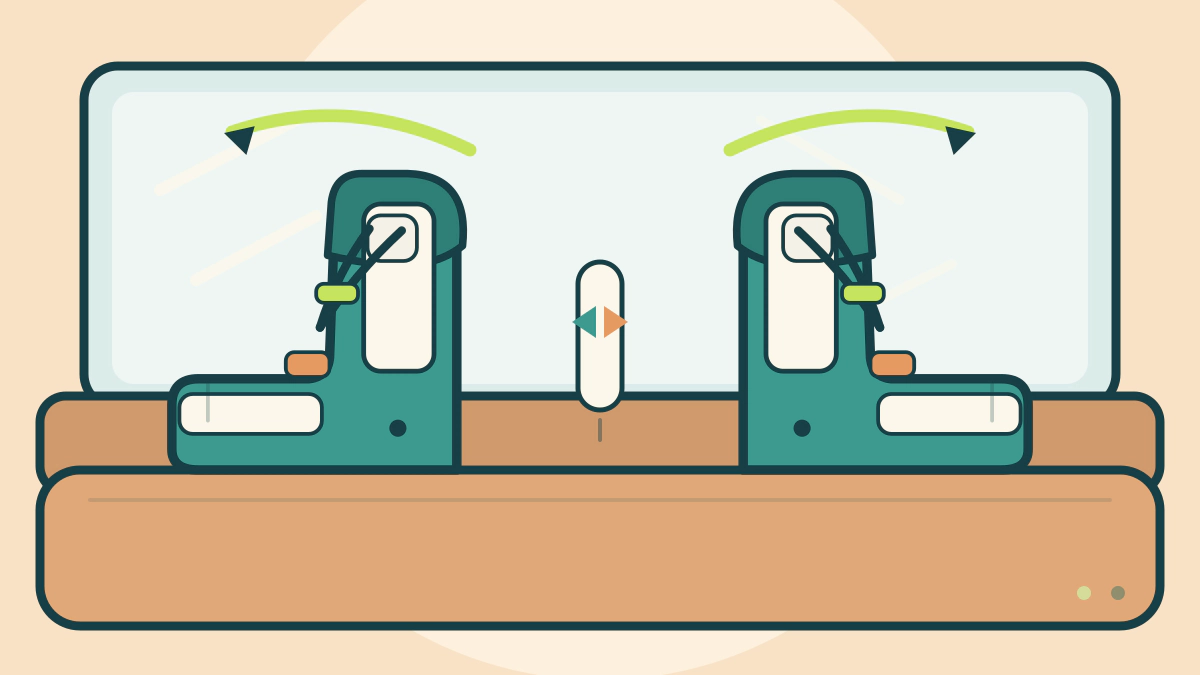
Learn why rear-facing is safer for a young child, what the seat's height and weight limits change, and when a forward-facing harness is the right step.
Rear-facing or forward-facing: which way should a young child ride?
Rear-facing is the safer direction for a young child, and the seat should stay rear-facing until the child reaches the seat’s rear-facing height or weight limit. NHTSA tells parents to keep a child rear-facing as long as possible, not to switch at a set birthday.
Why the direction changes the protection
NHTSA describes a rear-facing seat as one that cradles the child and moves with the child in a crash, which reduces stress on the neck and spinal cord. The seat supports the child’s head and back as it moves with the crash forces.
A forward-facing seat works differently. It uses a harness and a tether to limit how far the child’s head and body move forward. That is effective, and it is why the tether matters so much in this position.
What decides the switch
The seat manual decides. Each convertible or all-in-one seat lists a rear-facing height and weight range and a forward-facing range, and the child moves up when either rear-facing limit is reached.
NHTSA’s age bands follow the same logic. It says children under 1 should always ride rear-facing, and that children from 1 to 3 should stay rear-facing as long as possible. IIHS adds that the limit may not come until age 2 or older.
The Graco Extend2Fit manual shows how far the ranges can spread. It lists rear-facing from 4 to 50 lb and forward-facing from 22 to 65 lb, and it says children under 22 lb must ride rear-facing. Those numbers belong to that seat, not to car seats in general.
What changes when you turn the seat
| Detail | Rear-facing | Forward-facing |
|---|---|---|
| Direction | Faces the rear of the vehicle | Faces the front |
| Harness slots | At or below the shoulders | At or above the shoulders |
| Top tether | Usually not used in the US | Used with the harness |
| Recline | Set by the angle indicator | More upright |
| Child limit | The seat’s rear-facing range | The seat’s forward-facing range |
| When it ends | Child reaches the rear-facing limit | Child reaches the harness limit |
The harness slot rule comes from the NHTSA install guides. Rear-facing straps go through slots at or below the shoulders, and forward-facing straps go through slots at or above them. Some seats require the top slots for forward-facing use, so the manual wins.
The tether is the other big change. NHTSA recommends using it with every forward-facing seat, whether the seat is held by the belt or the lower anchors. Most rear-facing seats in the US do not use one, but installations differ by model, so read the seat’s own instructions.
Recline, space and the front seat
A rear-facing seat needs its recline angle set for the child’s age and size, and most have an indicator or an adjustable foot to help. Check it with the vehicle on level ground, and recheck it as the child grows.
Recline also costs space. A rear-facing seat can push the front seat forward, which is why a fit check matters before buying. How to check car seat compatibility covers that process.
State law and the seat’s limit
State laws set a minimum, and the seat manual can require more. IIHS reports that 25 states and the District of Columbia require children to ride rear-facing until at least age 2, while other states use different wording.
A law that allows a forward-facing seat at a given age does not override a seat that is still within its rear-facing limits. NHTSA also says to keep the child in the back seat at least through age 12.
Do not rush the next step
The same rule applies at the forward-facing stage. NHTSA says to keep the child in a harnessed forward-facing seat until the seat’s forward-facing limit, then move to a booster. A child who still fits the harness should not be moved early.
The install method for either direction is covered in LATCH vs seat belt car seat installation. Replacement after a crash is covered in when child car seats need replacement. The hub is Family, Teen and Accessible Vehicles.
Frequently asked questions
Can my child ride forward-facing at age 2?
Only if the child has reached the seat’s rear-facing height or weight limit. Age alone is not the trigger. NHTSA says to keep the child rear-facing until the seat’s limit, and that may come after age 2.
How do I know when the rear-facing seat is outgrown?
Check the manual for the rear-facing height and weight limits. The seat is outgrown when the child reaches either one. At that point move to a forward-facing harnessed seat that fits the child.
Does a forward-facing seat need a top tether?
NHTSA recommends a tether whenever a seat is forward-facing, with either a belt or lower anchor install. Check the seat and vehicle manuals for the anchor location and routing before you drive.
When does a child move from the harness to a booster?
When the child reaches the forward-facing harness limit in the manual. NHTSA says to keep the harness and tether as long as the child fits, then use a booster until the seat belt fits properly.