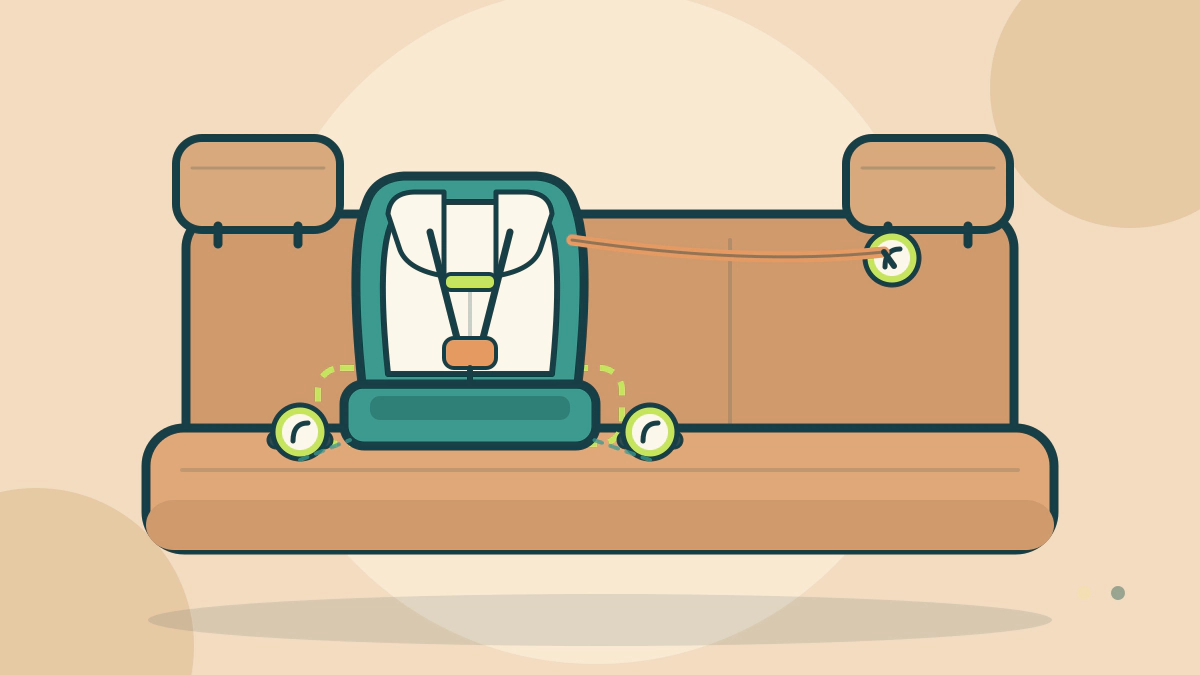
Check a car seat against your own vehicle before you buy it, using the owner's manual, anchor positions, seat belt type and a test fit.
Does a car seat fit every vehicle?
No. Seats differ in width, base shape and belt path, and vehicles differ in cushion depth, anchor positions and buckles, so a fit is specific to one seat and one vehicle. NHTSA states it directly: not all car seats fit in all vehicles, and you should test the seat you plan to buy in your own vehicle.
Two documents answer the question. The car seat manual gives the seat’s size, limits and install rules; the vehicle owner’s manual gives the seating positions, anchors and belt details. FMVSS 225 requires a new vehicle to be delivered with written information on how to use its child restraint anchorages.
What the vehicle owner’s manual tells you
| Vehicle detail | Where it is listed | Why it changes the fit |
|---|---|---|
| Lower anchor positions | Child restraint section, often with a diagram | Anchors exist only at marked positions |
| Tether anchors | Same section, plus the seat and cargo area | Locations vary by body style and row |
| Seat belt type and locking | Seat belt section | Locking method decides how the install tightens |
| Center seat shape | Diagram and a look at the cushion | A hump can stop the base sitting flat |
| Head restraint | Seat section | Can block the belt path or push the seat forward |
FMVSS 225 sets the minimum, not a full map. A vehicle with three or more forward-facing rear seating positions must have a full anchorage system, meaning two lower anchors and a tether, at no fewer than two of them, plus a tether at a third. That is why a five-seat car can have lower anchors in the two outer rear seats and only a tether in the middle.
What the car seat side adds
The seat manual and the labels on the shell list the child height and weight range for each mode. They also state the lower anchor weight limit, the belt path, the recline positions and any vehicle seating positions the maker excludes.
Limits are seat-specific, so a general rule is not enough. The Graco Extend2Fit manual, for example, lists rear-facing use from 4 to 50 lb and forward-facing use from 22 to 65 lb, but it caps lower anchor use in the rear-facing position at 45 lb. A different seat will publish different numbers.
Check the label on the side of the seat for the anchor limit. If the seat has no label, NHTSA says to subtract the seat’s weight from 65 lb.
Also check what the maker allows you to add. NHTSA’s glossary says aftermarket products are not recommended unless the car seat manufacturer approves them for that model.
Fit checks you can do before you buy
Start with the position you plan to use, not the seat. Put the seat on the cushion and look for gaps under the base. The base should sit flat, so try another position or another model if it rocks on a hump or overhangs the cushion edge.
Then check the hardware. The buckle stalk should not sit inside the belt path, the tether must reach its anchor without crossing the seat back at an angle, and the front seats and door should clear the seat.
Install it and run the NHTSA install checks. With the belt or the lower anchors tightened, the seat should not move more than 1 inch side to side or front to back at the belt path. Use the recline indicator with the car on level ground.
For three seats across, measure the widest part of each seat, not the base.
Where to get the fit checked
NHTSA lists inspection stations where certified technicians check an installation and show you how to correct it. Most stations do this free of charge, and some offer virtual checks. The same page points owners to Safe Kids Worldwide when no station is nearby.
Register the seat with its maker so recall notices reach you. Replacement rules after a crash are covered in when child car seats need replacement.
What a high ease-of-use rating does not tell you
NHTSA rates car seats on labels, instructions, vehicle installation features and securing the child, and says the ratings measure ease of use, not safety. A seat can score well and still be awkward in your car, so use the ratings to compare features and confirm the fit in the vehicle.
Seat depth also affects how much room a rear-facing seat takes, which is covered in how to compare rear seat legroom.
The install method is covered in LATCH vs seat belt car seat installation, the seat direction in rear-facing vs forward-facing car seats, and more topics in Family, Teen and Accessible Vehicles.
Frequently asked questions
Can a car seat go in any rear seating position?
No. Use only positions the vehicle manual lists and the car seat manual allows. A position may lack lower anchors, have a seat belt that will not lock, or sit too close to a fixed head restraint.
How do I know whether my car has lower anchors?
Look for the small bars in the gap between the cushion and the backrest at the marked positions, then confirm them in the owner’s manual. NHTSA says lower anchors are found in a minimum of two rear seating positions, not every position.
What if the installed seat moves more than an inch?
Recheck the belt path for twists, tighten the belt or anchor strap again, and confirm the recline. If it still moves, try another seating position or have a certified technician look at it before you carry a child.
Do I need a different seat when I change cars?
Not always, but you do need to repeat the fit check. Anchors, belt type and cushion shape change between vehicles, and a seat that fits one car well may not fit another.