Compare accessible SUV and van conversions by entry type, floor space, seating, parking and safety paperwork, using NMEDA and NHTSA guidance.
Which is better: a wheelchair-accessible SUV or a van?
Neither body style wins by default. The conversion has to fit the wheelchair, the person who will drive or ride, and the place the vehicle is parked. A van usually offers more floor space and more entry layouts. An SUV conversion is built on one specific crossover and can keep SUV cargo space. NMEDA and NHTSA both point to an in-person assessment before you choose.
What the ADA does and does not settle
The ADA’s vehicle guidelines require access to new or remanufactured transportation vehicles, including buses and vans, that are covered by Department of Transportation rules, according to the U.S. Access Board. Those rules are written for transportation service to the public. They are not a safety certification for a vehicle you buy for personal use, so ask what was changed and who did the work.
Entry type changes the answer more than the body
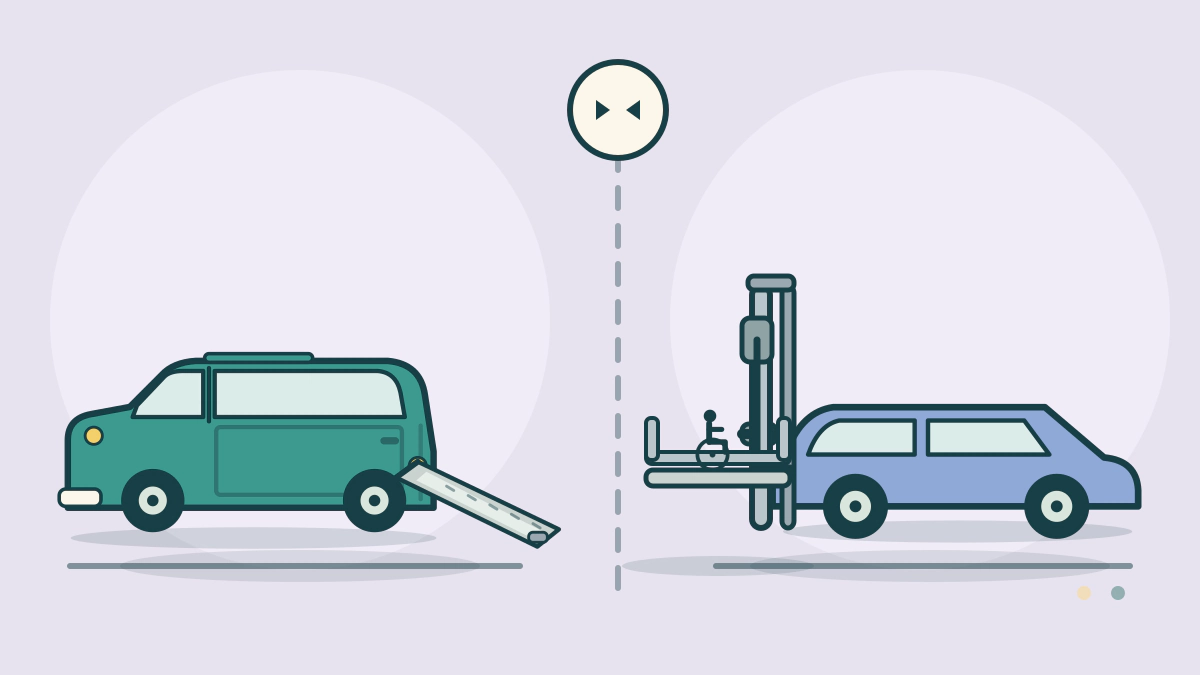
NMEDA describes two main van layouts. A side-entry van has a lowered floor and a ramp at the side door. The wheelchair user can drive or ride in a front-row position or ride in the second row, and cargo space behind the third row is kept. A rear-entry van usually costs less to convert, and the ramp deploys from the rear, which helps in a narrow parking space or a two-car garage. Full-size vans add the most interior space and the most seating combinations.
Converted SUVs and crossovers get a side-entry lift or ramp, or adaptive seating that lets the user transfer into a vehicle seat. The layout is meant to preserve cargo storage.
Measure the chair, the door and the parking space
Start with the wheelchair, not the brochure. Record its width with armrests, its length, its height and its weight. Then compare the usable door opening, the ramp or lift capacity and the interior height.
The figures get that detailed. BraunAbility lists a 30.5-inch usable door width, a 54.5-inch usable door height, a 52-inch ramp and a 1,000-pound ramp capacity for its Traverse conversion. Collect the same numbers for every vehicle you consider, and take your own chair to the dealer.
Parking belongs in the same measurement: a side ramp needs space beside the vehicle, and a rear ramp needs space behind it. Check your garage and usual parking spots before you commit.
| Question | SUV or crossover conversion | Van conversion |
|---|---|---|
| Entry layout | Side-entry lift or ramp; adaptive seating for a transfer | Side entry, rear entry, or a full-size van with a lift |
| Floor and cabin | Lowered floor on one specific crossover; cargo area preserved | Lowered floor with more floor length, especially in full-size vans |
| Where the wheelchair user sits | Driver or front passenger position in some conversions; transfer seat available | Front row as driver or passenger, or second row in a side-entry van |
| Parking and garage | Side deployment needs clearance beside the vehicle | Side entry needs side clearance; rear entry helps in narrow spaces |
| Typical cost pattern | Depends on the chassis and the conversion | Rear entry usually costs less than side entry |
Safety paperwork you should see
NHTSA says a business that modifies a vehicle for adaptive equipment must be registered with the agency, and registered modifiers may change federally required safety equipment. The modifier must give the buyer a written statement of the work and list any Federal Motor Vehicle Safety Standards affected on a label next to the original equipment label or the modifier’s certification label. NHTSA publishes a modifier search tool.
NMEDA’s Quality Assurance Program is a dealer accreditation, not a government approval. NHTSA’s adapted vehicle guidance suggests asking whether a dealer is registered with NHTSA, whether it takes part in NMEDA’s program, what training the staff has, what warranty covers the work and whether parts and service are available locally.
Fit is part of safety too. NHTSA notes that even a half-inch change in floor height can affect equipment use and the driver’s view.
Cost, funding and the first appointment
NHTSA puts a new vehicle modified with adaptive equipment at $20,000 to $80,000. It also notes that many manufacturers offer rebates on adaptive equipment, usually up to $1,000, and that state vocational rehabilitation agencies, the Department of Veterans Affairs and workers’ compensation may help in qualifying cases. Get the funding agency’s written statement before you order.
Before shopping, NHTSA recommends a driver rehabilitation evaluation. It covers muscle strength, flexibility, range of motion, coordination and reaction time. It can also address a passenger’s seating and entry needs. Test the actual vehicle with your chair, and ask how the conversion is maintained.
Keep the base vehicle decision separate. Check crash safety and recalls and cargo and dimension figures before the conversion is added. More household mobility guidance sits in the Family, Teen and Accessible Vehicles hub.
Frequently asked questions
Does the ADA require a dealer to sell me an accessible vehicle?
The ADA vehicle guidelines apply to covered transportation services such as transit buses and vans, not to a private purchase. They do not certify an individual conversion for personal use. Ask the modifier for its NHTSA registration and written statement instead.
Can any SUV be converted for wheelchair access?
NMEDA says converted SUVs and crossovers use a side-entry lift or ramp, or adaptive seating for a transfer. BraunAbility says a chassis needs the dimensions and structure to support a lowered floor, which is why conversion companies work from specific models.
Is a rear-entry van cheaper than a side-entry van?
NMEDA says rear-entry vans typically involve a less expensive conversion than side-entry vans. They also suit narrow parking spaces and users who prefer to sit in the middle or rear of the vehicle.
Do I need a driver rehabilitation specialist?
NHTSA recommends an evaluation before buying, especially for a driver who will use hand controls. The evaluation can also advise on a passenger’s seating and entry needs. It is separate from the dealer’s sales consultation.