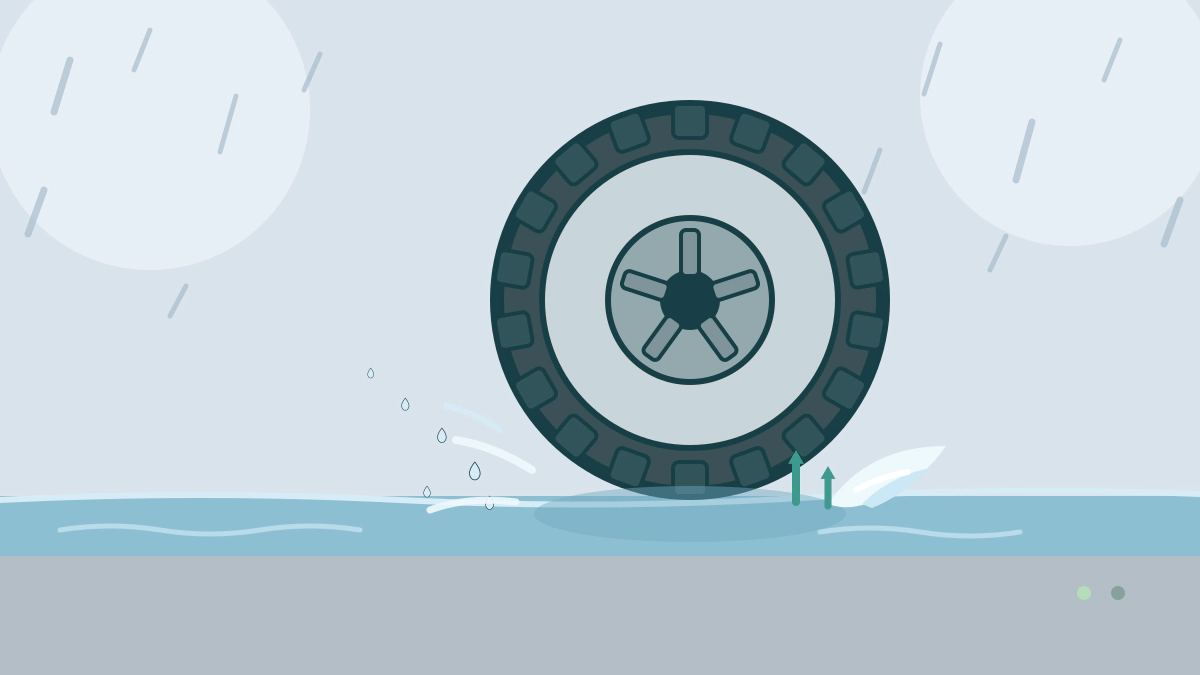
Ease off the gas, keep the wheel steady and avoid hard braking when tires ride on water; then slow down and check the tires once grip returns.
What should you do if your car hydroplanes?
Ease off the accelerator, hold the wheel steady and avoid hard braking; let the tires find the pavement again before you make a sudden correction. Hydroplaning means the tires are riding on a film of water instead of the road. Steering can feel light, and braking can feel delayed.
The instinct to stomp the brake or wrench the wheel is the dangerous part. The North Carolina Department of Transportation says to take your foot off the gas, apply the brakes in a steady, slightly firm way, then steer in the direction of the skid. AAA says to look and steer where you want the car to go and to avoid slamming the brakes.
Why the tires lose contact
The Federal Highway Administration says hydroplaning can begin at speeds as low as 35 mph. AAA explains that with as little as 1/12 inch of water, a tire must displace a gallon of water per second. New tires can still lose some contact at 35 mph; worn tires make the margin smaller.
Water collects in wheel ruts and along the pavement edge, and the FHWA says ruts deep enough to pond water can start hydroplaning. NHTSA says a slick road makes a vehicle harder to control or stop.
Hands, feet and eyes in the first seconds
Keep both hands on the wheel and your eyes on the lane you want. Ease off the accelerator smoothly. Do not jerk the wheel, stab the brake or accelerate to push through the water.
NCDOT’s sequence and AAA’s skid advice agree on the main point: smooth inputs. A hard brake or a sharp turn asks the front tires for grip they do not have.
Do not accelerate through it
More throttle spins the tires faster and gives the tread less time to clear water. It also makes the moment traction returns more abrupt. AAA’s wet-weather guidance recommends avoiding hard braking, sharp turns and cruise control, and separating braking, turning and accelerating into distinct actions.
That last point matters after grip returns. Brake first, then turn, then accelerate, rather than asking the tires to do all three at once.
After the car regains grip
Pull off the road when it is safe. Check the tires for cuts, bulges or debris, and check pressure when they are cold. NHTSA says tires should be inspected for damage and replaced when tread reaches 2/32 inch.
If you drove through standing water, test the brakes gently. The Ford F-150 owner’s manual notes that wet brakes do not stop as effectively and can be dried by applying light pressure while moving slowly. Do that only where it is safe and legal.
Conditions that raise the risk
| Condition | Why the risk rises | What helps |
|---|---|---|
| First minutes of rain | Oil and dust float on the water | Slow down before the road looks wet |
| Standing water in wheel ruts | Water is deeper than it looks | Avoid the ruts when it is safe |
| Heavy spray from traffic | Visibility and water film both increase | Open the gap and use low beams |
| Worn or underinflated tires | Tread clears less water | Check tread and cold pressure |
| Cruise control in rain | It may hold speed when you need to lift | Switch it off before the rain |
Tires set the limit
AAA says proper tread depth and inflation are imperative for wet traction. NHTSA says to check pressure monthly when cold and to replace tires at 2/32 inch. Neither step guarantees grip, but both widen the margin.
For the full wet-weather routine, see how to drive safely in heavy rain. Tire details are in how to check tire tread depth and tire pressure placard vs sidewall. More weather guidance is in Driving Guides.
Frequently asked questions
Can hydroplaning happen with new tires?
Yes. AAA says even new tires can lose some contact with the road at 35 mph when the water film is thick enough. Worn tread makes the margin smaller, but good tires are not a guarantee.
Should I brake hard when the car hydroplanes?
No. AAA warns that slamming the brakes can upset the vehicle’s balance. NCDOT advises steady, slightly firm brake pressure rather than a stomp, with the steering pointed where you want to go.
Does cruise control make hydroplaning more likely?
It can make the response harder. AAA says a driver may need to lift off the accelerator to regain traction, and cruise control works against that by trying to hold the set speed. Switch it off before the road turns wet.
What should I check after a hydroplaning event?
Stop somewhere safe and inspect the tires for cuts, bulges or debris. Check pressure when the tires are cold and look for tread at or below 2/32 inch. If the car pulls, vibrates or a tire looks damaged, have it inspected by a professional before continuing.