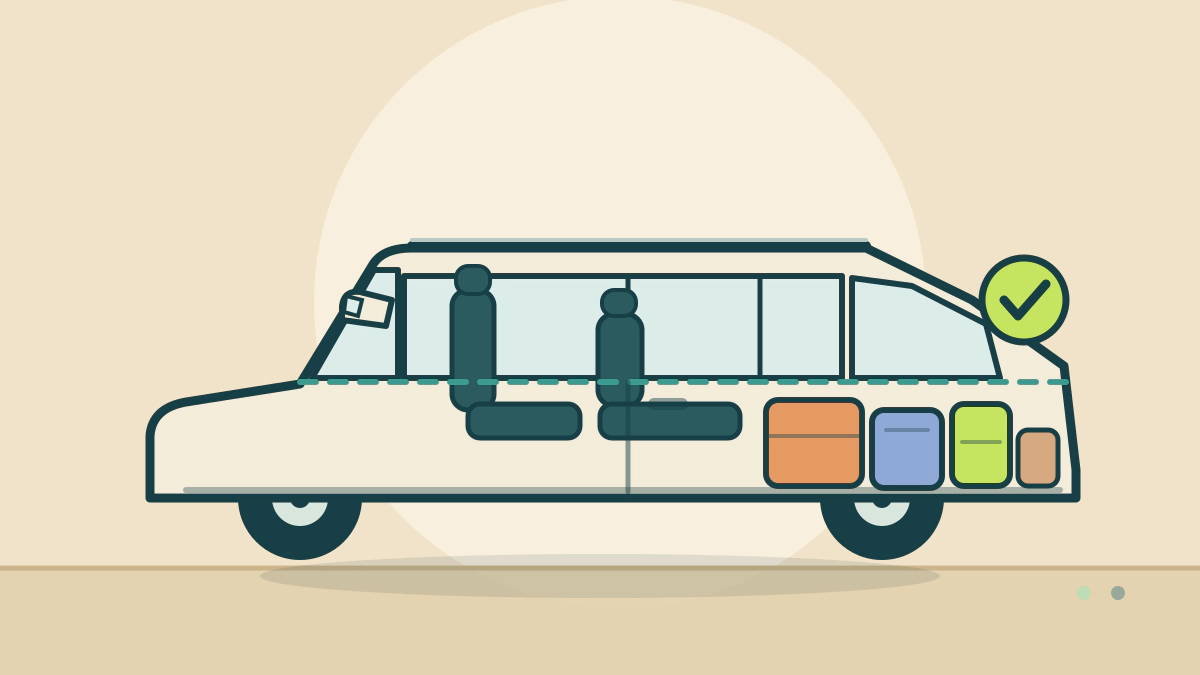
Pack a car so the rear glass, side windows and mirrors stay clear, the load stays under the limit, and nothing loose can move in a stop.
How do you pack a car without blocking visibility?
Keep the load below the window line, put heavy items low and forward, and leave the rear glass and mirrors clear. Visibility is not only the windshield. A full stack against the rear glass removes the view you need for lane changes, parking and pedestrians.
Check the load limit before the car is full
Every passenger car has a maximum load. Under 49 CFR 571.110, the vehicle capacity label must state that the combined weight of occupants and cargo should never exceed a stated figure. That figure covers people, pets and everything in the trunk.
NHTSA points drivers to the Tire and Loading Information label on the driver’s door jamb for the correct tire size and pressure. Read that label and the owner’s manual before a full load.
Do the arithmetic before packing. Add the weight of everyone riding, then subtract from the limit. A roof box or hitch rack does not create capacity, because the same limit still applies to the whole vehicle.
Keep the rear glass clear
Washington law is a clear example. It says no person may drive with any sign, poster or other nontransparent material on the front windshield, side wings, or side or rear windows that obstructs the driver’s clear view of the highway. The rear window is named, not just the windshield.
State statutes differ in wording, so check your own state’s vehicle code. The practical test is the same. Sit in the driver’s seat with the car loaded and look in the interior mirror. If you cannot see the lane behind you, the load is too high.
Pack to the seatback line, not the roof
Treat the top of the seatback or the cargo cover as the ceiling for the load. In a hatchback or SUV the glass sits close to the load floor, so a stack that looks modest from outside can fill the mirror.
NHTSA’s guidance for 15-passenger vans says to place cargo forward of the rear axle, avoid overloading, and see the owner’s manual for the maximum weight of passengers and cargo. Forward placement keeps weight between the axles instead of behind the rear tires.
| Zone | Pack here | Keep clear |
|---|---|---|
| Floor ahead of the rear axle | Heavy cases, coolers, tools | Seatback latch and cargo cover track |
| Floor behind the rear axle | Light bags and soft items | Rear window glass |
| Rear seat | Passengers and child seats | Seatback top and side windows |
| Roof rack | Light bulky items within its limit | Sunroof and antenna |
| Cabin shelves | Nothing loose | Interior mirror and driver sight line |
Secure what can move
Loose items do not stay put in a stop. NHTSA reports about 850 people killed and almost 19,000 injured each year in crashes involving objects in the road, and 73% of the vehicles in those crashes are passenger vehicles.
NHTSA advises tying loads with rope, netting or straps, tying large objects directly to the vehicle, and double-checking the load. It also notes that all 50 states and the District of Columbia have laws about unsecured loads.
Inside the car, the same idea applies. Put small loose items in a closed bin or under a cargo net, and keep hard objects off the rear parcel shelf. How to secure luggage in an SUV covers tie-down ratings, seatback limits and airbag paths for a larger cargo area.
Adjust the mirrors after loading
Load the car first, then set the mirrors. A full cargo area changes the angle through the rear glass, and a passenger in the middle seat can block the interior mirror.
Set the side mirrors so they show the lanes beside the car rather than repeat the center view. Check the backup camera lens and screen with the load in place, and clean the lens if the trip has been dusty.
Keep the side windows clear at the height of the mirrors. Do not hang bags on coat hooks beside the rear glass, and do not let a pet crate ride above the window line.
Roof and hitch cargo do not add capacity
A roof box or hitch carrier can free space inside, but it does not raise the vehicle’s load limit. Check the rack’s own weight limit and the roof load in the owner’s manual, and keep the heaviest items inside and low.
Keep roof loads light, because weight placed high works against stability. NHTSA’s van guidance says not to place any loads on the roof of a 15-passenger van. Roof cargo box versus hitch cargo carrier explains the trade-offs, and does roof cargo reduce gas mileage covers the fuel side. More packing guidance is in Driving Guides.
Frequently asked questions
Can I stack bags above the rear seatback?
No. Keep the load at or below the seatback top or cargo cover. A stack above that line blocks the rear window and can fall forward in a stop.
Is it illegal to cover the rear window with luggage?
Many states restrict nontransparent material that blocks the driver’s clear view, and Washington’s statute explicitly includes the rear window. Check your state’s vehicle code, and treat a hidden rear view as a risk even where the wording is narrower.
Does a backup camera replace the rear window?
No. The camera shows a limited area and can be dirty or blocked by the load. Use the mirrors and turn your head as well.
Where do I find my car’s load limit?
Check the Tire and Loading Information label on the driver’s door jamb and the owner’s manual. Federal rules require the capacity label to state the maximum combined weight of occupants and cargo.