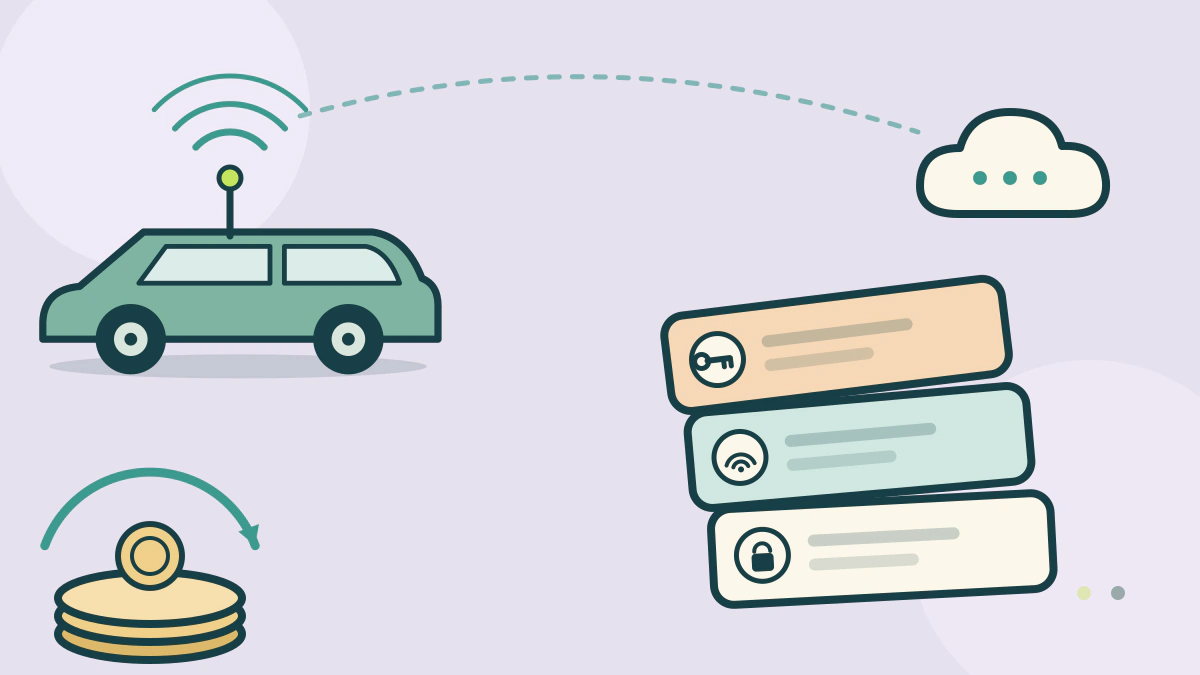
Check trial renewal terms, what stops working after cancellation, data sharing and resale transfer before paying for a connected-car subscription.
Is a connected-car subscription worth paying for?
Only if you will use the live services after the trial ends and the total still beats what you already pay for. A connected-car plan usually sells convenience and remote access, not a physical upgrade to the vehicle.
The decision that matters comes when the introductory period ends and the card on file is charged.
Treat the offer like any other recurring subscription. Read the renewal price, the billing period and the cancellation route before you agree.
What the plan usually buys
Manufacturers package different features, so ask for a written feature list rather than a marketing name. Common items include remote lock, unlock and start through a phone app, live traffic and map updates, a Wi-Fi hotspot, stolen-vehicle assistance, automatic crash notification and vehicle health reports.
Some plans also include driver-score or trip-history features, which overlap with insurance telematics. Car subscriptions versus traditional ownership covers the vehicle-access model; this article covers optional digital services attached to a car you already own or lease.
Do not assume every listed feature needs the paid tier. Remote start may work from the key fob, and stored maps may remain. Ask which functions die when billing stops.
The trial is a billing decision
The FTC’s subscription guidance warns that a free trial often requires a card so the company can charge you if you do not cancel in time. It also warns about pre-checked boxes that can authorize further charges or data sharing.
The same page says businesses must tell you how to cancel before taking your card information, and that cancellation must be simple. Save the terms and a screenshot of the cancellation instructions.
If a charge appears after you cancelled, the FTC advises contacting the company, keeping records and disputing the charge with your card issuer if needed.
Questions to ask before you agree
| Question | Why it matters | Where to check |
|---|---|---|
| What is the price after the trial? | Introductory rates can change at renewal | The offer terms and account page |
| Which features stop if I cancel? | Some depend on the car’s modem, not the key fob | A feature-by-feature list from the dealer |
| Can I cancel online? | Phone-only cancellation adds friction | Sign-up terms and your account settings |
| Does the plan transfer if I sell the car? | It can affect resale and the next owner | The contract and manufacturer support |
| What data does the plan collect or share? | Location and driving data can be sensitive | The privacy notice and in-app settings |
| Is the hardware useful without the plan? | Avoid paying for a feature you cannot use later | The owner’s manual |
Get the answers in writing before you enroll.
What happens when the plan ends
Behavior varies by manufacturer, model year and country. Some cars keep emergency calling, some keep remote commands for a grace period, and some disable app access immediately.
Map updates are a common loss. So is the hotspot, which depends on a cellular account.
Ask the dealer to demonstrate the car with the plan switched off, or at least to list the differences. Check the owner’s manual for functions that work without a data connection.
Data collection comes with the connection
A connected car can collect more than most owners expect. The FTC’s technology blog on car data notes that connected vehicles can gather sensitive information such as location or biometric data, and that its collection and sharing can affect privacy and finances.
In January 2026 the FTC finalized an order with General Motors and OnStar. The agency alleged the companies collected and sold precise geolocation and driving behavior data without adequate notice and consent. The order requires affirmative consent, a way to request and delete data, and a way to disable precise geolocation collection where the vehicle allows it.
That case is a reminder, not a claim about every brand. Read the privacy notice for the specific plan, and look for data-sharing settings in the car and the phone app. The automotive cybersecurity guide explains why vehicle data is also a security question.
Compare it with what you already own
List the features you would actually miss. Then price the alternatives: phone navigation, a phone hotspot plan, a factory or aftermarket remote starter, and the free tier the manufacturer already includes.
Do not compare a subscription with a zero cost. Compare it with the cheapest combination that covers the same need. If you already pay for a phone hotspot, the car’s Wi-Fi plan may add little.
Check the resale and trade-in angle
Ask whether the subscription follows the vehicle or the account. If it follows the account, a buyer may need to start a new plan and pay activation costs. That can weaken your asking price.
Before selling, sign out of the app, remove the vehicle from your account and follow the manufacturer’s data-deletion steps. The FTC has long advised clearing personal data before selling a connected car.
Finally, check open recalls by VIN at NHTSA before you renew anything. A software remedy may change which connected features work.
Frequently asked questions
Is the free trial really free?
Not always. The FTC says a trial can require a card and charge you if you do not cancel in time. Read the terms before you enroll.
Can I cancel a connected-car plan at any time?
That depends on the contract. Month-to-month plans usually can be cancelled with notice, while annual plans may run to term. Check the cancellation method and any early-exit fee before paying.
Does cancelling the plan disable safety features?
Some call-center services stop, while others may remain for a period. Check the manufacturer’s feature list for your model year before the trial ends.
Will the next owner inherit my subscription?
Usually the plan is tied to an account, not the car, but terms differ. Remove your account and data before handing over the keys.
Bottom line: value the features you will keep using, price them against your existing tools, and know exactly how to cancel.