Learn how lane-keeping assist corrects a drift while lane-centering assist steers continuously, with the speed limits, warnings and failure cases to check.
What is the difference between lane-keeping assist and lane-centering assist?
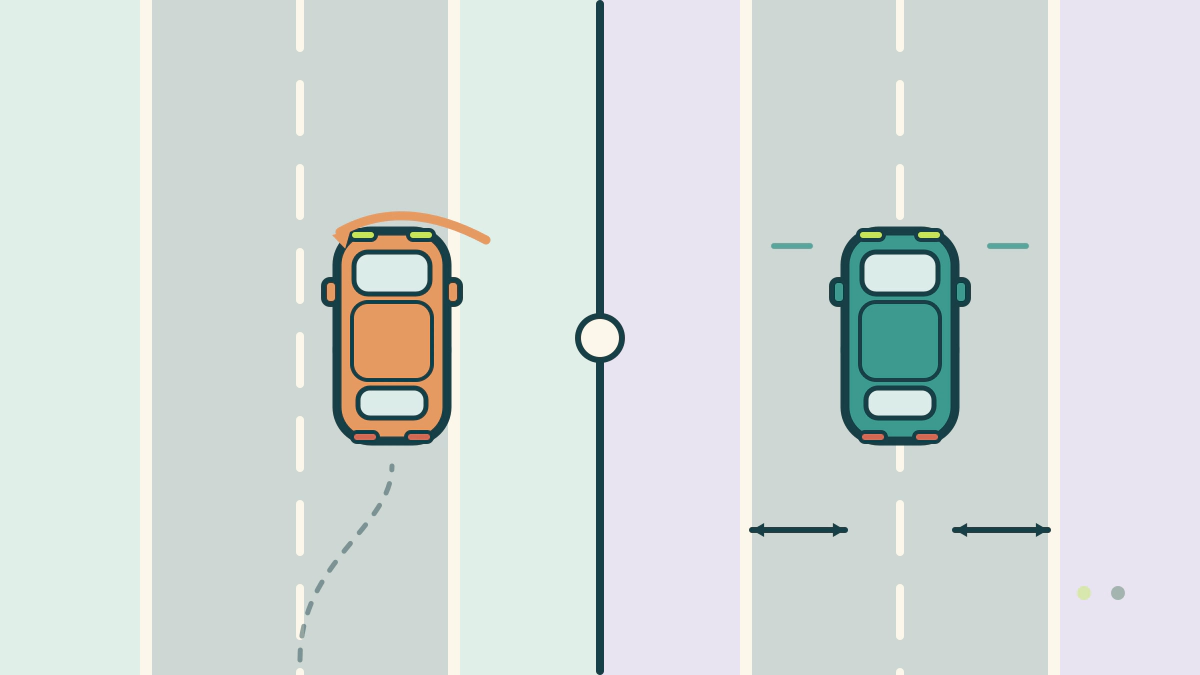
Lane-keeping assist reacts when the car is about to leave its lane; lane-centering assist steers continuously to hold the middle of the lane. NHTSA separates them the same way. Lane keeping assistance corrects a drift, while lane centering applies continuous steering inputs to keep the vehicle centered.
Both are driver aids in the Car Technology category. Neither takes over the driving task, and both depend on a camera seeing lane markings or a vehicle ahead.
Lane-keeping assist is a correction, not an autopilot
Kia’s Lane Keeping Assist has two stages. Lane Departure Warning alerts the driver when the vehicle is leaving the lane. Lane Keeping Assist then adds steering input to help bring it back.
On the 2024 Telluride, Kia says the warning and the steering assist activate at roughly 40 to 120 mph. The manual also says the system does not control the steering wheel when the car is driven in the middle of the lane. That sentence is the key difference: it is not holding you in the center.
If you take your hands off the wheel for several seconds, the car displays a hands-off warning and sounds an alert in stages. Kia says the steering assist may not work if you grip the wheel very tightly or turn it beyond a certain angle.
Lane-centering assist steers all the time
Kia’s Lane Following Assist uses the same kind of camera hardware but a different job. When the vehicle ahead or both lane markings are detected, and speed is below 120 mph, it helps center the car by assisting the steering wheel, according to the Lane Following Assist page.
It still is not hands-free driving. Kia describes a staged warning in the hands-off section: a message first, then a red steering wheel and an audible warning, and finally automatic cancellation if the driver does not respond.
The two systems can be active together. Lane centering does the continuous work; lane keeping remains a backstop for a departure. Some brands bundle them under one button, others separate them, and the names change from one manufacturer to another.
Side-by-side comparison
| Behavior | Lane-keeping assist | Lane-centering assist |
|---|---|---|
| Trigger | Unintended lane departure | Continuous lane position |
| Steering | A correction after drift | Ongoing small inputs |
| Typical speed | About 40 to 120 mph | Below 120 mph |
| Works when centered | No | Yes |
| Hands-off response | Warning in stages | Warning then cancellation |
| Main limit | Markings must be visible | Markings or a lead vehicle must be visible |
The speeds and behavior above are Kia’s, not a universal rule. Read the manual for the exact car.
Where both systems stop working
Rain, snow, dirt, oil and shadows can hide a lane line. So can construction zones, worn paint, crosswalk markings and a lane that splits or merges. Kia’s limitation list includes all of these.
The systems also switch off or pause in specific situations. Kia says Lane Keeping Assist will not operate when the turn signal or hazard lights are on, when stability control is active, during sharp lane changes, or outside the speed window.
IIHS adds the physical limit. It says lane departure systems use sensors to register lane markings or the road edge, and those can be poor on roads that are not well marked or are covered with snow. Low light and bad weather also reduce performance.
Why the distinction matters when shopping
A car with lane-keeping assist will let you drift close to the line, then nudge you back. A car with lane centering will make constant small corrections and can feel like it is steering itself. Some drivers find that helpful on a long highway drive; others find it tiring or unnerving. NHTSA notes that manufacturers use different names for the same technology, so check the manual or the menu, not the marketing badge. The ADAS camera calibration after windshield replacement article explains why the camera behind the glass matters.
Also remember what these systems do not do. They do not replace mirror checks, and they do not make a distracted driver safe. Why blind spot monitoring cannot replace mirror checks covers the same theme for a different aid.
A simple way to test a car
On a test drive, find a marked road and let the car drift slightly toward a line with your hands lightly on the wheel. Note whether it warns, steers, or both.
Ask the salesperson to show the menu that turns each system on and off. Finally, read the warnings page in the manual. The limits are written there, and they are more useful than the feature name on the window sticker.
Frequently asked questions
Is lane-centering assist the same as lane-keeping assist?
No. Lane keeping corrects a departure after it begins, while lane centering steers continuously to hold the middle of the lane. NHTSA defines them as separate technologies. Some cars have both, and some have only the warning.
Can I take my hands off the wheel with lane centering?
No. Kia warns that the system issues a hands-off message, then an audible warning, and then cancels if the driver does not respond. The manual says the driver is responsible for steering and staying in the lane at all times. Keep both hands on the wheel.
Does lane-keeping assist work on any road?
No. It needs visible lane markings or a detectable road edge, and Kia limits operation to roughly 40 to 120 mph. It also pauses when the turn signal is on, during sharp lane changes, or when stability control is active. Snow, rain and worn paint can hide the line.
Why does lane keeping fight me during a lane change?
Kia says the system will not operate when the turn signal or hazard lights are on. If you change lanes without signaling, the camera can read the crossing line as an unintended departure and apply a correction.