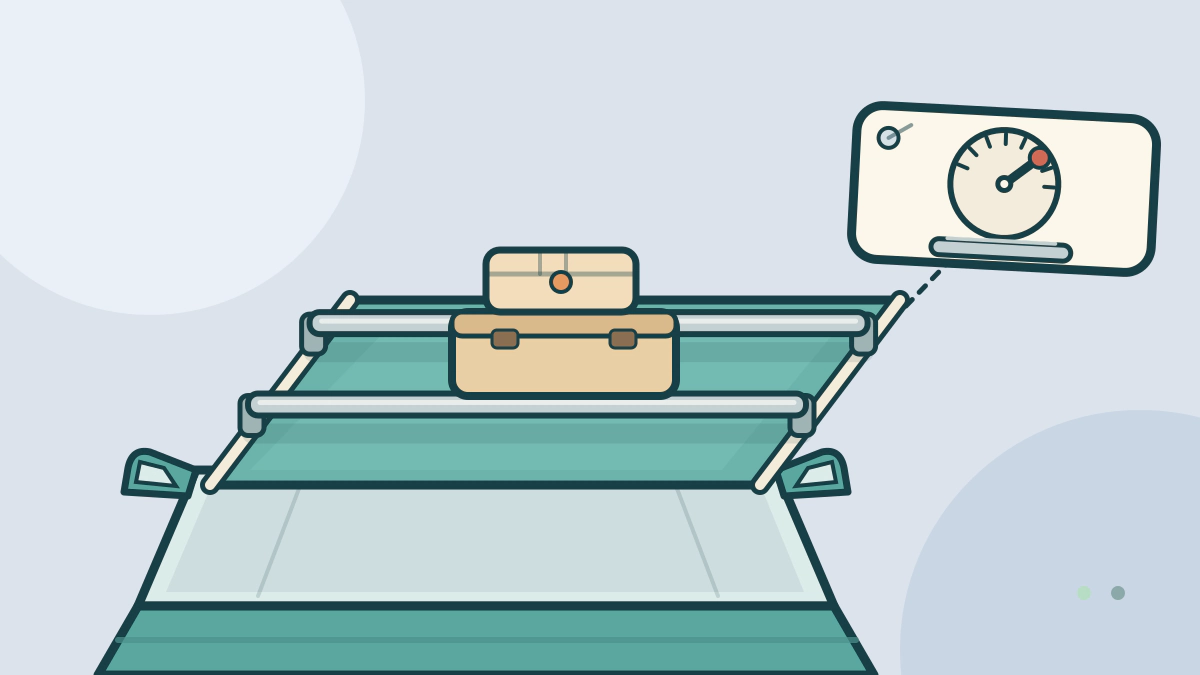
Choose crossbars by roof type, bar width and approved mount positions, then work from the lowest roof, bar and accessory load rating.
What should you check first when buying crossbars?
Match the bars to your roof type, then use the lowest load rating in the chain. Crossbars are the two bars that span the roof. They attach through legs or feet and a vehicle-specific fit kit, so the same bar can need different hardware on another car. Rhino-Rack’s fitment guide lists five roof types: bare roof, raised rails, flush rails, gutter and track.
The vehicle’s own roof limit comes before any product claim. A rack cannot make the roof stronger.
Identify your roof type before you compare bars
A bare roof has no rails, so the fit kit has to clamp at the door frame or another approved point. Raised rails stand above the roof and give a leg something to grip. Flush rails sit close to the body. A track is a permanent rail with a channel. Rhino-Rack says the fit kit is the vehicle-specific part that matches pads, brackets, clamps or track hardware to that roof.
Crossbars suit boxes, bikes, boards and bags. A platform covers more roof for tents or mixed loads.
Start with the owner’s manual roof figure
Kia’s 2026 Sportage Hybrid/PHEV manual gives two different figures. The roof rack can hold up to 880 lb (400 kg) only while the vehicle is parked. On the road, the limit is 220 lb (100 kg) of cargo and accessories, spread evenly. Kia also says the combined weight of occupants and cargo must stay under the GVWR.
The parked figure is static. Use 220 lb as the working ceiling, then check whether the bars are rated lower.
Compare the crossbar rating with the vehicle rating
Rhino-Rack’s RCP07-BK instructions rate a pair of crossbars at 80 kg (176 lb) evenly distributed. That figure includes the 5 kg weight of the bars and legs, so the cargo allowance is lower. Rhino-Rack’s fitment guide also says the vehicle’s own roof limit governs, not the rack’s.
The rating belongs to the pair, not to each bar. Two bars spread a load; they do not double the roof limit. Ratings differ by vehicle and bar type, so use your own kit’s label or fitment sheet.
Put the bars only at approved mount positions
Spacing matters because the bars must sit on the roof’s strong points. Rhino-Rack lists three possible spacings for one vehicle: 1175 mm, 820 mm and 765 mm, and calls 820 mm the recommended setting. Those numbers are specific to that fitment, not a universal rule.
Kia says the crossbars should be placed in the proper load-carrying positions before loading. It also says to reposition the bars if wind noise appears when empty. Move them between approved points, not to any convenient spot.
Two bars close together support a kayak over a shorter span, so check the carrier’s clamp spacing too.
Check sunroof travel and the roof panels
Kia’s manual is direct about sunroofs. Cargo on the rack must not interfere with sunroof operation, and the sunroof should not be operated while cargo is aboard. Load should never rest directly on the sunroof or the roof panels, which are not designed to carry it.
Cycle the sunroof through its full travel after fitting the bars, before loading. A bar that clears when closed can still hit a tilting panel.
Width, security and noise
Bar width should cover the usable roof width without hanging far past the body. Kia says large objects must not exceed the roof’s overall length or width, and cargo must not block the driver’s view or the high-mounted stop lamp.
Check the fasteners after the first short drive. Rhino-Rack asks for a recheck after fitting and at regular intervals, and says the bars should come off before an automatic car wash.
Wind noise is normal after adding bars. Rhino-Rack says an aerodynamic bar is quieter than a square one, and a fairing can reduce the noise further. If it is bad, confirm the bars are in the approved positions first.
For a lifted SUV, the extra height changes the math, as this roof rack guide explains. Compare rooftop and hitch options in Roof Cargo Box vs Hitch Cargo Carrier, and see the wider range in Car Accessories.
Which numbers set the limit
| Limit or setting | Example figure | What it controls |
|---|---|---|
| Kia roof, driving | 220 lb (100 kg) | Total cargo and accessories on the move |
| Kia roof, parked | 880 lb (400 kg) | Static load only, such as a roof tent |
| Rhino-Rack bar pair | 80 kg (176 lb) | Pair rating, including about 5 kg of bars and legs |
| Approved bar spacing | 765, 820 or 1175 mm | Mount positions for one specific fitment |
Frequently asked questions
Do I need crossbars if my car already has roof rails?
Yes, if you want to carry a box, bike or board. The rails are the side bars that run front to back. Crossbars span them and give the carrier a mounting point. Kia says cargo can attach to the roof rack or to Kia cross members, so check which part your car actually has.
Can I use any crossbars on any car?
No. The legs and fit kit are matched to the roof type and to specific mounting points. Rhino-Rack lists bare roofs, raised rails, flush rails, gutters and tracks as different attachment situations. A bar that fits one roof may have no safe foot for another.
How far apart should crossbars be?
Use the distance or positions in your vehicle’s fitment instructions. Rhino-Rack gives three approved spacings for one vehicle and recommends one of them. Moving the bars outside the approved points can put the load in the wrong place on the roof.
Do crossbars fit over a sunroof?
They can, but clearance has to be checked. Kia says cargo must not interfere with sunroof operation and that the sunroof should not be used while cargo is aboard. Cycle the panel through its full travel after fitting the bars, before you load anything.