Pick a roof rack for a lifted or modified SUV by matching roof load limits, crossbar spacing, sunroof clearance and garage height.
What is the real roof limit on a modified SUV?
The roof limit is the lowest number among the vehicle’s roof rating, the crossbar rating, the carrier rating and the load’s own hardware. A lift, a heavy spare or a rooftop tent does not raise that number. It can lower the usable margin because the added parts count as cargo.
A rack that looks strong enough can still exceed the roof structure limit, and a carrier can be rated below both. That applies to every Car Modifications build.
Start with the owner’s manual, not the rack catalog
Kia’s 2025 Sorento owner’s manual lists a roof load of 220 lb (100 kg) while driving, evenly distributed across the crossbars and roof rack. It also lists 880 lb (400 kg) for the parked vehicle, which covers static uses such as a roof tent. The parked figure does not apply on the road.
The same page says crossbars should be placed in the proper load-carrying positions before loading, and that cargo must not interfere with sunroof operation. It also says never to place load directly on the sunroof or roof panels and never to operate the sunroof with cargo aboard.
Crossbar spacing and sunroof clearance
Crossbar spacing is not a style choice. Factory rails have fixed mounting points or an approved adjustment zone, and aftermarket systems come with a fitting position for each vehicle. Moving a bar outside that zone can reduce clamping strength and put the load in the wrong place.
Rhino-Rack’s fitting instructions for a CR-V system tell installers to make sure the sunroof will not collide with the roof rack system. That check matters on a modified SUV because a lift changes the height of the body, but the sunroof still travels inside the same roof opening.
Spacing also controls support for a long load. Two bars close together support a kayak over a shorter span than two bars at the approved maximum. The carrier’s clamps add another limit, so check its fit list first.
Rack ratings and off-road derating
A rack’s own label is part of the chain. Rhino-Rack rates one CR-V crossbar kit at 75 kg (165 lb) for two bars on the road, and says to use the lower of that figure and the vehicle manufacturer’s roof allowance. The kit weighs about 5 kg, and that weight comes out of the cargo total.
The same instructions say to divide the rating by 1.5 for off-road use, which gives 50 kg (110 lb) for two bars. They also say that adding crossbars does not increase the vehicle’s maximum permissible roof load. A third bar can spread a load, but cannot make the roof stronger.
How a lift changes garage and car-wash clearance
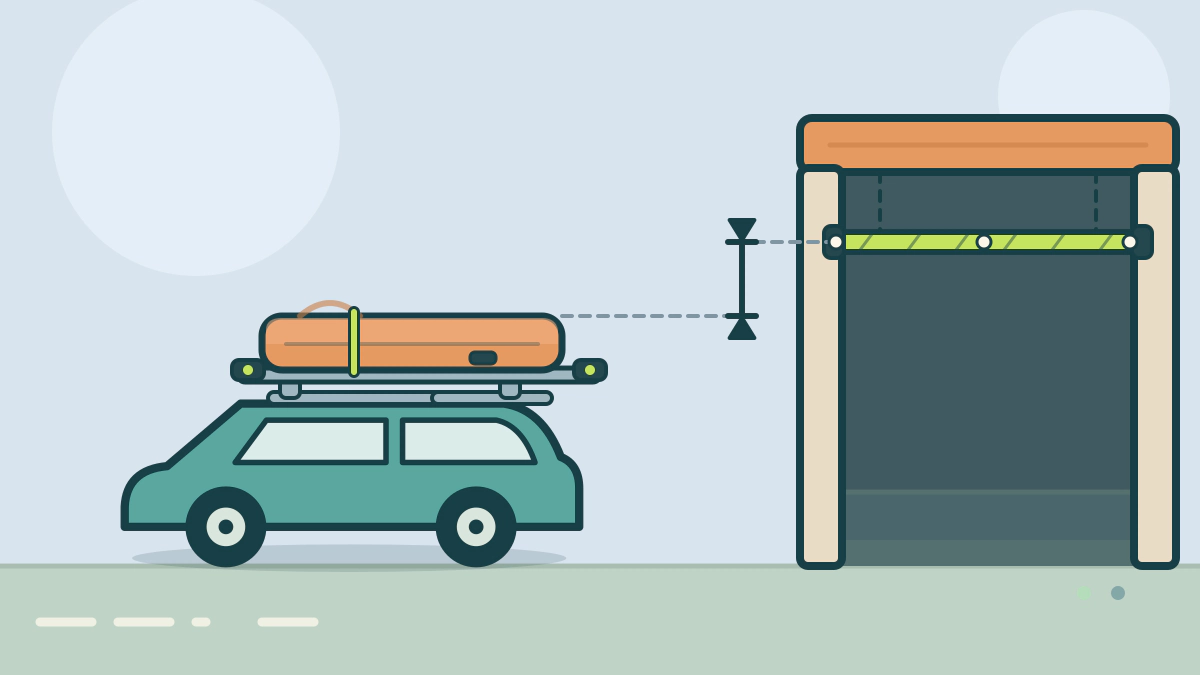
A suspension lift raises the body by roughly the lift height, and larger tires add about half of their diameter increase to the roof height. A roof rack adds its own height, and a loaded box or tent adds more. The total is what has to clear the garage door, the opener rail and any pipe or beam.
Measure the lowest point of the opening, not the ceiling. Then measure the vehicle at its tallest point with the rack and load fitted. Do not use the stock brochure height after a lift.
A lift also changes car-wash and parking-structure fit. Remove the crossbars when not needed, as Rhino-Rack instructs for automatic car washes, and check the clearance sign.
Load height, center of gravity and driving
Kia warns that loads on the roof raise the center of gravity and can change handling, and tells drivers to avoid sudden starts, braking, sharp turns and high speeds. That warning applies doubly to a lifted SUV with a tall load.
Secure the load to the rack, not the roof rails alone. NHTSA’s secure your load guidance says cargo should be tied down and the load double-checked. Stop and check the straps after the first few miles.
Comparing the numbers
| Rating | Example figure | What it covers |
|---|---|---|
| Vehicle roof, driving | 220 lb (100 kg) on a 2025 Sorento | Cargo plus accessories, evenly spread |
| Vehicle roof, parked | 880 lb (400 kg) on the same manual | Static load such as a roof tent |
| Aftermarket crossbars, on-road | 165 lb (75 kg) for two bars | Bars plus cargo, minus the 5 kg kit weight |
| The same bars, off-road | 110 lb (50 kg) | Rating divided by 1.5 |
| Carrier or box label | Varies by product | The carrier’s own maximum |
A roof box and a hitch carrier load the vehicle differently; our guide to a roof cargo box versus a hitch cargo carrier covers that choice. For bike fit, see bike rack types.
A lifted SUV also changes towing behavior, as our guide to lifted truck towing explains.
Frequently asked questions
Does a lift increase my SUV’s roof load rating?
No. The rating comes from the roof structure and rack, not the suspension. A lift raises the vehicle but adds no carrying capacity. Use the lowest figure on the vehicle, crossbar and carrier labels.
How do I set crossbar spacing?
Use the mounting points or adjustment zone in the vehicle manual and the rack maker’s instructions. Then check that the carrier’s clamps fit that spread and that the sunroof and hatch clear the bars. Do not move the bars just to fit a box.
Can I leave a roof box on all the time?
You can, but it adds height, wind noise and weight, and may not fit low garages or car washes. The driving limit still applies. Remove the box when clearance is tight.
Can I open the sunroof with a roof rack fitted?
Kia’s manual says not to operate the sunroof while carrying cargo on the roof rack, and not to let anything interfere with its movement. Check the rack instructions as well; a bar or clamp can sit in the sunroof’s path.