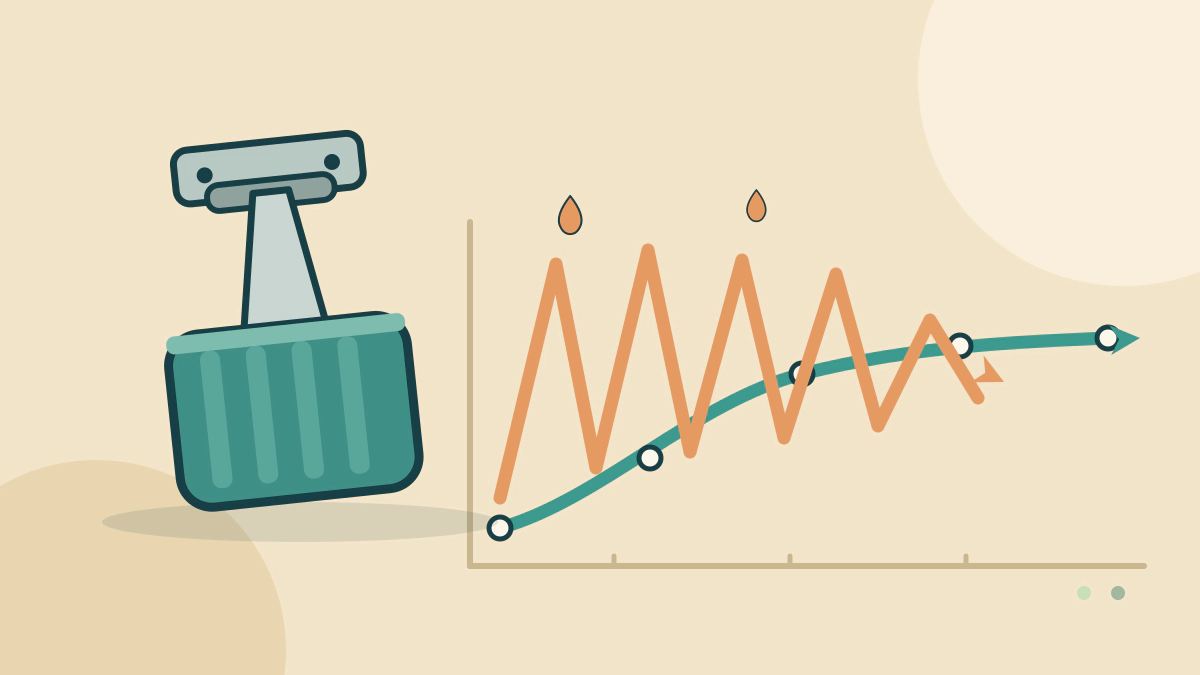
See how much fuel aggressive acceleration costs, why braking throws energy away, and how to measure the difference on your own commute.
Does aggressive driving really cost fuel?
Yes. Rapid acceleration and hard braking raise fuel use, and the effect is large enough to measure at the pump. FuelEconomy.gov puts the penalty at roughly 15% to 30% on the highway and 10% to 40% in stop-and-go traffic. The page counts speeding, rapid acceleration and hard braking as aggressive driving.
The page puts the equivalent cost at $0.42 to $1.66 per gallon at its example price of $4.15. That is a range across vehicles and driving styles, not a guaranteed saving for every driver. The direction is consistent: harder speed changes burn more fuel.
Where the energy goes when you accelerate
Only about 12% to 30% of the energy in gasoline is used to move a conventional car down the road, according to FuelEconomy.gov’s energy analysis. Most of the rest is lost as heat in the engine, driveline and accessories.
Braking is another loss. The page explains that whenever you use the brakes in a conventional car, energy first used to overcome inertia and propel the vehicle is lost as heat through the brakes. A hard launch followed by a hard stop spends fuel to build speed and then turns that speed into heat.
The same analysis estimates that 14% to 20% of the fuel energy reaches the wheels in city driving, against 22% to 30% on the highway. City driving has more stops, more idling and more braking, so the way you use the pedals matters more.
What smooth acceleration looks like in practice
Smooth does not mean slow. It means one deliberate push on the accelerator, then a steady build to the speed you need. Avoid stabbing the pedal, backing off and stabbing it again. That pattern asks for repeated bursts of power.
Look further ahead. If the next light is red or traffic is stacking up, ease off early instead of accelerating to the bumper in front and braking. Easing off early avoids building speed that the brakes would turn into heat, the loss FuelEconomy.gov describes. For the idling side of the same habit, see does idling use more fuel than restarting.
The traffic pattern that wastes the most
| Driving pattern | What happens | Fuel effect |
|---|---|---|
| Full-throttle launch, then hard braking | Engine builds speed that the brakes turn into heat | High loss, repeated at every light |
| Tailgating in a moving queue | Constant small brake and accelerator corrections | Speed never settles |
| Late braking into a stop | Fuel spent maintaining speed longer than needed | Wasted momentum |
| Coasting to a red light | Engine does less work near the stop | Smaller loss |
| Steady highway speed | Fewer accelerations and less braking | Lowest loss of the group |
The size of the difference depends on the car, the road and the traffic.
Highway speeding is part of the same problem
Aggressive driving includes speeding, and speed has its own fuel penalty. FuelEconomy.gov says gas mileage usually falls rapidly above 50 mph, and treats every 5 mph over 50 as an extra $0.29 per gallon at its example price. A driver who accelerates hard to 80 mph and then brakes for an exit combines both penalties.
The highway estimate of 15% to 30% covers that pattern. The city estimate of 10% to 40% is wider because stop-and-go traffic magnifies the cost of each hard launch. See how to improve highway fuel economy for the speed side and driving habits that increase brake wear for the hardware side. The Driving Guides hub covers more driving topics.
How to measure the change on your own car
Use the tank-to-tank method. Fill the tank, reset the trip meter, drive normally for the whole tank, then fill again at the same pump. Divide miles by gallons. Repeat for two or three tanks to get a baseline.
Then drive smoothly for the same number of tanks on the same routes. Keep tire pressure, fuel grade and air-conditioning use close. Weather and traffic will still move the result, so treat a small difference as noise.
FuelEconomy.gov says driver feedback devices helped the average driver improve fuel economy by about 3%, and helped drivers using them to save fuel by about 10%. A simple log does the same job. It turns a general claim into a number for your commute.
When the gain will be smaller
A car that spends most of its life at a steady 70 mph has little braking to remove. A hybrid or electric car recovers some braking energy through regenerative braking, which the FuelEconomy.gov analysis notes, so the penalty for hard braking is different from a conventional car.
Cold weather and short trips also cut fuel economy before driving style enters the picture. FuelEconomy.gov’s factors page notes that the engine does not operate efficiently until it warms up and that frequent short trips reduce economy. Smooth driving helps, but it cannot outweigh a cold engine on a two-mile trip.
Frequently asked questions
Does smooth acceleration really save that much fuel?
FuelEconomy.gov estimates a 10% to 40% difference in stop-and-go traffic between aggressive and sensible driving. That is a range. Your saving depends on how much braking and re-acceleration your route contains.
Is cruise control better than smooth pedaling?
On an open highway, cruise control can hold a steady speed and usually saves gas, according to FuelEconomy.gov. In traffic or on hills, manual smooth driving is often the better tool because the system cannot react to the road ahead.
Does hard braking waste fuel even if I accelerate gently?
Yes, in a conventional car. FuelEconomy.gov explains that braking turns the energy used to build speed into heat. Gentle acceleration helps, but late, hard braking still throws away momentum you already paid for.
Do hybrids avoid the penalty for aggressive driving?
Partly. Regenerative braking recovers some energy that would otherwise be lost as brake heat, according to FuelEconomy.gov. Aggressive driving still costs fuel, and the exact penalty varies by hybrid system and route.