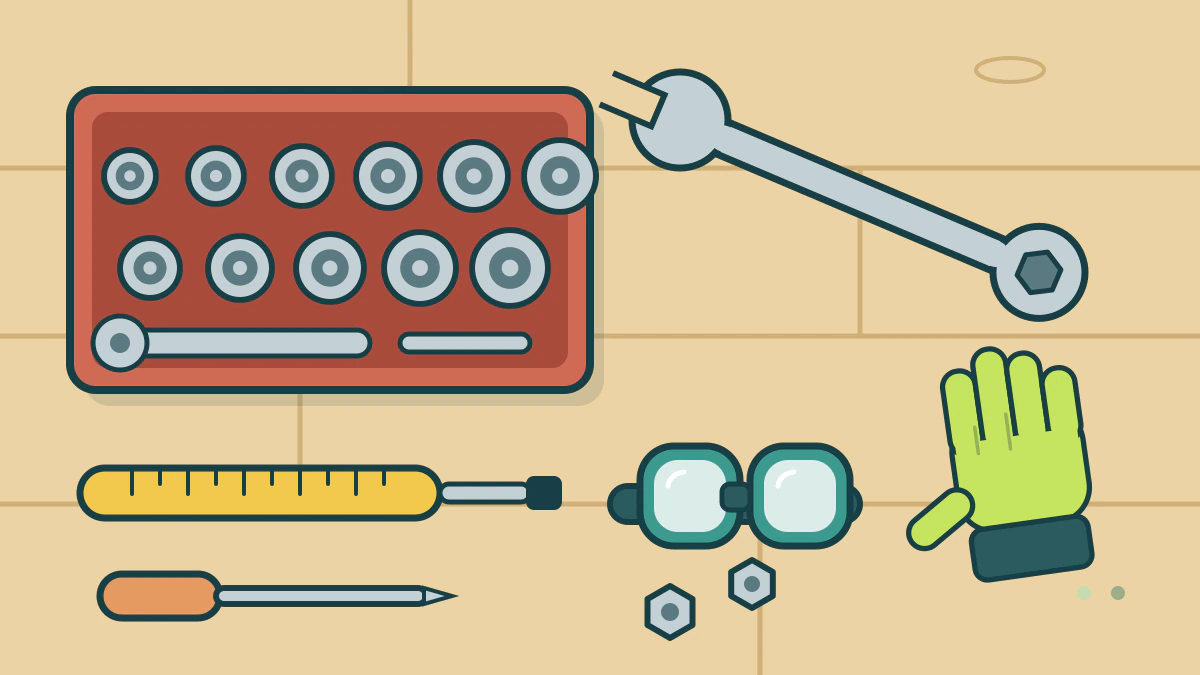
See which basic tools a beginner needs for car care, from the jack and stands to a socket set, tire gauge and safety gear, using owner's manuals and OSHA.
Which basic tools does a beginner need first?
A beginner needs a short list: the jack and wheel wrench that came with the car, jack stands, a socket set with a wrench, a tire pressure gauge, gloves and eye protection. This guide describes each item only the way manuals and safety agencies do. Brands and prices are left out because neither changes what a tool is for.
Your owner’s manual sets the limits. The 2026 Kia K5 manual says it gives instructions only for maintenance items that are easy to perform. It adds that several procedures can be done only by a dealer with special tools, as stated in its maintenance services section. So start small. Add a tool only when a manual procedure asks for it.
The car’s own jack and the stands it cannot replace
The 2026 Kia K5 manual lists a jack, a jack handle and a wheel lug nut wrench in its jack and tools section. A 2025 Hyundai manual (CN7 edition) lists the same three items in its changing tires steps.
Kia stores them in the luggage side trim and states that the jack is provided for emergency tire changing only. Treat it that way. Your own manual’s flat tire section shows where yours are kept.
The Kia manual says never to go under a vehicle supported by a jack. It tells owners to use vehicle support stands instead. It also says to use only the designated jacking positions, never the bumpers, and never to run the engine while the car is on the jack.
The Hyundai manual agrees. It says not to get under a vehicle that is supported by a jack. Stands protect your body, not just your car. Your manual shows where the lifting points are. Our comparison of jack stands versus car ramps covers the two support options in more detail.
Socket set, wrench and the thread-size question
The Kia manual’s wheel steps show good socket habits. It says to seat the socket completely over the nut. It also says not to stand on the wrench handle or slide an extension pipe over it.
Do not assume inch sizes. Both the Kia and Hyundai manuals say their wheel studs and nuts have metric threads. Kia warns that a non-metric nut on a metric stud will not secure the wheel and will damage the stud. Check which system your car uses before you buy anything.
A torque wrench is a separate tool with its own rules. Read how to use a torque wrench correctly before you tighten anything that matters.
Eye protection and gloves
OSHA says thousands of people are blinded each year by work-related eye injuries that proper eye and face protection could have prevented. The 2026 Kia K5 manual tells owners to wear eye protection when charging or working near a battery. It warns that battery acid must not contact skin, eyes or clothing.
Gloves are less simple. OSHA’s PPE publication says there is no ANSI standard for gloves. It recommends choosing them for the task. It says leather, canvas or metal mesh gloves protect against cuts and burns. For chemicals, the glove must be chosen for the chemical you will handle.
Tire gauge: the cheapest safety check
NHTSA advises keeping a tire pressure gauge in the vehicle. It says to check every tire, including the spare, at least once a month. Tires should be cold, meaning the car has not been driven for at least three hours.
NHTSA also says a tire pressure monitoring light is not a substitute for the monthly check. Use the pressure on the door-edge label or in the manual, not the number molded into the sidewall. Our guide to the tire pressure placard versus the sidewall explains the difference.
Beginner tool kit at a glance, and what to hold off on
| Tool | What the sources say | Where to find your car’s details |
|---|---|---|
| Jack and wheel wrench | Supplied for emergency tire changing | Flat tire section of the owner’s manual |
| Jack stands | Use stands, never a jack alone, under a car | Jacking positions in the owner’s manual |
| Socket set and wrench | Seat the socket fully; wheel nuts are metric in two manuals | Wheel and tire section of the manual |
| Tire gauge | Check monthly, tires cold | Door-edge label and owner’s manual |
| Gloves and eye protection | Pick by task; eye injuries are preventable | OSHA guidance and manual warnings |
Skip specialty tools until a maker’s instructions name them. Some jobs are not for beginners at all. Our guide on when a car repair is not safe to do yourself lists the jobs that manuals send to a dealer.
For more beginner guides, browse DIY Car Repair.
Frequently asked questions
Is the jack that came with my car enough for repairs?
No. Kia describes its jack as provided for emergency tire changing only. For any work under the car, both manuals say to use support stands and never to rely on a jack alone.
Do I need metric or inch sockets?
Check your manual. The Kia and Hyundai manuals say their wheel studs and nuts have metric threads. Other fasteners on your car can differ, so confirm the thread type before you buy.
Which gloves should I wear for car work?
OSHA says to choose gloves for the task. Leather, canvas or metal mesh gloves protect against cuts and burns. Chemical work needs gloves rated for that specific chemical.
How often should I check tire pressure with a gauge?
NHTSA says at least once a month, with cold tires. The 2026 Kia K5 manual says at least twice a month and before long trips. Follow the schedule in your own manual.