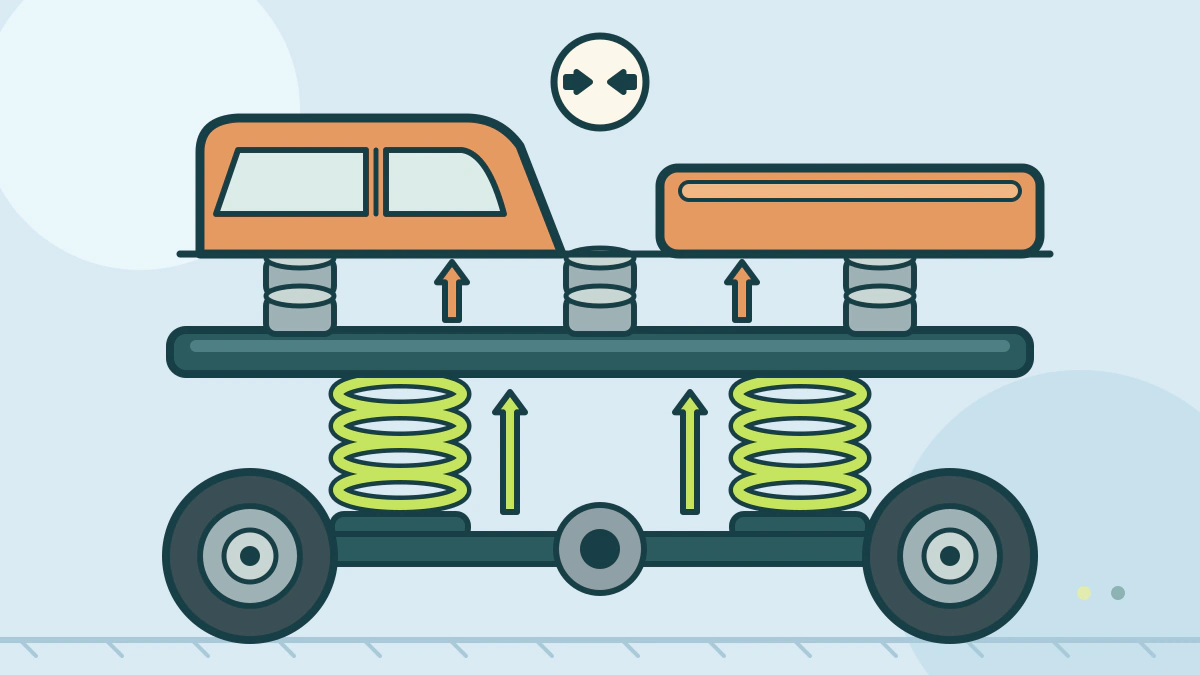
Compare suspension and body lifts: what each raises, alignment and steering changes, driveshaft and brake-line strain, stability, towing and inspection rules.
What is the difference between a suspension lift and a body lift?
A suspension lift raises the frame and body relative to the axles; a body lift raises only the body relative to the frame. The first changes springs, steering and alignment geometry. The second leaves the axles, springs and alignment alone but stretches every connection between body and frame.
What a suspension lift actually moves
A suspension lift changes the distance between the axle and the frame. It can use taller coil springs, spacers above the springs, lift blocks between the axle and leaf springs, or replacement struts and control arms.
A lift block, in Virginia’s rule, is any solid piece placed between and separating the vehicle’s front axle and the springs. The state rejects lift blocks on the front axle, while allowing shims used to correct alignment.
The federal in-use inspection standard is broader: springs shall not be broken or extended above the vehicle manufacturer’s design height.
What a body lift actually moves
A body lift puts blocks between the body and the frame at the body mounts. The axles, springs, shocks and alignment settings stay where the factory put them. The body, bed, bumpers and grille move up as a unit.
The suspension geometry is untouched, but the body now sits farther from the frame. Steering shafts, brake lines, wiring, ground straps, fuel filler hoses and radiator mounts were all built for the original gap.
Virginia draws a line at three inches. It rejects a vehicle modified to raise its body more than three inches above the manufacturer’s attachment points or frame rail, excluding original spacers, washers and bushings when measuring. Other states set their own limits or none.
Alignment and steering after a suspension lift
Raising the frame changes the angles that alignment settings describe. Camber, caster and toe can all move.
The federal in-use standard gives the test: toe-in and toe-out shall not be greater than 1.5 times the value in the vehicle manufacturer’s service specification. A lifted truck needs an alignment to the manufacturer’s numbers, not to whatever looks straight.
Virginia also rejects front suspension changes that reduce turning radius, bypass safety components of the original steering mechanism, or allow lateral movement between the axle and frame.
Driveshaft angles and brake-line strain
With the frame farther from the axle, the driveshaft meets the differential at a larger angle, and CV or U-joints work through more of their range. Larger working angles mean more vibration and more wear.
The federal in-use standard says brake hoses shall not be mounted so as to contact the body or chassis, and it requires inspection of front hoses through all wheel positions from full left to full right. A hose that is merely tight at stock height can become taut at full droop or full lock.
Height, stability and the towing numbers
A taller truck carries its weight higher. That changes the margin it had in corners, lane changes and crosswinds, and a trailer adds force to the same body. The published tow rating was written for a stock vehicle, so a lift does not create a new one. Our guide to lifted truck towing covers hitch height, lamp aim and ratings.
Ford’s towing guide explains the load side. Too much tongue load can press the vehicle down at the back and lift the front wheels to the point where traction, steering response and braking are severely decreased. Too little tongue load can reduce rear traction and cause instability, tail wagging or jackknifing. A leveling kit changes the rake the truck had when that advice was written.
IIHS measured a car bumper zone of 16 to 20 inches and found that many light-truck bumpers sit above 20 inches, so the bumpers miss each other in a low-speed crash. Raising a bumper moves it further from the protection other vehicles offer.
Inspection, state rules and warranty
Start with your own state’s inspection manual. Virginia’s three-inch body limit and front lift-block ban are examples, not a national code. Massachusetts limits how far the front-to-rear horizontal plane may differ, which matters for leveling kits.
Kia’s owner’s manual adds that the vehicle should not be modified, that modification can affect performance, safety or durability, and that it may violate safety and emissions regulations. It says damage or performance problems from a modification may not be covered under the warranty.
| Question | Suspension lift | Body lift |
|---|---|---|
| What rises | Frame and body, relative to axles | Body only, relative to frame |
| Alignment settings | Change; reset to manufacturer spec | Unchanged |
| Driveshaft and CV angles | Larger working angles | Unchanged |
| Brake hoses and steering shaft | Check at full lock and full droop | Check for added length and engagement |
| Bumper and hitch height | Rises with the frame | Rises with the body |
| Inspection focus | Springs, steering, alignment, hoses | Body mounts, body height, connections |
Frequently asked questions
Does a body lift need a wheel alignment?
The suspension and axles do not move, so the alignment settings should not change. The work still needs a check of the steering shaft, brake lines, wiring and hoses, because those parts now span a larger gap.
Is a three-inch body lift legal?
Not everywhere, and not as a universal rule. Virginia rejects a body raised more than three inches above the manufacturer’s attachment points, but other states use different limits or none.
Which lift is better for towing?
Neither adds towing capacity. A body lift keeps suspension geometry but raises the hitch and bumper with the body, while a suspension lift changes how the truck sits under load.
Will a lift void the truck warranty?
It depends on the warranty terms and on what failed. Kia’s manual says damage or performance problems resulting from a modification may not be covered.