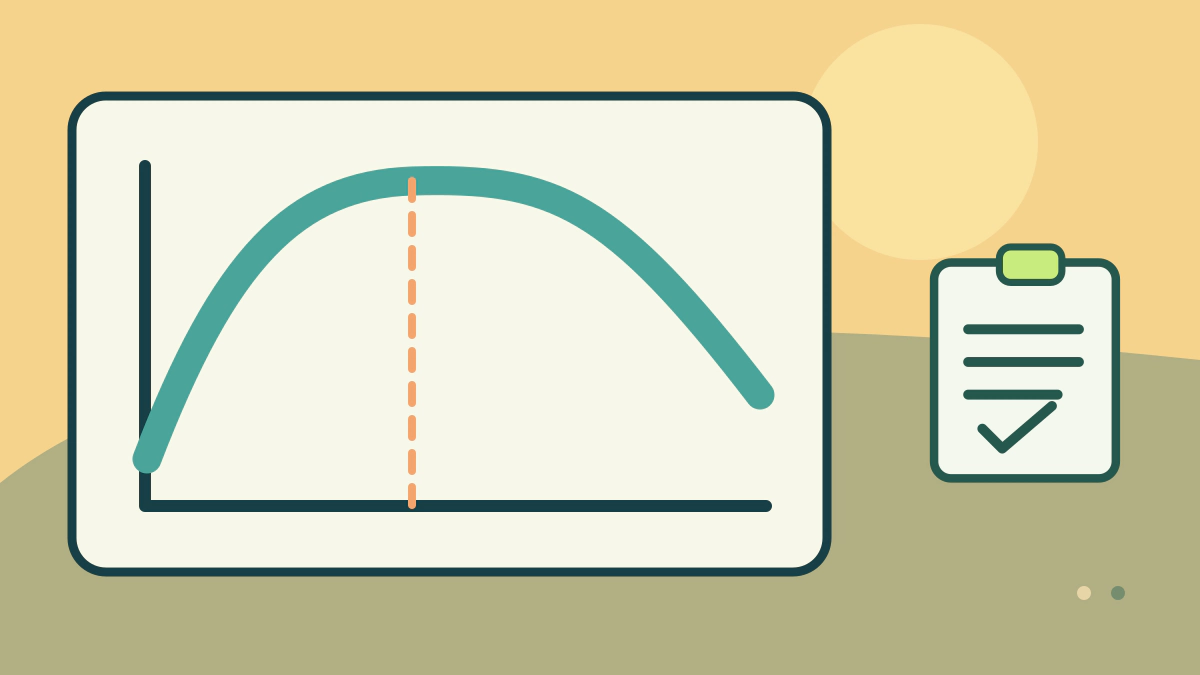
Check EV charging record claims by separating peak power, average power, energy added, state-of-charge window and repeatable customer conditions.
How should you evaluate an EV charging-speed record?
First identify exactly what was measured: peak kilowatts, average power, energy added, miles of rated range added or elapsed time across a stated battery window. These are different records. A brief high peak can coexist with an ordinary charging session, while a lower peak held longer can produce a faster useful stop.
Do not assume a headline describes a customer-ready production vehicle.
Determine whether the test used a prototype, development battery, laboratory supply, special cable, preconditioned pack or charger not available on the public network.
The disclosure checklist
| Evidence | Question to ask | Why it changes the result |
|---|---|---|
| Vehicle and software | Production specification or prototype? | Hardware and limits may differ |
| Battery | Usable capacity, chemistry and voltage architecture? | Affects current, heat and energy accepted |
| State of charge | Exact start and finish percentages? | Charging normally slows as the pack fills |
| Temperature | Pack and ambient temperature; was preconditioning used? | Battery limits depend on temperature |
| Charger | Rated voltage, current and delivered power? | The vehicle cannot take power the station cannot supply |
| Measurement | Where and how were energy and time recorded? | Display estimates may not equal metered energy |
NREL describes a charging curve as power in kilowatts versus battery state of charge and notes that accepted power varies by vehicle, model year and state of charge. Its fast-charging infrastructure analysis models power dropping substantially around high states of charge. That is why a peak number cannot represent the whole session.
Peak power versus average power
Peak power is the highest observed rate, often sustained briefly. Average power over a stated interval is energy added divided by elapsed time. If a session adds 50 kWh in 15 minutes, the simple charger-to-vehicle average is 200 kW. That arithmetic says nothing by itself about battery capacity, driving range, charging losses or repeatability.
Ask to see the complete curve. A credible graph labels both axes, shows the start and finish state of charge and identifies whether the energy figure came from the charger or vehicle.
Cropped graphs can hide ramp-up, thermal throttling or an early stop.
Why “miles added” needs context
Miles are not electricity. A claim converts energy into distance using an efficiency assumption. EPA range is established through defined laboratory and adjustment procedures; the agency’s EV range testing explanation also notes that official MPGe includes charging losses. A private record might use a different cycle, optimistic display estimate or local certification.
For cross-vehicle comparison, publish both metered kWh and the range basis. A highly efficient car can add more estimated miles per minute at the same power than a less efficient vehicle.
That is valuable, but it is not a higher electrical charging rate.
Conditions that can make a record hard to repeat
Battery preconditioning can bring cells into their preferred temperature window.
Very cold or hot conditions can reduce accepted power.
The arrival state of charge matters, as do charger sharing, station voltage, cable temperature and battery software.
Repeated sessions may heat the pack differently from a single prepared run.
A useful result therefore includes multiple sessions or an independently observed repeat.
It should state whether cabin climate was running, whether the car had just been driven and whether charging began automatically after navigation-based preconditioning.
A fair reporting method
- Link the original test report, not only a press release quoting it.
- State the exact record category in the headline.
- Name vehicle status: production, preproduction or research hardware.
- Report energy, time, state-of-charge window, peak and average power.
- Describe charger and environmental conditions.
- Separate measured facts from manufacturer interpretation.
- Explain what a driver could reproduce on compatible public equipment.
The DOE Alternative Fuels Data Center distinguishes charging equipment and infrastructure considerations. Availability matters: a record requiring a voltage or current no deployed station provides may demonstrate future capability rather than present road-trip performance.
Common questions
Is the highest-kW EV always the fastest to charge?
No. Curve shape, usable capacity, efficiency and the chosen state-of-charge window determine stop time.
Is 10–80 percent a universal test?
It is a useful convention, not a universal rule. Battery buffers and trip strategies differ, so energy added must also be reported.
Can a charger’s nameplate prove delivered power?
No. It shows a limit. Actual voltage, current and the vehicle’s requested power determine delivery.
Does a record prove long-term battery durability?
No. Charging speed and durability require different evidence, including repeated-cycle testing and warranty terms.
Bottom line: celebrate engineering progress only after the record’s unit, window and conditions survive a transparent evidence check.