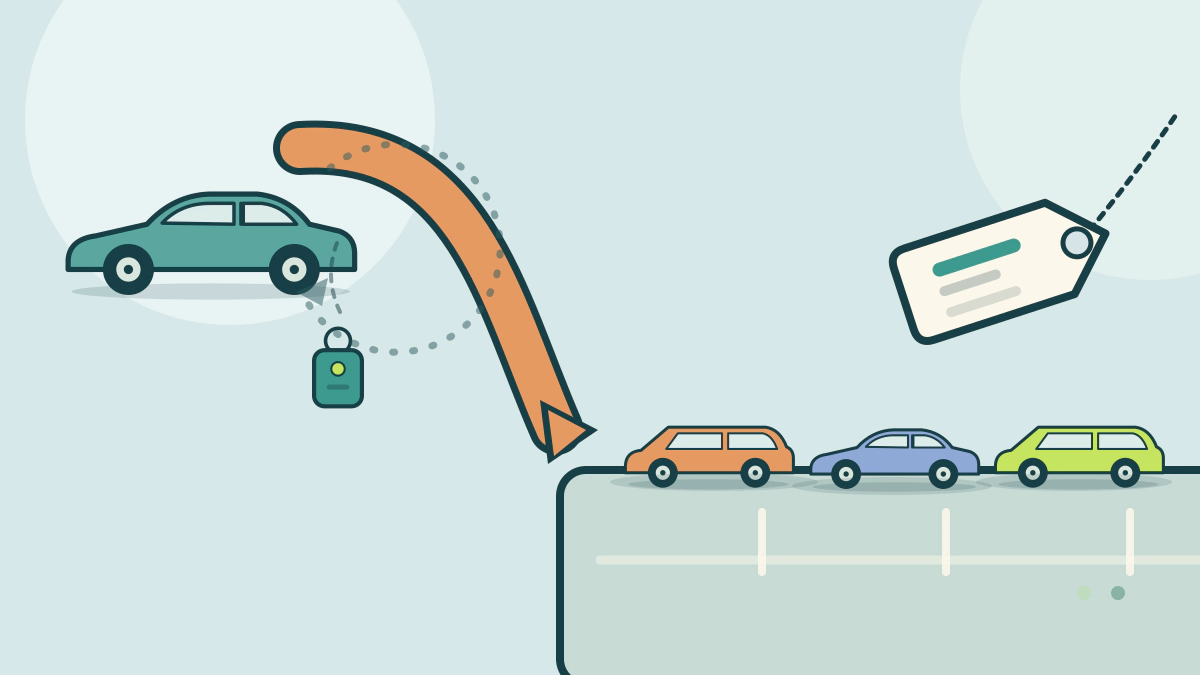
Follow how a lease becomes a used car: contract length, buyouts, inspections, auctions and dealer reconditioning shape the supply that reaches lots.
How does a lease become a used car?
A lease becomes used-car supply on a delay: the car is returned at the end of a 24-to-48-month contract, inspected, remarketed and then sold by a dealer. A change in leasing today does not change today’s used inventory. It changes what may arrive years later.
The CFPB says a lease is an agreement to use a vehicle for a set number of months and miles. Payments cover depreciation plus rental charges. A typical lease runs two to four years, and most limit mileage to 10,000 to 15,000 miles a year (CFPB). Those terms set the age and mileage of the future used car.
The Federal Reserve explains the end of a closed-end lease. The lessee returns the vehicle unless they buy it, and may owe excess mileage, excess wear and a disposition fee (Fed). Each outcome changes whether the car reaches a dealer lot.
The lease contract sets the age and mileage of future supply
A 36-month lease returns a three-year-old car; a 24-month lease returns a younger one. The mix of terms shapes the age of off-lease inventory, not just its quantity. Mileage allowances do the same. A 10,000-mile allowance and a 15,000-mile allowance produce different odometers after three years. The CFPB says most leases restrict mileage to that range.
| Stage | What happens | Effect on used supply |
|---|---|---|
| Lease signed | Term, mileage allowance and residual are set | Sets the age and mileage of a future return |
| Lease term | Lessee pays depreciation plus rent | The car stays out of the used market |
| Maturity | Lessee returns or buys the car | A buyout removes the car from auction supply |
| Inspection | Lessor checks wear and mileage | Condition decides the retail or wholesale channel |
| Remarketing | Lessor sells, often through an auction | Dealer inventory rises when the car sells |
| Retail sale | Dealer reconditions and lists the car | The car reaches the used lot |
These terms are set at signing.
Buyouts remove cars from the auction pipeline
Not every leased car reaches a sale lane. A lessee can buy the car at the residual price if the contract includes a purchase option. The Federal Reserve notes that a closed-end lease may build equity when market value is above residual. The lessee does not receive that equity by returning the car, but can capture it by buying or transferring the option.
That matters for supply. Automotive Fleet reported Cox data showing most leases run 36 months. It also reported that, when used values were high, more than 90% of leases were not returned to dealers or auctions because consumers bought or kept them (Automotive Fleet). Those cars never became auction supply.
A buyout is not always good for the buyer. If residual is above market value, returning can be cheaper.
Inspection and condition decide which lot the car reaches
A returned lease is inspected before sale. Ally says a returned vehicle may be offered through SmartAuction after a third-party inspection. It stays on the dealer’s lot until sold and picked up, or a transporter takes it away (Ally).
Condition affects the channel. A car with excess wear may need reconditioning before retail sale. The lessor’s report and the dealer’s inspection both matter.
Reconditioning takes time and money. Automotive Fleet lists transport delays, reconditioning bottlenecks and title or administrative delays as reasons vehicles sit. Each idle day is a day of depreciation (Automotive Fleet).
Fleet leases follow a similar path
Commercial fleets add another stream. A company lease or fleet program ends when the vehicle is de-fleeted. It is then remarketed, often through an auction, and a dealer may buy it for retail or commercial resale.
The mechanics are the same: contract length, mileage, condition, transport and paperwork. The difference is the buyer and specification. A work truck with a specialized upfit may appeal to fewer buyers. Automotive Fleet says build and specification data help remarketers target buyers before the vehicle leaves service.
What the supply chain means for a used-car shopper
Lease supply is one input. Rental fleet sales and repossessions also feed used lots. A shortage of off-lease cars does not empty the market. It changes the mix and may change prices for segments leases dominate.
The timing is slow. A leasing change this year affects returns in two to four years. A buyout wave can remove cars even when lease volumes are steady.
For the buyer, the checks are ordinary. Verify the title and history, inspect the condition, compare mileage with age and ask for service records. The mileage guide explains why one reading is not a verdict. The lease-end guide explains returns, and car leasing explained covers contract basics. More coverage is in Automotive News and Industry.
Frequently asked questions
Do all leased cars go to auction?
No. A lessee may buy the car, and a dealer may keep it for its own inventory. The lessor may also sell it through a closed or digital auction. The route depends on the contract and the lessor’s policy.
How long after a lease ends does the car reach a dealer?
It varies. The return, inspection, transport, title work and sale can take days or weeks. The car may need reconditioning before retail sale. There is no single timeline for every lessor.
Does a lease return always have lower mileage?
Not necessarily. The contract sets an allowance, and the driver may stay under or go over it. A three-year lease with a 15,000-mile annual allowance can return with about 45,000 miles. A shorter lease with a lower allowance can return with less.
Why do buyouts reduce used-car supply?
A buyout keeps the car with the lessee instead of sending it to the lessor’s sale channel. If many lessees buy at maturity, fewer cars reach auctions and dealer lots. The effect is largest when the residual is below market value.