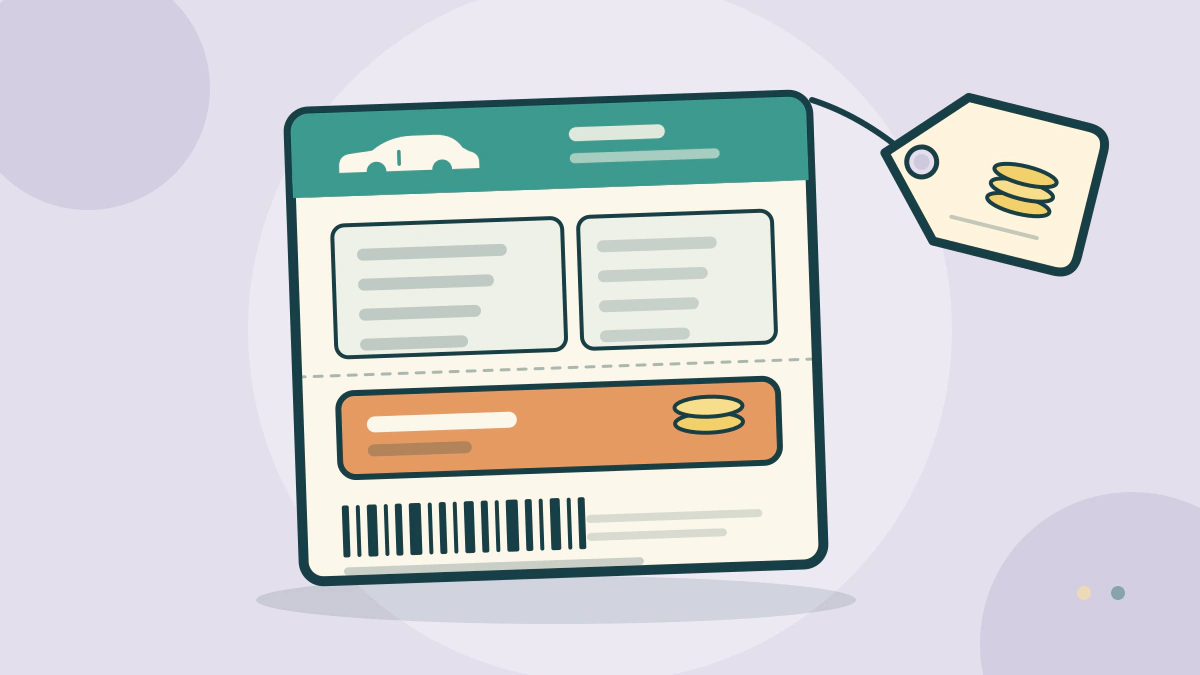
MSRP means manufacturer's suggested retail price: the figure federal law puts on a new car's window label, what the total includes and what stays outside it.
What does MSRP mean?
MSRP stands for manufacturer’s suggested retail price: the price an automaker recommends a dealer charge for a new vehicle. Federal law requires that suggested figure to appear on the window label of every new car sold in the United States. The word “suggested” is the part buyers most often miss. The number is a reference point, not a ceiling and not a fixed price.
This entry is part of the Automotive Glossary, which defines the terms that recur in US buying and ownership paperwork.
The federal rule that puts MSRP on the window
The price line comes from the Automobile Information Disclosure Act, 15 U.S.C. 1232. The statute requires a manufacturer to attach a label to the windshield or side window before delivering a new automobile to a dealer. The label must state the make, model and identification number, the final assembly point, the dealer and delivery location, and the transportation method when the car is driven or towed.
The price items are listed separately. The label must disclose “the retail price of such automobile suggested by the manufacturer,” the suggested retail price of each factory-installed accessory or optional item, the amount charged to the dealer for transportation, and the total of those amounts. That structure explains why one label shows a base price, a list of options and a destination charge instead of a single figure.
The same section also provides for NHTSA crash-test ratings to appear when they have been assigned, which is why safety stars share space with pricing on a modern sticker.
What the MSRP figures cover
| Line on the label | Inside the total MSRP? | What it represents |
|---|---|---|
| Base vehicle price | Yes | The suggested price of the car with standard equipment |
| Factory-installed options | Yes | Each option carries its own suggested retail price |
| Destination charge | Yes | The transportation amount charged to the dealer |
| Dealer-installed accessories | No | Added after the factory build and priced by the dealer |
| Sales tax, title, registration | No | Government charges set by state and locality |
| Dealer documentation fee | No | A dealer charge kept separate from the vehicle price |
| Market adjustment or addendum | No | A dealer markup above the manufacturer label |
Read the pricing block from the base price down. The factory options and the destination charge should add up to the total shown at the bottom. If a number appears on a second sticker placed beside the official one, it is not part of the manufacturer’s suggested price. The FTC’s car-buying guidance makes the same separation between an advertised price and the written out-the-door price that includes all charges and fees.
Why the letters matter more than the number
The Consumer Financial Protection Bureau describes MSRP as the price a manufacturer suggests the dealer offer, with recommended options and features included. It also notes that other costs and fees shape the total cost of the vehicle.
Because the price is suggested, two dealers can sell the same car at different amounts. Manufacturer rebates, inventory levels, trade-in allowances and financing offers all move the final figure. A discount from MSRP is also not the same as a low purchase bill, because fees and add-ons can erase the difference.
A worked reading of one label
Start with the base price for the exact trim. Add each factory option listed on the label, then add the destination charge. Compare that subtotal with the total MSRP printed on the sticker; on a complete label the two should agree.
Then build the purchase total. Add any dealer-installed accessory, the documentation fee, sales tax, title and registration, and any other disclosed charge. The result is the amount before financing, which is the figure to compare between dealers. The out-the-door price guide walks through that comparison in detail.
Keep the vehicle identification number attached to every quote. A lower MSRP on a differently equipped car is not a better deal.
Common confusions
MSRP and sticker price are often used as synonyms, but a dealer addendum is not part of the manufacturer label. Invoice price is a different figure: it is the amount the manufacturer charges the dealer, and it is not the dealer’s final cost after incentives. Transaction price is what a buyer actually agrees to pay. Out-the-door price adds taxes and fees to that agreed price before financing.
A market adjustment also sits outside MSRP. It is a dealer charge, sometimes printed on a supplemental sticker, and it can be questioned or refused.
The MSRP versus invoice comparison explains why invoice is a weak proxy for dealer profit, and the window sticker guide covers the remaining label fields.
Frequently asked questions
Is MSRP the same as sticker price?
Not exactly. MSRP is the manufacturer’s suggested price for the vehicle, its factory options and the destination charge. A dealer may attach a second sticker with accessories or a markup, and those amounts are not part of MSRP.
Can a dealer charge more than MSRP?
Yes, in general. The figure is a suggested retail price, so a dealer may sell above or below it. Ask for the final terms in writing and compare them with the label before you agree.
Does MSRP include tax and registration?
No. Sales tax, title, registration and dealer fees are separate from the manufacturer’s suggested price. The CFPB advises buyers to look at the full cost, not only the vehicle price.
Does MSRP change during the year?
It can. Manufacturers may adjust prices or option packages during a model year, and a later build may carry a different label. Compare the label on the specific vehicle by its identification number, not a number remembered from an earlier listing.