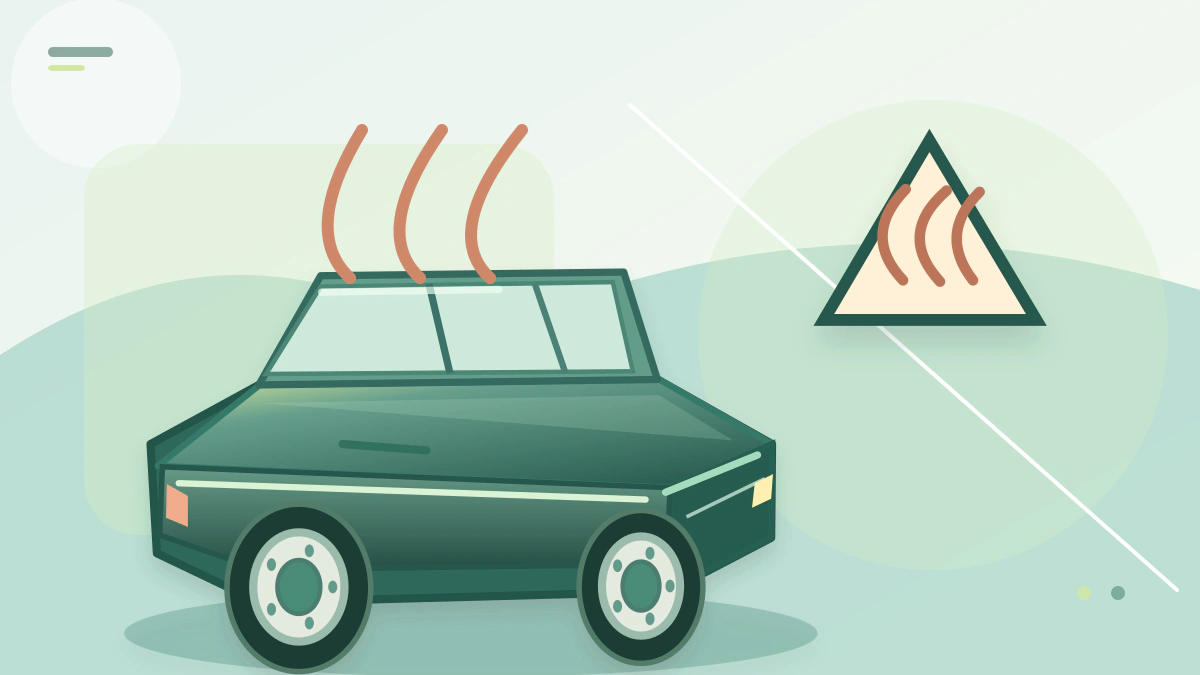
An overheating engine can be caused by low coolant, a leak, airflow problems, thermostat failure, a faulty fan, a damaged water pump or other issues. Continuing to drive may cause major damage.
Recognize the signs
Watch for a high temperature gauge, overheat warning, reduced power, steam or a sweet coolant odor. A heater that suddenly blows cold air may also be a clue on some vehicles.
The exact dashboard warning and protective behavior differ by manufacturer.
Use the owner’s manual for the proper response.
AAA warns that the gauge only works if its sensor works. If you see steam, smell burning or lose power while the gauge looks normal, pull over anyway and turn the engine off.
The FTC describes a sweet, steamy odor as a sign of a coolant leak. A hot, metallic smell with steam from under the hood means the engine has overheated. The FTC says to pull over immediately and have the vehicle towed.
What to do immediately
Pull over as soon as it is safe, turn off the engine if the vehicle is overheating, and keep clear of hot moving components.
Never open a hot radiator or pressurized coolant reservoir cap: escaping fluid can cause serious burns.
If there is heavy steam, loss of coolant or recurring overheating, arrange roadside assistance instead of trying to drive farther.
Possible causes
Common categories include coolant leaks, inadequate radiator airflow, an inoperative cooling fan, stuck thermostat, failing water pump, blocked passages or combustion gases entering the cooling system.
A diagnosis should distinguish an actual engine overheat from a faulty sensor or gauge, but do not assume it is just a sensor when temperature warnings appear.
Telling a coolant leak from other puddles
Look under the car only after the engine has fully cooled. Note where the puddle sits and what color it is.
The FTC says yellowish green, pastel blue or fluorescent orange fluid points to an antifreeze leak. AAA adds that coolant can also be red, yellow or violet and smells sweet.
Color alone is a clue, not proof. AAA says color is not a reliable way to tell which coolant type a car needs.
A clear puddle of plain water is usually air-conditioner condensation, according to the FTC. The cooling system is sealed, so AAA says low coolant means a leak somewhere. Photograph the stain and tell the shop how often you have topped up.
Checking likely causes from simple to costly
AAA lists low coolant first, because most coolant problems come down to a leak. A hose can also leak or clog.
A damaged or loose serpentine belt can slow the water pump. AAA says to check the belt before blaming the pump, since a belt fault is more likely.
AAA also names a stuck thermostat and low engine oil. A blown head gasket is among the more serious causes.
This order is a guide, not a diagnosis. Ask the shop which tests ruled each cause in or out.
Inspection and repair
A qualified technician may pressure-test the cooling system, inspect hoses and fans, scan sensor readings and check thermostat and pump operation.
Topping off fluid without identifying the cause can leave an unsafe problem unresolved.
After repair, make sure the correct coolant specification and refill/bleeding procedure were used for the vehicle. Cooling-system checks before hot weather are covered in the summer car maintenance checklist.
Symptom-to-action guide
| Observation | Possible categories | Urgency and next step |
|---|---|---|
| Temperature warning or gauge climbing into danger zone | Cooling-system or sensor problem | Stop safely; follow owner manual, avoid continued driving |
| Steam or coolant spraying | Major leak or overheating | Keep clear, switch off when safe, request roadside help |
| Overheating mainly in traffic | Cooling fan, airflow or related fault | Have cooling system professionally diagnosed |
| Overheating on climbs or under load | Coolant circulation, capacity or engine fault | Stop if warning appears; don’t assume vehicle can continue |
| Coolant puddle under parked car | Hose, radiator, reservoir or other leak | Do not drive while coolant loss or overheating remains unresolved |
These patterns do not diagnose a specific component. A failed thermostat, water pump, fan, coolant leak, obstructed radiator or internal engine problem can share symptoms. A high temperature indication may sometimes be electrical, but assuming “just a sensor” without proof risks engine damage. Thick white exhaust together with coolant loss is covered in white vs blue vs black exhaust smoke.
Critical safety precautions
If overheating is suspected, move to a safe location, follow the manufacturer’s warning instructions and allow the system to cool. Never remove a radiator cap or pressurized expansion tank cap while hot. Hot coolant and steam can cause severe burns.
Avoid fans and belts that may activate without warning.
Do not spray cold water over hot engine components.
If steam blocks visibility, stop where safe and request assistance rather than driving onward.
Common questions
Can I drive a few more miles if the car is overheating?
Continuing can cause serious damage and may be unsafe. Stop safely and consult the manual; arrange a tow if the warning persists or coolant is leaking.
Does adding coolant fix overheating?
Only if the underlying issue is properly resolved. Coolant loss often points to a leak or another fault, and the system may require a manufacturer-specific bleeding procedure. Never open a hot pressurized cap.