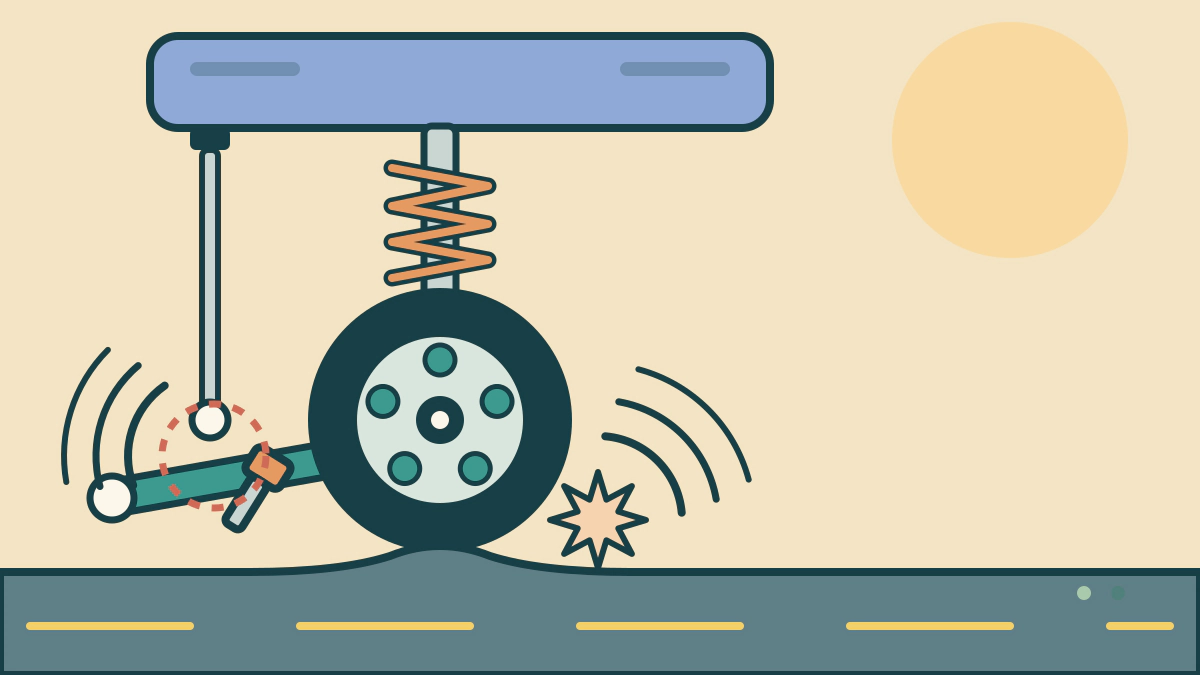
Learn what a clunk or knock over bumps can point to, which simple checks to make first and which signs mean the car needs a prompt inspection.
What a clunk over bumps usually means
A clunk over bumps is a dull knock from a part that is loose, worn or hitting something, and it deserves an inspection soon. The noise alone cannot name the part.
The FTC lists a “clunk” as a random thumping sound. It names two causes: a loose shock absorber or other suspension component, and a loose exhaust pipe or muffler.
This guide covers knocks and thumps. A higher-pitched creak is a different complaint, covered in why a car squeaks over bumps.
No test drive or hands-on diagnosis went into this page. It summarizes what federal and industry sources and two owner’s manuals say.
Match the sound to the likely area
The pattern of the noise helps a technician. Write down what you notice before the visit.
| What you notice | What the sources link it to | Sensible next step |
|---|---|---|
| Random thump over bumps | FTC: loose shock absorber or other suspension part, or a loose exhaust pipe or muffler | Book an inspection soon |
| Rattle when starting, accelerating or braking | Car Care Council lists this as an exhaust symptom | Ask for an exhaust check |
| Knock that began after tire work | Manuals call for re-checking wheel nuts after a wheel is disturbed | Return to the tire shop promptly |
| Thud from the cargo area | Loose cargo moving around | Remove or secure the items, then listen again |
| Clunk plus pulling, wandering or vibration | FTC ties these to worn steering parts, alignment or tire pressure | Do not wait for it to grow |
Rule out the easy causes first
Start with what is inside the car. Toyota’s 2021 Tacoma manual says to secure cargo so it does not shift or slide while driving. A moving load can sound like a failing part.
Next, think about recent tire or wheel work. Ford’s 2014 Escape manual says to retighten lug nuts to the specified torque within 100 miles after any wheel disturbance. It also warns that a wheel installed without correct contact can loosen and come off while the vehicle moves.
Toyota’s manual gives a different number. It says to check that wheel nuts are still tight after driving 1,000 miles. Manuals differ, so read yours and ask the shop what it did.
Do not tighten wheel nuts by feel. The torque value and tool are in your manual and the shop’s records.
Do a safe bounce check
The FTC describes a simple test for shocks and struts. Bounce the vehicle up and down hard at each wheel, then let go. Count the bounces. Weak shocks allow two or more.
Park on level ground and push down on the body only. Never reach under a car held up by a jack.
The same FTC page says springs normally do not wear out. It suggests looking for one corner sitting lower than the rest.
A passing bounce test does not clear the suspension. Only an inspection can rule out other worn parts.
Signs that call for faster action
The Car Care Council calls steering and suspension key safety systems. It lists these symptoms:
- The car pulls to one side.
- Tires wear unevenly.
- There is excessive noise, vibration or bouncing.
- The driver feels a loss of control.
The FTC adds that worn steering parts, such as a ball joint, can cause wandering or trouble steering straight. Worn shocks or suspension parts, or improper tire pressure, can hurt cornering.
If a clunk comes with any of these, limit driving and get it inspected. See why a car pulls to one side and uneven tire wear patterns for related checks.
An exhaust knock has its own warning. Ford’s manual says a damaged exhaust system may let exhaust enter the vehicle, and it should be inspected and repaired immediately.
What to ask the shop
Tell the shop when the clunk happens: slow bumps, fast bumps, turning, braking or cold starts. Mention recent repairs and tire work.
Ford’s maintenance table lists parts a shop can check, including suspension components for leaks or damage, the exhaust system, and steering and linkage. Ask which of these were examined.
The FTC advises getting a written estimate that names the condition, the parts and the labor. For expensive or complicated repairs, it suggests a second opinion.
You can also check for open recalls with the VIN on NHTSA’s recall page. Browse more Car Problems guides for other symptoms.
Frequently asked questions
Is it safe to drive with a clunking noise over bumps?
It depends on the cause, and the sound alone does not reveal it. A thump from loose cargo is minor, but a loose wheel or damaged steering part is not. Stop driving if steering feels loose or the car pulls, and have it inspected promptly.
Can bad shocks cause a clunk?
Yes. The FTC names a loose shock absorber or other suspension part as a cause of a random clunk. Its bounce test, where weak shocks bounce twice or more, can add a clue but does not replace an inspection.
Why did the clunk start after new tires or a rotation?
Wheel nuts that are not tightened to specification can loosen. Both manuals above call for re-checking nuts after wheel work, though the stated intervals differ. Return to the shop quickly and ask them to confirm the torque.
Does a clunk always mean an expensive repair?
No source supports that. The FTC says a clunk may come from a loose shock or a loose exhaust part, and a technician has to find which. Ask for a written estimate and consider a second opinion before approving costly work.