Learn when and how to check engine coolant on a cold engine, read the reservoir marks, choose the right coolant and spot a low level that needs diagnosis.
Check the level cold, between the marks, with the engine off
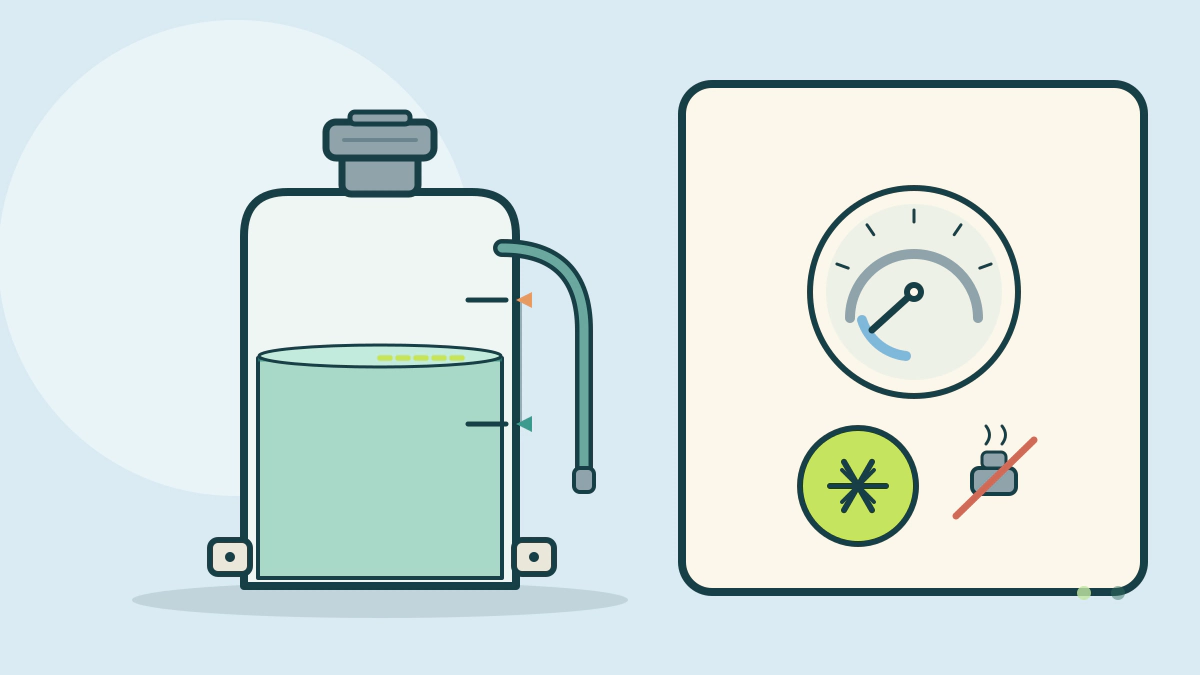
The safe way to check coolant is on a cold, parked car: open the hood, find the reservoir, and read the level against the MAX and MIN marks without removing the cap.
The Kia manual says the level should sit between those marks when the engine room is cool. It also says to check the antifreeze protection and level at least once a year, at the start of winter and before travel to a colder climate.
A cold check also keeps you away from pressurized, scalding coolant. The same manual warns never to remove the reservoir cap while the engine is operating or hot.
Why the cap is the main hazard
The manual calls the cooling system a high-pressure system. It warns that scalding hot coolant and steam may blow out under pressure when the cap is removed while the engine and reservoir are hot.
The manual warns of cooling-system and engine damage, and serious injury from escaping hot coolant or steam. Its removal steps assume a cooled engine.
Even then, the manual says to wrap a thick towel around the cap and turn it counterclockwise slowly to the first stop. Step back while pressure releases. Only when you are sure the pressure is gone should you press down with the towel and finish turning the cap off.
The electric cooling fan can run even when the engine is off, the manual warns, because coolant temperature, refrigerant pressure and vehicle speed control it. Keep hands and tools clear of the blades.
If the engine is already overheating, do not treat the cap as a quick fix. The manual’s emergency section says to pull off the road safely and not open the hood while coolant is running out or steam is visible. Adding coolant suddenly to an overheated engine that ran low can also crack the engine.
The cold-check sequence in one owner’s manual
The 2026 Kia K5 procedure runs in this order: turn the vehicle off and let it cool; wrap a thick towel around the reservoir cap and turn it slowly to the first stop; step back while pressure escapes; press down with the towel and finish turning; check the cooling-system and heater hoses for swelling or deterioration; read the level against MAX and MIN.
Treat that as one manufacturer’s example, not a universal method. Some cars use a different cap, reservoir or cover over the radiator. Use the section for your model year and engine.
Often you do not need to open the cap at all. If the reservoir is translucent and marked, you can read the level from outside. Open it only when the manual calls for it, such as when adding coolant.
What the marks mean and how much to add
The Kia manual says to add enough specified coolant to reach MAX but not to overfill. It also says frequent additions require a cooling-system inspection at a dealer. A level that keeps falling is telling you something a top-up cannot fix.
Match the coolant, not just the color
The Kia manual specifies a phosphate-based ethylene glycol coolant for its aluminum engine. It says to use only deionized or soft water when dilution is needed, and never to mix hard water into factory coolant. It also rules out alcohol or methanol coolant and mixtures of different coolant types.
Concentration has limits too. The manual says not to use a solution with more than 60 percent antifreeze or less than 35 percent, because either extreme reduces effectiveness. Its chart ties concentration to expected low temperatures:
| Antifreeze by volume | Water by volume | Ambient temperature in the manual |
|---|---|---|
| 35% | 65% | 5 F (-15 C) |
| 40% | 60% | -13 F (-25 C) |
| 50% | 50% | -31 F (-35 C) |
| 60% | 40% | -49 F (-45 C) |
This is a manufacturer-specific chart for one model, not a mixing recipe for every car. Read the coolant label and the manual’s mixing instructions before adding anything. The manual warns against mixing different coolant types, so match the specified chemistry. The coolant flush guide explains when replacement, rather than a top-up, is justified.
When a low level is a symptom
A single low reading on a cold engine can have a simple explanation. Repeated low readings should not be ignored. The Kia manual says frequent additions mean the cooling system needs inspection, and its overheating section says a serious loss of coolant indicates a leak.
Also watch for coolant under the car, steam, a rising temperature gauge or swollen hoses. The Car Care Council calls cooling-system failure a leading cause of breakdowns and advises checking the level often. For causes, read why an engine overheats.
A pressure test and leak inspection are shop jobs on many vehicles. If the reservoir is empty, the engine has overheated, or you see a leak, do not keep driving and do not keep topping up.
The Car Parts and Fluids hub lists related cooling-system and fluid topics.
Frequently asked questions
Can I check coolant while the engine is running?
No. The Kia manual requires the engine off and cooled before the cap is removed, and specifies a cool engine room for the reading. The system can stay pressurized after the engine stops.
Should the level be at MAX or between the marks?
Between MAX and MIN is the normal range. If it is low, add specified coolant to MAX without overfilling; the system needs room for expansion.
Can I add water if I do not have coolant?
The manual permits deionized or soft water for dilution, but water alone does not provide freezing and corrosion protection. Use the specified coolant, and have the mixture corrected if you added water.
Why does the level keep dropping?
The Kia manual says frequent additions mean the system should be inspected. A leak, a faulty pressure cap or another cooling-system problem may be responsible. A top-up treats the symptom, not the cause.