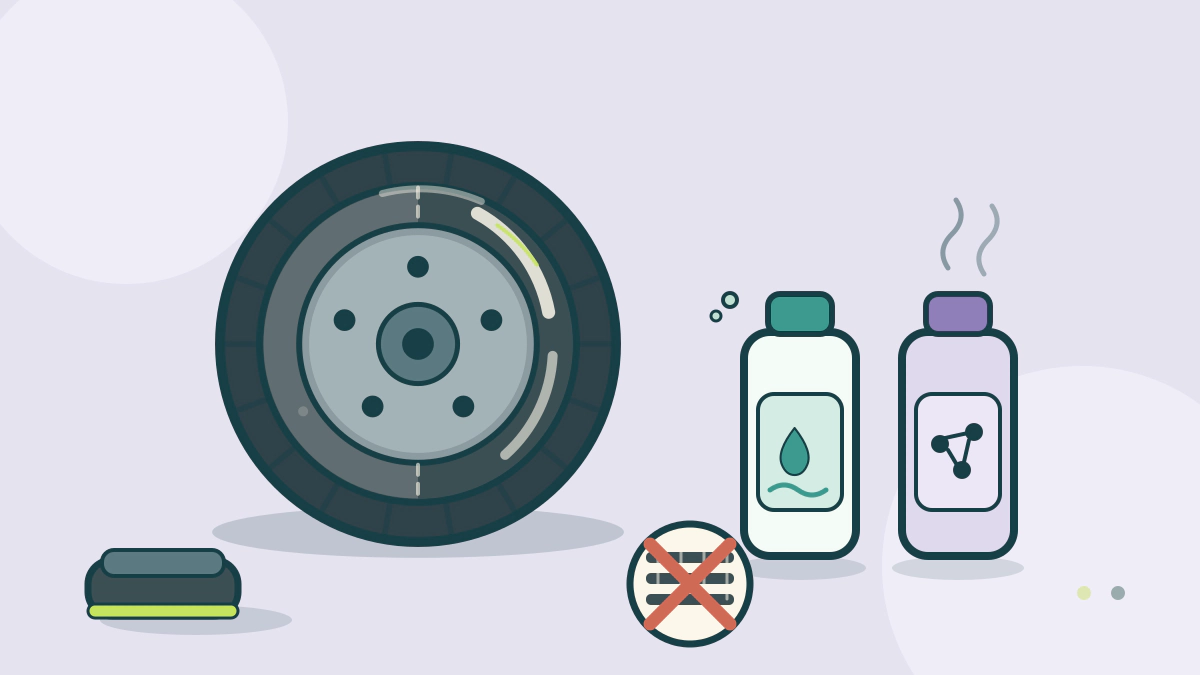
Compare water-based and solvent-based tire dressings on finish, sling, dust and rubber care, and see why dressing must stay off the tread and brake parts.
Is water-based or solvent-based tire dressing better?
For most drivers, a water-based dressing is the safer default. It is less likely to leave an oily film, attract dust or sling onto paint, and tire makers warn against petroleum-based products on rubber. Solvent-based dressings can give a glossier, faster-drying finish, but they demand more care around the tread and brakes.
Dressing is cosmetic. It does not replace a tread check or a sidewall inspection. For tread, see how to check tire tread depth. More exterior care is under Car Detailing and Protection.
What the two types actually are
A water-based dressing carries its polymers or silicone in water. It dries to a matte or satin film and usually needs more time to cure.
A solvent-based dressing uses a solvent carrier that evaporates quickly, which can leave a wetter, glossier look. Some are petroleum-based.
Either family is cosmetic. The choice is mostly about how the product carries its shine and how it behaves once the tire rotates.
Goodyear’s tire care page says to avoid cleaning products that are petroleum-based, because they may degrade the rubber’s weathering agents and lead to premature cracking (Goodyear). That warning is about the product chemistry, not the shine.
Sling, dust and the finish
Sling is dressing thrown off a rotating tire onto the bodywork. A heavy coat and fast driving make it more likely. Water-based products are marketed as sling-free, and Gold Eagle says they are not oily and leave no heavy, streaky residue (Gold Eagle).
Solvent-based shine can look wetter, but a tacky film collects dust. Gold Eagle also says a water-based formula avoids the chalky, dusty look that some foam cleaners leave.
Apply thin coats and let each one dry. A heavy single coat is the usual cause of sling and uneven gloss.
| Question | Water-based | Solvent-based |
|---|---|---|
| Carrier | Water | Solvent |
| Typical finish | Matte to satin | Glossier and wetter |
| Dust and residue | Less oily film | Can feel tacky and collect dust |
| Sling risk | Marketed as sling-free | Higher if applied heavy |
| Rubber caution | Generally the gentler choice | Check for petroleum distillates |
| Best use | Regular upkeep | Occasional show finish |
Clean the tire before you dress it
Dressing over dirt traps grit and produces an uneven finish. Goodyear’s method is simple: clean the surface monthly with a washcloth, water and a mild dish soap, then rinse with water. It says a water-based cleaner will not add chemicals that could affect the tire’s compounds.
Michelin also recommends rinsing tires after exposure to road salt or chemicals (Michelin). Let the tire dry before applying anything.
Keep it off the tread and the brakes
This is the safety line. NHTSA says the tread provides the gripping action and traction that keep a car from slipping, and that tires are not safe once tread reaches 2/32 of an inch (NHTSA). A coating on the tread changes the surface the tire relies on.
Apply dressing to the sidewall only, with a sponge or applicator, and wipe off excess. Do not spray it across the tread or let it run into the grooves.
Keep it away from brake rotors, pads and calipers as well. Oils and silicones can contaminate friction surfaces, and brake work is not a place to experiment. If product reaches a brake component, have the area cleaned according to the manufacturer’s service information.
No dressing makes an old tire safe. Check pressure against the door label with the placard versus sidewall guide, and inspect the sidewalls for cracks.
What UV protection can and cannot do
Goodyear lists excessive UV exposure as a leading cause of sidewall weathering, and NHTSA says sunlight and warm climates contribute to tire aging. NHTSA also notes that you cannot detect aging simply by looking at a tire.
A dressing with UV blockers may slow surface fade while it is on the tire. It cannot reverse cracking, and it is not a substitute for the date code or a professional inspection. Goodyear advises storing tires out of direct sunlight, and Michelin says long parking in direct sun accelerates rubber aging.
Frequently asked questions
Does water-based tire dressing last as long as solvent-based?
It often looks less glossy and may need more frequent reapplication, but it is less likely to sling or leave a tacky film. Follow the product label rather than assuming a fixed interval.
Can I put tire dressing on the tread?
No. Keep it on the sidewall. NHTSA says the tread provides the grip, and any product left in the grooves works against that. Wipe up overspray before driving.
Is solvent-based dressing bad for tires?
Not automatically, but check the label for petroleum distillates. Goodyear warns that petroleum-based products may degrade the rubber’s weathering agents. A water-based product avoids that specific concern.
Does tire dressing prevent dry rot?
A dressing may slow surface fading, but it cannot stop rubber from aging. Goodyear says cracked or weather-checked tires should be evaluated for replacement, and NHTSA says aging is not visible from the outside.