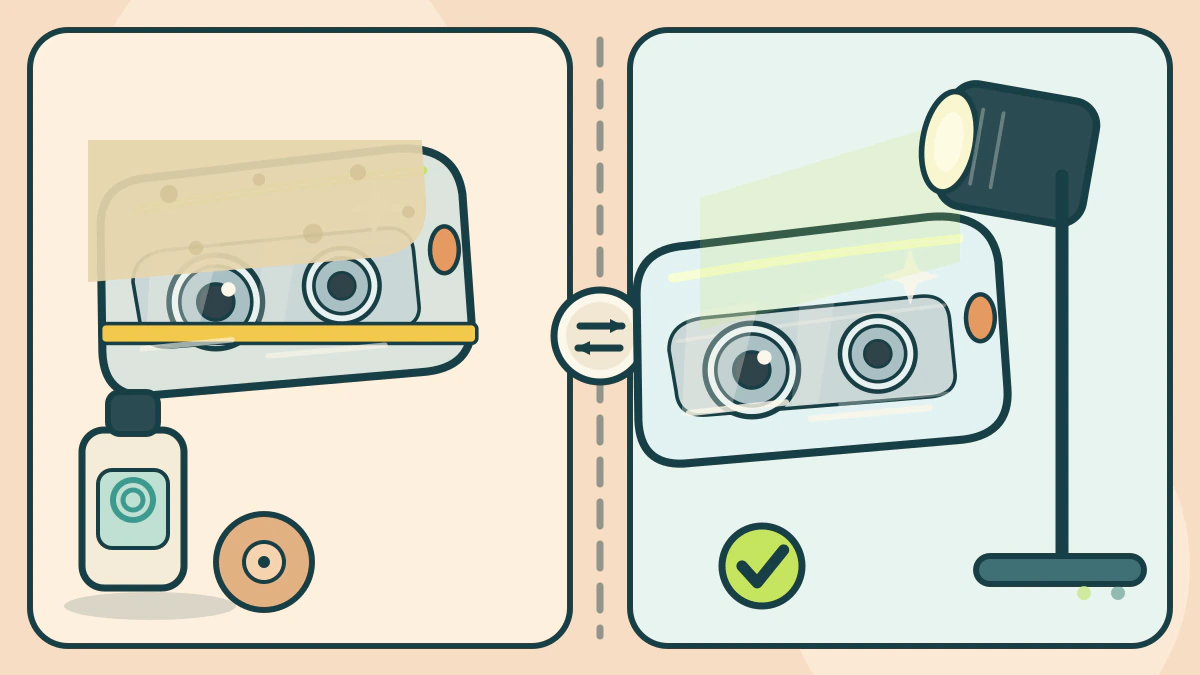
Compare DIY headlight kits with professional restoration, their measured light output, and when a new lens assembly is the better answer.
Is DIY headlight restoration as good as professional restoration?
DIY kits and professional restoration both clear a yellowed lens, but neither makes it new again. In AAA testing, professional restoration returned about 73 percent of new headlight output and DIY restoration about 69 percent. Deteriorated lenses produced just 22 percent, so either route is a large improvement, and replacement is the only option that measured 100 percent.
The gap between the two restoration routes was small in AAA’s sample. The bigger decision is whether the lens housing is sound enough to restore. This guide is part of the car detailing section.
Why plastic headlight lenses turn yellow
Most modern lenses are polycarbonate. AAA explains that sunlight breaks down the protective plastic coating, and the resulting discoloration blocks part of the light. Depending on where and how the car is used, lenses can start showing deterioration as early as three years.
The damage is in the coating and the outer plastic, not in the bulb. That is why a new bulb does not fix a cloudy lens. It is also why restoration is a surface job: the damaged layer has to come off.
What professional restoration does
AAA describes the professional process in three stages. The original protective film is removed with power sanding. The scratched polycarbonate is then polished with increasingly finer grades of sanding discs. Finally, a protectant film is applied to the whole lens.
The equipment and the final coating are the main differences from a kit. AAA’s tested process used power sanding, and a shop can judge whether the haze is only on the outside. Consumer kits vary, so read the steps before buying and note what the kit uses for the final protective layer.
DIY, professional or replacement?
| Option | What it does | Light output in AAA testing | Best suited to |
|---|---|---|---|
| DIY restoration kit | Sands and polishes the lens, then adds a protectant | About 69 percent of new | Mild yellowing, sound housing, low budget |
| Professional restoration | Power sanding, polishing and a protective coating | About 73 percent of new | Heavier haze, sound housing, controlled result |
| OEM replacement assembly | Fits a new factory assembly | 100 percent | Cracks, internal moisture, best possible light |
| Aftermarket assembly | Fits a new non-OEM assembly | 83 to 90 percent, with more glare risk | Budget replacement, if properly certified |
Two cautions come with that table. AAA found that both restoration methods produced more glare than is acceptable under Department of Transportation criteria. Aftermarket assemblies also failed some intensity requirements and were more likely to glare than OEM parts.
The lighting rules that limit the job
Headlamps are regulated equipment, not just appearance parts. Federal Motor Vehicle Safety Standard 108 requires each original and replacement headlamp lens to be marked with the DOT symbol to certify conformity (49 CFR 571.108).
That leads to a simple rule for restoration. Do not tint, smoke or wrap the lens, and do not apply a coating that changes the color or cuts the light. The lamp still has to produce white light within the standard’s limits.
The same logic applies to bulbs. NHTSA’s 2024 interpretation states that no LED replaceable light source is currently permitted in a replaceable bulb headlamp. A restoration job should keep the original bulb type and the original housing, not turn the lens into an experiment.
When replacement is the better answer
AAA recommends replacement because it offers the most improvement in light output. It is also the right call when the housing is damaged, when there is moisture or fog inside the lens, or when the lens is cracked.
If the lens is sound, restoration is reasonable. Judge the result on the road at night, not only on how glossy the lens looks in the driveway. A shiny lens with a scattered beam is not a successful repair.
After any replacement, have the aim checked. The Car Care Council includes proper headlight aim in its vehicle checklist, and the pre-road-trip inspection checklist covers the rest of the lighting check. A new assembly that points too high helps no one and glares at everyone.
If the lights flicker or dim rather than look cloudy, that is a different problem. See why headlights flicker while driving before replacing a lens.
Questions to ask a restoration shop
Ask what is removed, what is applied, and how the shop judges the result. Ask whether the housing is checked for cracks and internal moisture, and whether the lens will be coated after polishing.
Ask for the old parts if an assembly is replaced, and ask for the aim to be set before you leave.
Frequently asked questions
Does DIY headlight restoration really work?
Yes, but with a ceiling. AAA measured a large gain over a deteriorated lens and about 69 percent of new output after a DIY restoration. It is a sensible choice for mild yellowing on a sound housing. It will not match a new assembly, and AAA found more glare than DOT criteria allow.
How long does headlight restoration last?
There is no single answer. AAA explains that the life of the original protective coating depends on how much UV exposure the car gets, and a restoration coating faces the same conditions. Parking in sun shortens it. Replacing the assembly avoids the question.
Will tinted or smoked lenses reduce light output?
Yes, and they can also break the color and intensity requirements in FMVSS 108. The standard requires a certified lens and compliant white light. A dark film or spray works directly against both goals, whatever the product label claims.
Should I replace both headlights or restore them?
Match the work to each housing. If one lens is cracked or holds moisture, replace that assembly. If both are merely yellowed and sound, restoring both keeps the light output even. Ask for the aim to be checked after any replacement.