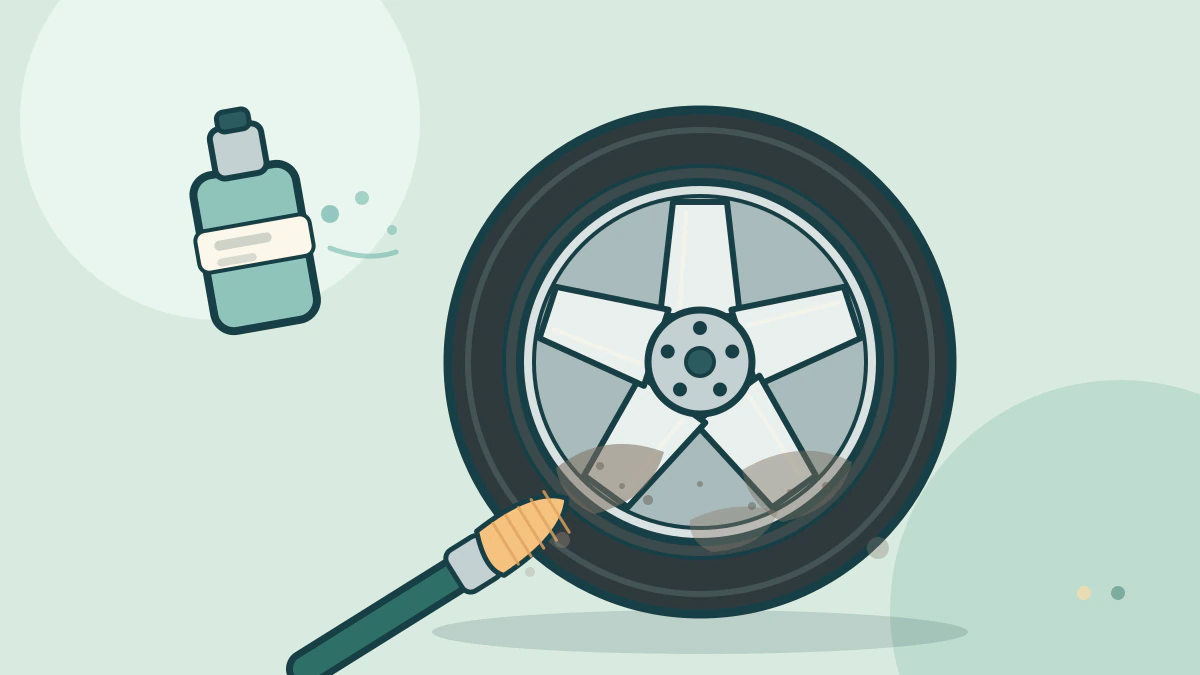
Clean coated alloy wheels with mild soap, cool wheels and soft tools, and avoid the acid, alkaline and abrasive products makers warn against.
What is the safest way to clean alloy wheels?
Use a mild soap or neutral detergent on cool wheels, with soft tools and plenty of water, and keep acid, alkaline and abrasive products off the finish. Kia’s manual says its aluminum wheels carry a clear protective finish, then lists what damages it. BBS and HRE give the same narrow list of approved products for their wheels.
The common thread is that the wheel is not bare metal. Cleaning is really about protecting the coating. These rules sit inside the wider Car Detailing and Protection category. For the wheel-type comparison, see Steel Wheels vs Alloy Wheels.
The clear coat is the part you are protecting
Kia says the wheels are coated with a clear protective finish. Abrasive cleaners, polishing compounds, solvents and wire brushes can scratch or damage it. Once that layer is compromised, corrosion and discoloration have a path to the aluminum.
BBS makes the corrosion point directly. Aluminum alloy is prone to corrosion when exposed to salt and anti-freezing agents, so BBS says to wash with water after driving by the sea or on snowy and rough roads. HRE goes further and ties regular cleaning in salt and chemical climates to its finish warranty.
Brake dust and road film
Wheel makers single out a product type worth understanding. BBS says not to use iron powder removers, the cleaners sold to dissolve iron-rich contamination. Brake dust is the iron-rich dust that brake pads shed as they wear, and it lands on the wheel face and in the spokes.
Ordinary road film and salt collect there too. Kia says to clean the wheels after salted roads to help prevent corrosion. Left in place, the layer pushes you toward a stronger product, and the stronger product is what attacks the coating. Brake dust returns between washes, so match the routine to how often you wash the car.
Which products the makers rule out
Kia’s list is specific: no abrasive cleaner, polishing compound, solvent or wire brush, and no alkaline or acid detergents. BBS says to avoid acidic, alkaline and abrasive wheel cleaners, plus plating cleaners and iron powder removers. HRE says no chemical-based or harsh cleaners and no spray-on, hose-off products, and notes that many car washes use an acid spray on wheels.
A bottle labeled “wheel cleaner” is not automatically safe. Read the label and the wheel care section of your manual. If the product is described as acid, alkaline, abrasive or solvent-based, it is not the mild soap those documents ask for.
A safe sequence for a coated alloy wheel
- Let the wheels cool and work in shade. Kia says to clean the wheel when it has cooled, and HRE says to let wheels cool before even hosing them off.
- Rinse loose dirt and salt first, so you are not grinding grit into the finish.
- Wash with mild soap or a neutral detergent and a soft cloth or sponge, as Kia, BBS and HRE all specify.
- Rinse thoroughly with water. Kia’s instruction is to rinse well after the mild soap or neutral detergent.
- Dry with a clean cloth. BBS gives that step for its magnesium wheels, which need fresh water and a soft cloth.
- Check the finish for scratches, chips or dull patches. BBS gives that inspection advice for its magnesium wheels and says to consult a dealer if you find scratches or abnormalities.
- If the finish allows it, apply wax or a ceramic coating to make the next clean easier. HRE permits this but advises against it on unprotected polished surfaces.
Magnesium wheels need more attention than aluminum. BBS says its magnesium forged wheels are coated, but corrosion advances faster if that coating is damaged. It asks for a monthly wash with fresh water and a soft cloth, and warns that brushes and high-speed washing machines can damage the coating.
When the finish is already damaged
A stronger cleaner will not repair a failing clear coat. Peeling or chalky coating needs refinishing by a wheel specialist.
BBS also says never repair or modify a deformed or cracked wheel, and to stop using it if a crack appears.
What the makers say about each product
| Product or method | What the makers say | Source |
|---|---|---|
| Mild soap or neutral detergent | Approved for cleaning | Kia, BBS, HRE |
| Acid or alkaline wheel cleaner | Do not use on coated wheels | Kia, BBS |
| Abrasive polish, compound or wire brush | Can scratch or damage the finish | Kia |
| Spray-on, hose-off chemical cleaner | May damage the finish; HRE says it can void the warranty | HRE |
| High-speed car wash brushes | Avoid | Kia, BBS |
| Wax or ceramic coating | Allowed on most finishes, not on unprotected polished surfaces | HRE |
Frequently asked questions
Can I use dish soap or an all-purpose cleaner?
Kia asks for mild soap or a neutral detergent and warns against strong soap and chemical detergents. HRE says no chemical-based cleaners. A grease-cutting household cleaner is the wrong tool for a coated wheel, even if it lifts the dirt quickly.
Are acid wheel cleaners safe if I rinse quickly?
Kia and BBS both say not to use acid detergents on these wheels, and HRE warns that acid sprays can damage the finish. Rinsing sooner does not change what the acid does to a clear coat. Use the mild option and give it more time instead.
Can I clean wheels while they are still hot?
No. Kia says to clean the wheel when it has cooled, and HRE says to let wheels cool before hosing them off. Heat also makes cleaners dry faster, which is the opposite of what you want on a coated surface.
Will wax stop brake dust from sticking?
It can make the dust easier to wash off, but it does not stop the dust. HRE lists wax or ceramic coating as a way to ease maintenance, not as a shield. You still need regular cleaning with mild soap.