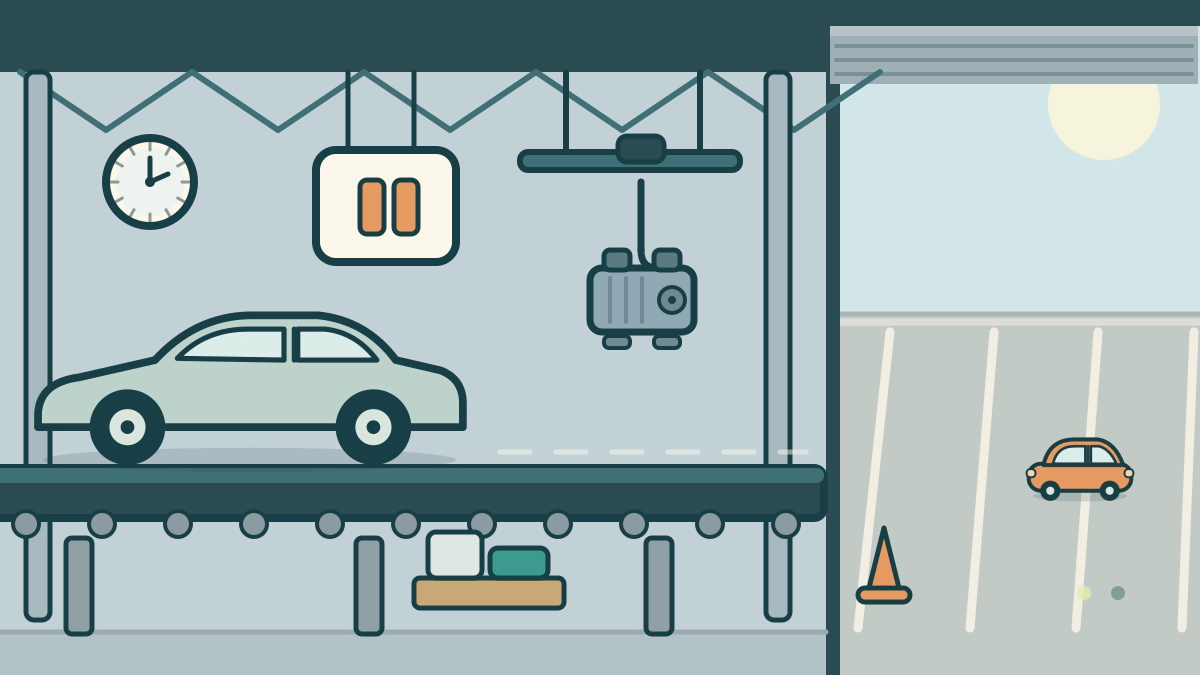
A factory shutdown removes specific models from the supply pipeline, changes dealer inventory and allocation, and can alter choices, wait times and discounts.
Why does a factory shutdown reach car buyers?
A shutdown reduces the number of vehicles a plant can build, and that loss reaches buyers through dealer inventory, allocation and timing. Plants feed a distribution chain that replenishes dealer stock. When a line stops, the effect can appear weeks later as fewer choices, longer waits or less room to negotiate. The size depends on how long the line is down, how much stock exists and whether another plant builds the same model.
Ford’s March 2020 statement shows the pattern. The company planned to restart Hermosillo Assembly on one shift, then Dearborn Truck, Kentucky Truck, Kansas City’s Transit line and Ohio Assembly. It also planned to restart stamping, transmission and engine plants that feed those lines, and said it would adjust plans for public health conditions and supplier readiness (Ford, March 2020). An assembly plant cannot run without its supplier network.
A smaller example: Ford said a short-term supplier issue affected F-150 production at the end of September 2026, while its dealers were turning inventory quickly and vehicle stock was healthy (Ford, October 2026).
What a shutdown removes from the pipeline
A vehicle must be built before it can be shipped, invoiced and sold. A plant that loses a week may not make up every unit later. Restarting takes time, and the ramp-up may be slower than the stop. Dealers often see gaps in specific trims before a broad shortage.
The first visible effect is a narrower choice: the model may be there without the trim, color or powertrain a buyer wants. The second is timing: an inbound vehicle may be delayed or not scheduled. Price pressure follows when stock is thin and the model has no close substitute.
Why one stopped plant can affect several models
Assembly plants are not isolated. One plant may build several body styles, and it depends on stamping, engine, transmission and component plants that may serve other vehicles. Ford’s 2020 restart list also included stamping, transmission and engine plants.
Production is also concentrated. Indiana describes itself as home to the world’s second-largest automotive industry (State of Indiana). That supports jobs and suppliers, but a fire, flood, strike or parts shortage at one site can reach several vehicle lines.
How allocation changes what your dealer can offer
Allocation is how a manufacturer divides limited production among dealers. It is not the same as a dealer ordering each car individually. When production falls, every dealer may get fewer units, but not by the same amount. A high-volume store may still get a larger share, and a store with older stock may wait longer for fresh inventory.
The practical question is what this dealer can deliver, and when. Ask for the VIN or order number of an inbound vehicle, the build date and an arrival window in writing. Ask whether the deposit is refundable if the car arrives late or with different equipment. A website listing is a claim about availability, not proof the car is on the lot.
Which buyers feel a shutdown first
| Shutdown or disruption | What stops | What buyers may see | What to check |
|---|---|---|---|
| Short supplier interruption | A component flow for a few days | Delayed builds for one model | Inbound VINs and build dates |
| Multi-week assembly halt | Full production at one plant | Thin stock, fewer trims, longer waits | Dealer stock plus other stores |
| Planned model phase-out | Future production of a nameplate | Fewer new units, limited colors | Whether an order bank is still open |
| Plant retooling | Old model ends before new one starts | A gap between generations | Launch date and actual dealer arrival |
| Supplier plant fire or flood | Parts for several models | Unpredictable delays across brands | Manufacturer statements and vehicle status |
Buyers who need a car immediately feel it first, as do buyers who want an exact trim or color or depend on an expiring incentive. A buyer who can switch models, take another trim or wait for the next allocation cycle has more room.
What to check before you agree to a price
Start with the out-the-door price in writing, with the vehicle price separated from taxes, fees and add-ons. Confirm whether any rebate or special rate depends on model year, trim, region or delivery date.
Ask the dealer to identify the exact vehicle, not just the model. Confirm the VIN, build date and expected delivery window. If the car is in stock, inspect it before signing. If it is inbound, read the deposit terms and ask what happens if the build changes.
Compare at least one alternative: a different trim, model or used vehicle. A shutdown narrows supply but does not remove every option.
Frequently asked questions
Does a factory shutdown always raise car prices?
No. A short stop can be absorbed by existing stock. Prices are more likely to firm when the model is already scarce, the shutdown is long and buyers have few substitutes. That describes pressure, not a prediction.
Can a buyer still order a car built at a closed plant?
It depends on whether the order bank is closed and whether dealers still have allocation. Ask for the order status in writing. A dealer that cannot provide an order number or build date is estimating, not committing.
Why does a shutdown at a parts plant matter?
An assembly plant needs a steady flow of components. Ford’s 2020 restart plan included stamping, transmission and engine plants because the lines depend on them. A parts shortage can stop a plant even when the assembly site is ready.
How long does inventory take to recover?
There is no fixed period. Recovery depends on how long production stopped, how fast the line ramps up, shipping capacity and the stock available before the stop. Ask about inbound units instead of relying on a general timeline.
Related reading: Factory Ordering a Car: Benefits and Risks and How Interest Rates Affect Car Prices. For more industry coverage, see Automotive News and Industry.