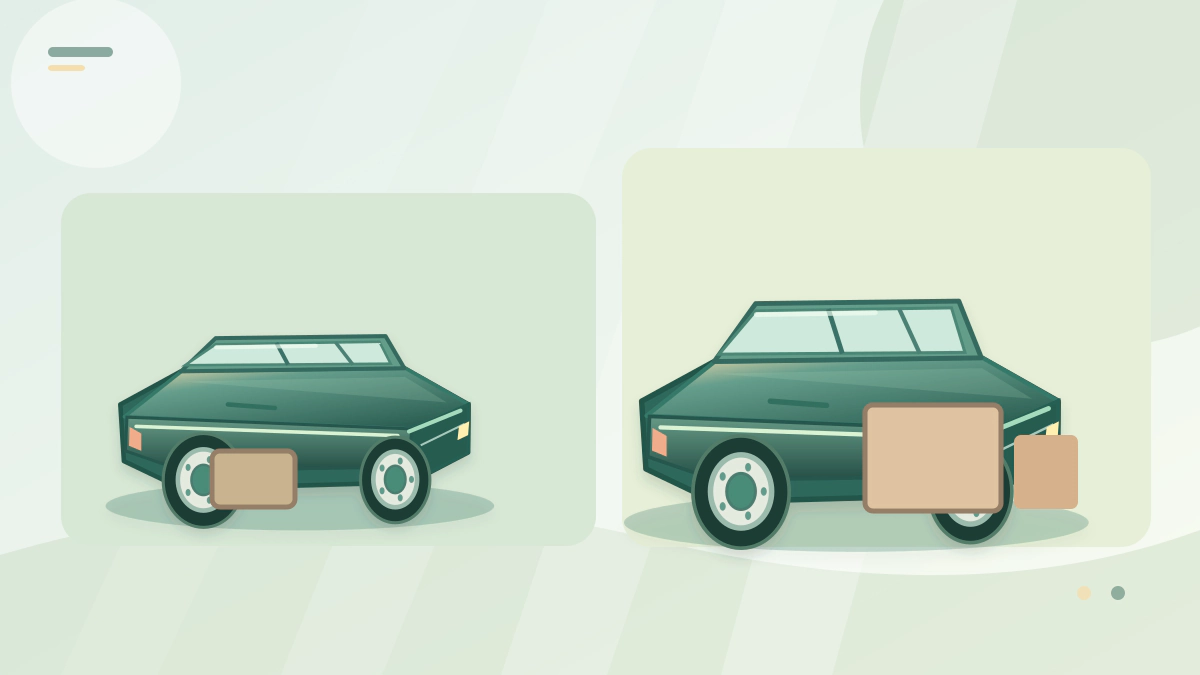
Learn why hatchbacks and sedans differ in cargo access, usable luggage space, privacy and real-life practicality.
Is a hatchback more practical than a sedan?
Hatchbacks usually offer a larger loading aperture and more flexible room for tall or awkward items. A sedan separates luggage from passengers and may have a deeper trunk floor. Neither is automatically best: compare the shape of the actual items you move.
A sedan normally has a trunk lid below the rear window. A hatchback’s rear liftgate typically rises with the rear glass, opening the cargo compartment into the passenger area.
This can affect everything from stroller loading to moving a flat-packed desk.
Practical comparison
| Shopping question | Sedan | Hatchback |
|---|---|---|
| Large box loading | Trunk opening may limit height | Taller opening often helps |
| Long luggage | A long trunk floor can be advantageous | Rear-seat folding adds flexibility |
| Cargo privacy | Sealed separate luggage compartment | Cargo cover may be needed |
| Loading in a tight garage | Small trunk lid often needs less swing space | Tall liftgate may require overhead space |
| Family use | Check pass-through and rear seats | Check cover, ties and seat folding |
| Measurement | Trunk volume often measured separately | Cargo volume can include taller irregular space |
A real-world Edmunds cargo test illustrates why a larger stated cubic-foot number need not hold more ordinary suitcases with the rear seats upright. Dimensions, floor length and opening shape are decisive.
Why cargo-volume numbers mislead
Cubic feet express volume, not whether your stroller or bicycle can pass through the opening.
Hatchback extra capacity may be above the seatback height or in areas unsuitable for rectangular luggage. A sedan can have a long floor with a small opening.
Manufacturers may quote seats-up, seats-down or under-cover figures differently.
If transporting bulky equipment, bring its dimensions to the dealership.
Try placing it into both cars without forcibly bending it.
Verify whether the rear seats must be folded and whether passengers still have room.
One model, two body styles: the Mazda3 figures
Mazda’s US page for the 2026 Mazda3 Sedan lists 13.2 cubic feet of cargo space. Its page for the 2026 Mazda3 Hatchback lists 20.1 cubic feet. That is a difference of 6.9 cubic feet on one compact model.
The numbers still do not decide the matter. A figure alone does not show whether the rear seats are up or a cover is in place. It also says nothing about the height or width of the opening. Ask the dealer how each figure was measured.
What EPA’s vehicle data keep separate
EPA’s fueleconomy.gov data service records interior volume by body style. It has separate fields for 2-door, 4-door and hatchback luggage volume. Hatchbacks also get their own passenger volume field.
EPA notes that these volume figures are not required for two-seaters. They are also not required for vehicles classed as trucks, which include SUVs and minivans. So check which body style a published number belongs to before you compare it.
A five-minute loading test
- Measure the width, height and depth of the cargo opening.
- Load the two bulkiest items you expect to transport regularly.
- Fold the back seats and check whether the floor becomes flat or stepped.
- Close the trunk or hatch fully, with the cargo cover positioned normally.
- Assess whether gear can be tied down and kept from entering the passenger space in a hard stop.
Simple box math can help you judge a published number. One cubic foot is 1,728 cubic inches. As an illustration, a load space 40 inches wide, 36 inches deep and 30 inches tall holds 43,200 cubic inches. That is 25 cubic feet.
Real cargo areas are not boxes. Wheel wells, a sloping roofline and a raised load floor cut into that shape. If you measure the widest and tallest points, the result overstates usable space.
Do not treat exposed cargo as safe simply because it fits.
Secure heavy items appropriately.
For a loaded family car, consider rear visibility, cargo covers and head-restraint positions.
What else changes between the body styles?
Noise and privacy can differ because a sedan’s cargo compartment is separated from the cabin. Yet tire choice, insulation and construction can matter more than the label. Fuel economy should be compared using exact powertrains and the standardized EPA fuel-economy label.
Check compact versus midsize sedan space and SUV size comparisons if neither shape suits the load.
Common questions
Does a hatchback always hold more luggage?
No. Additional volume may be above the load floor or blocked by the cargo cover. Test real bags, not just the brochure.
Is a sedan more secure for valuables?
A separate trunk generally conceals luggage from view, but it cannot prevent theft. Avoid leaving valuables unattended in either body style.
Are hatchbacks worse on the highway?
Not inherently. Performance, noise and comfort depend on the particular vehicle and trim. Ask the same questions on both test drives.
Bottom line: Let loading geometry decide, not the published cubic-foot figure alone.