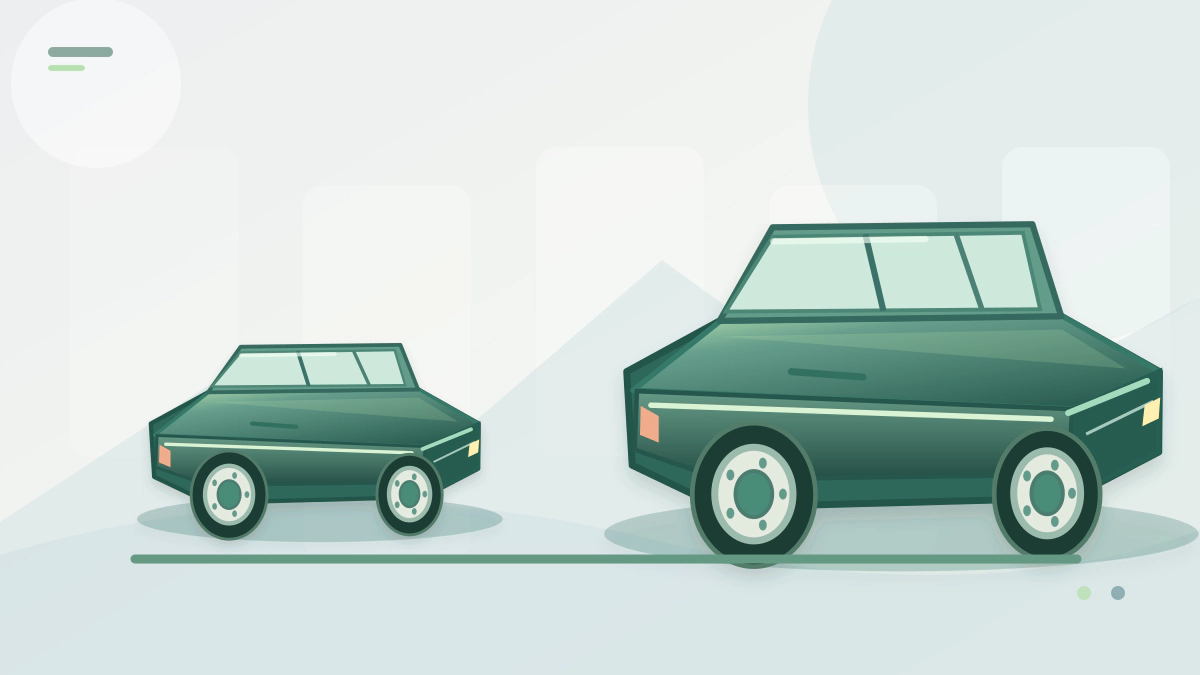
Compare subcompact and compact SUVs for real cargo space, passengers, city parking, highway comfort, insurance, ownership cost and US buying priorities.
Should you buy a subcompact or compact SUV?
For tight city parking, short trips and a smaller purchase budget, a subcompact SUV often fits better.
If you routinely carry adults, car seats, luggage or bulky gear, a compact SUV may be more comfortable.
But US segment labels are marketing conventions, not rigid measures: one roomy subcompact can rival a smaller compact.
The best choice is the vehicle whose actual dimensions, seats, equipment and total cost fit your lifestyle.
Avoid choosing solely by exterior appearance or a category name.
What really changes between the classes?
| Buyer question | Subcompact SUV often offers | Compact SUV often offers |
|---|---|---|
| Parking space | Shorter footprint and easier maneuvering | Larger footprint to fit into a spot |
| Rear seats | Potentially tighter knee room | Often more adult-friendly space |
| Cargo | Less usable volume in many models | Often greater volume and floor length |
| Road trips | Adequate for lighter loads | More luggage and passenger flexibility |
| Purchase cost | Lower starting price in many lineups | Higher price but possibly more features |
| Fuel economy | Smaller/lighter versions may use less fuel | Depends on engine, hybrid system and AWD |
| Towing | Often limited or not recommended | Some models support towing; check ratings |
These are screening tendencies, not guarantees. A model’s rear legroom figure, hatch opening, load-floor height and actual suitcase fit matter more than class.
EPA does not sort SUVs into subcompact and compact
EPA’s fueleconomy.gov classes SUVs by gross vehicle weight rating. Small SUVs are under 6,000 pounds. Standard SUVs run from 6,000 to 10,000 pounds. Those classes apply from model year 2013.
Subcompact and compact are not EPA class names. EPA also does not require interior volume figures for SUVs. So fueleconomy.gov may not list passenger or cargo volume for a given SUV. Check the maker’s specification page and ask how each figure was measured.
A real-use test is more useful than comparing cubic feet alone
Published cargo volumes may be measured under different conventions or with different seating positions.
Test the luggage you really carry: stroller, folding wheelchair, dog crate, sports bag or grocery bins.
Check whether the rear seats remain usable when a front-seat adult sets a comfortable driving position.
For families, bring the exact approved child safety seat and verify installation, belt access, legroom and front-seat clearance with the vehicle parked and safe.
Three child seats across are not automatically feasible in a model advertised for five people.
What about highway driving and safety?
Small does not automatically mean unsafe, and larger does not automatically mean better. Check NHTSA’s specific model-year safety data, braking features, headlight availability and tire equipment. Take both candidates over the same route; evaluate noise, wind stability, accelerator response, passing confidence and lane-change visibility.
Do not compare five-star ratings indiscriminately across vehicle size/weight classes.
The official program limits some comparisons, particularly the frontal crash component.
NHTSA says frontal results can only be compared with vehicles in the same class and within 250 pounds of curb weight. As an illustration, a 3,200-pound SUV and a 3,600-pound SUV are 400 pounds apart. Their frontal stars should not be compared. Side and rollover ratings can be compared across classes.
Compare total ownership costs instead of MSRP
A slightly more expensive compact SUV could have different depreciation, repair needs or insurance premiums than a lower-priced subcompact. Conversely, a larger vehicle can raise fuel and tire costs. Gather real insurance quotes for each VIN and model; compare fuel efficiency for the intended trims. The DOE ownership calculator is a screening tool, not a current local purchase quote.
Estimate monthly running cost using this template:
| Cost line | Subcompact quote | Compact quote |
|---|---|---|
| Out-the-door price | Your local offer | Your local offer |
| Insurance | VIN-based insurer quote | VIN-based insurer quote |
| Annual fuel/energy | Your miles × rated efficiency | Same annual miles |
| Scheduled maintenance | Manual and shop estimates | Manual and shop estimates |
| Tires | Actual wheel/tire size | Actual wheel/tire size |
See our realistic new-car budget guide before financing either option.
Showroom and test-drive checklist
- Measure garage length, turning space and parking clearance.
- Adjust driver’s position, then test rear-seat knee and head room.
- Load your actual or representative cargo and check the rear opening.
- Confirm fuel economy, wheel drive, safety equipment and options on the precise trim.
- Test highway merging, braking feel and road noise on the same route.
- Compare out-the-door prices and insurance, not just advertised monthly payments.
Frequently asked questions
Is a compact SUV always bigger inside?
Not necessarily. Exterior size and interior packaging differ by model, so compare usable cargo and real seats.
Is an AWD subcompact better than a FWD compact in snow?
AWD can help acceleration in poor traction, but tires, speed, braking and driver judgment matter greatly. AWD does not replace suitable tires.
Which is more reliable?
Size class is not a reliability metric. Assess model- and year-specific issues, service records and ownership patterns instead.