Learn what one-pedal driving is, how regeneration levels differ from it, how stops work, and when the setting weakens, using DOE guidance and a 2024 Kia manual.
What is one-pedal driving in an EV?
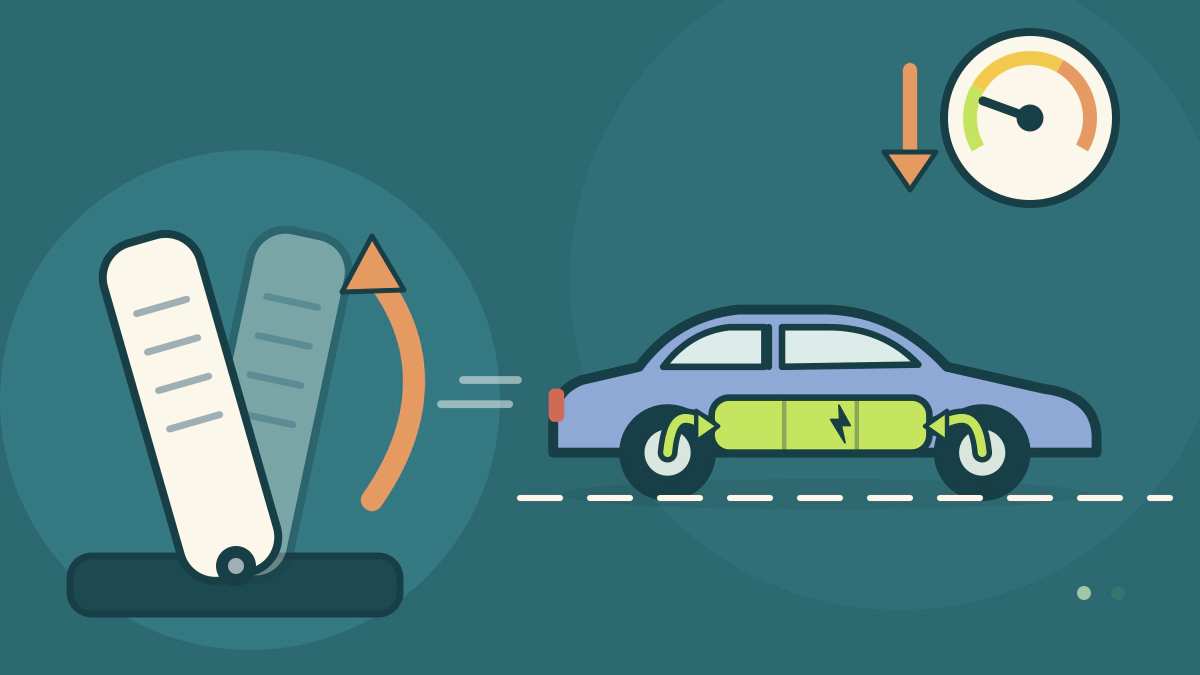
One-pedal driving is a strong regenerative braking setting that slows the car when you lift off the accelerator, and in some designs brings it to a stop, so you use the brake pedal less. There is no separate system. It is the same motor-as-generator braking, set to a higher strength.
Naming and behavior differ by brand. The Department of Energy says regenerative modes vary with each make and model. For the physics behind it, read how regenerative braking works. This guide covers the settings and limits. More on the category is in Electric and Hybrid Vehicles.
Regeneration levels versus one-pedal driving
DOE’s federal fleet training describes several modes. “Standard” gives the maximum regenerative braking, while “Low” lets the car coast farther. “Creep” and “Roll” disengage regeneration at low speed. “Hold” keeps regenerating until the car stops, then applies the friction brakes to hold it until you touch the brake or accelerator.
A 2024 Kia manual for its electric model shows another approach. Paddles adjust regeneration from level 0 to 3, and the left paddle increases it. The manual describes two stopping features.
| Term | How it works | Source |
|---|---|---|
| Regeneration level 0 to 3 | Paddles set how hard the car slows when you lift off | Kia 2024 EV manual |
| One Pedal Driving | Hold the left paddle for over 0.5 seconds while coasting; the car can stop | Kia 2024 EV manual |
| i-Pedal | Set level 3, pull the left paddle again; the accelerator controls speed and stopping | Kia 2024 EV manual |
| Hold mode | Regeneration to a full stop, then friction brakes hold the car | DOE training |
Other brands may use a button, a menu or a drive mode. Check the exact name in your manual.
How a stop works with one pedal
In the Kia manual, One Pedal Driving works while coasting. Above 2 mph, releasing the paddle returns the car to the previous level. Below 2 mph, the function keeps control to stop the car even after release. The driver can adjust the stopping position with the accelerator.
After a stop, the electric parking brake engages automatically if you shift to Park, open the driver’s door, hood or liftgate, or 5 minutes pass. It also engages if the system’s operation is limited for other reasons.
Two warnings stand out. The manual says not to rely solely on one pedal driving to stop, because stopping may not be possible depending on vehicle and road conditions. It also says to press the brake pedal when stopped or parked on steep hills.
DOE adds that in all these modes, the brake pedal is always available and works like a conventional car’s under emergency braking.
When one-pedal driving weakens or turns off
Regeneration is not always at full strength. The Kia manual lists conditions where the paddle shifter does not operate:
- Both paddles are pulled together.
- The car is decelerating because you pressed the brake pedal.
- Smart Cruise Control is active.
- The battery’s state of charge is 100%.
- SNOW drive mode is on.
- A trailer is attached.
In SNOW drive mode, the manual’s table gives an adjustable range of 0 to 1, against 0 to 3 in ECO, NORMAL and SPORT. The manual gives no reason for the full-battery entry, so check how your car behaves after a full charge.
Cold also matters. FuelEconomy.gov says battery performance decreases in cold weather and that this affects regenerative braking on hybrids, plug-ins and EVs. See EV ownership in cold climates.
On slippery roads, the Kia manual warns against raising the regeneration level suddenly, since it may cause tire slip and skidding. The manuals read for this guide do not describe brake-light behavior during regeneration. Look for it in your own manual.
Does it save fuel, energy or brakes?
FuelEconomy.gov says to anticipate stops and brake gently or moderately, because hard braking uses friction brakes that do not recover energy. One-pedal driving makes smooth lift-off driving easier, though technique still matters.
DOE says brake wear is significantly reduced in EVs because of regenerative braking. Reduced wear does not mean no service. See how long brake pads last for the wear side.
FuelEconomy.gov also notes that these vehicles vary in design and that tips for one model may not apply to another. The owner’s manual is the authority for yours.
Frequently asked questions
Does one-pedal driving mean I never need the brake pedal?
No. One manufacturer manual warns not to rely solely on it and says to use the brake pedal on steep hills. DOE says the brake pedal is always available in emergencies.
Why does my EV feel different when the battery is full or cold?
A full battery can limit regeneration, and a 2024 Kia manual lists a 100% state of charge among conditions where its paddle does not operate. FuelEconomy.gov says cold weather also reduces regenerative braking performance. Expect the car to slow differently until conditions change.
Is one-pedal driving the same as a regeneration level?
Not exactly. A level sets how strongly the car slows. One-pedal features, such as Kia’s i-Pedal, use the strongest level and add stopping behavior. Names and details differ by brand.
Can I use it on ice or snow?
Be careful. A 2024 Kia manual warns that sudden increases in regeneration on snowy or icy roads may cause skidding. In that manual, SNOW drive mode also limits the adjustable range to 0 to 1.